
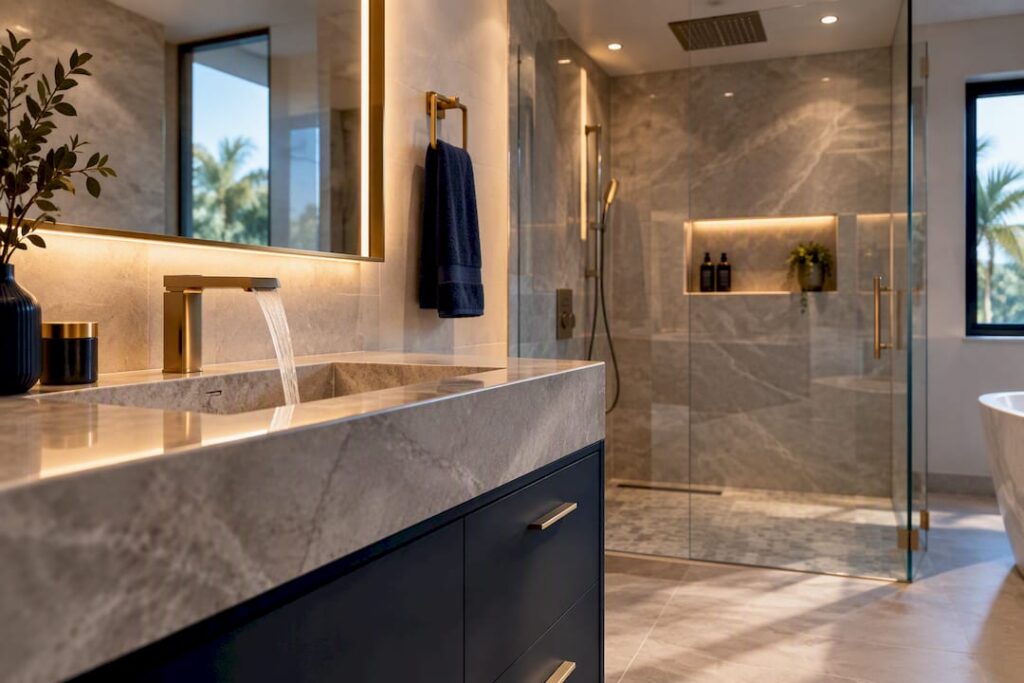
Seven smart bathroom features deliver real, lasting value: leak detection with automatic shutoff, humidity-sensing ventilation, a smart toilet or bidet seat, digital shower controls, a touchless faucet, an anti-fog smart mirror, and heated floors or a towel warmer. Together they cover three things homeowners actually care about: daily comfort, lower water and energy bills, and protection against the kind of damage that turns a small leak into a five-figure repair. The sections below break down what each feature costs, when to lock in the specs, and how to prioritize if your budget doesn’t stretch to all seven.
TL;DR:
- Leak detection systems cost a few hundred to around a thousand dollars and can prevent costly water damage by automatically shutting off water during leaks.
- Smart toilets and bidet seats require precise electrical and plumbing rough-ins, so choosing models early is crucial to avoid costly remodel delays.
- Digital shower systems typically cost between $2,000 and $5,000 installed and help eliminate water temperature swings while increasing convenience.
- Humidity-sensing ventilation offers significant savings by reducing mold risk and repair costs, worth prioritizing over luxury features.
- Pairing smart fixtures with proper planning and licensed installation can lower long-term damage risk and ensure full functionality.
Table of Contents
- Which Smart Bathroom Features Are Worth the Investment?
- Planning Your Smart Bathroom: What to Lock In Before Rough-In
- What Smart Bathroom Upgrades Actually Cost
- How to Prioritize Smart Features on Any Budget
- How Elite Builder Renovation Handles Smart Bathroom Remodels
- Sources
- FAQ
Which Smart Bathroom Features Are Worth the Investment?
Not every gadget with a Wi-Fi chip belongs in your bathroom. Some smart bathroom features solve a real problem every day; others are novelties that lose their appeal within a year. Here’s how the strongest options break down.
Smart toilets and bidet seats top the list for daily-use value. Heated seats, adjustable water temperature, and built-in dryers improve hygiene and comfort, and many models include night lights and hands-free lids that matter for aging-in-place bathroom design. The catch is installation. These units need a nearby electrical outlet, specific rough-in clearances, and sometimes a dedicated water line, so the model has to be chosen before framing and plumbing are finalized.
Digital shower systems replace manual valves with precise temperature presets, multiple outlet control (rain head, handheld, body sprays), and remote start. Beyond convenience, digital valves can eliminate the temperature swings that waste water while you wait for the shower to warm up. Installed cost typically runs from the low thousands into the $3,000 to $5,000 range depending on the number of outlets and whether existing plumbing needs rerouting.
Touchless faucets cut down on germ transfer and tend to reduce water use because sensors shut off flow the instant hands clear the stream. They’re a smaller investment than a full digital shower system and a smart retrofit for a kitchen or powder room refresh, too, which is worth remembering if you’re planning smart kitchen upgrades alongside a bathroom project.
Leak detection and whole-house water monitoring may be the single best dollar-for-dollar upgrade in this list. These systems track flow patterns at the main line and automatically shut off water when they detect an abnormal signature, like a running toilet or a burst supply line behind a wall. They don’t add comfort, but they prevent the kind of loss that no other smart feature touches.
Humidity-sensing ventilation runs your exhaust fan only when moisture actually rises, rather than on a dumb timer. Because excess humidity is a leading driver of mold growth and material breakdown in bathrooms, a smart fan pays for itself in avoided drywall and grout repairs alone.
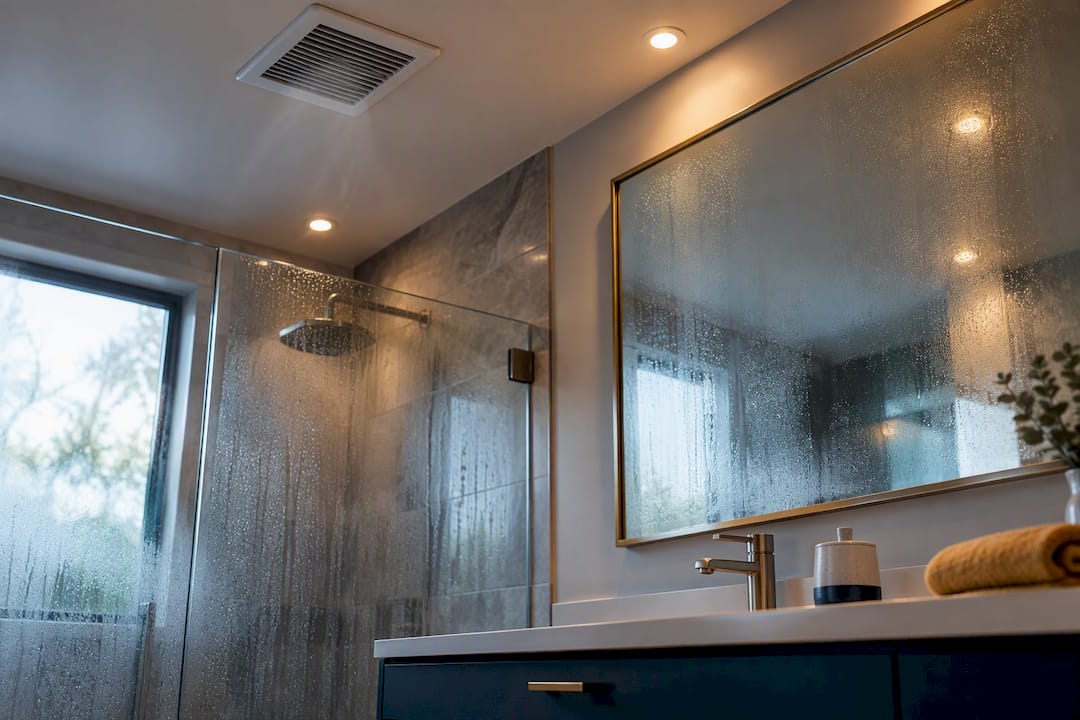
Smart mirrors split into two camps: anti-fog, adjustable color-temperature mirrors that make everyday grooming easier, and display-heavy mirrors with built-in screens. The first category holds its value for years. The second often becomes outdated tech clutter once the novelty wears off.
Heated floors and towel warmers are comfort upgrades with genuine wellness appeal, especially for anyone dealing with cold tile in the winter months. Retrofitting radiant floor heat into an existing bathroom costs more than installing it during a full gut renovation, since the mats or cables have to go under new flooring.
- Hot-water recirculation or demand pumps cut the wait (and the wasted water) for hot water on long pipe runs, a common issue in older Tampa Bay homes with the water heater far from the bathroom.
- Steam shower controls and chromotherapy lighting are legitimate wellness add-ons, but they’re the features to add last, after the daily-use basics are covered.
Pro Tip: Don’t chase every feature at once. A leak detector and a humidity-sensing fan cost far less than a digital shower system, and they protect the rest of your investment from water damage.
The bigger trend behind all of this: the National Kitchen and Bath Association’s 2026 bath trends report shows designers increasingly prioritizing larger showers, integrated technology, and aging-in-place features as standard requests rather than upgrades. Smart bathroom technology has moved from luxury add-on to a normal line item on remodel budgets.
Planning Your Smart Bathroom: What to Lock In Before Rough-In
The single biggest mistake homeowners make with smart bathroom features is picking the product after the walls are already framed. Smart toilets, digital valves, and touchless faucets all have specific electrical and plumbing requirements, and changing them mid-project usually means tearing into finished tile or cabinetry.
- Select your smart toilet or bidet seat model first. Integrated smart toilets need precise rough-in dimensions, a nearby GFCI outlet, and sometimes a dedicated water shutoff, and these specs vary by brand.
- Confirm electrical load with your electrician. Digital shower controllers, heated floor thermostats, and smart mirrors each draw power, and some require a dedicated circuit rather than sharing an existing bathroom outlet.
- Check your home’s flowing water pressure. Digital valves and multi-outlet shower systems need adequate pressure to run rain heads and body sprays simultaneously without a noticeable drop.
- Coordinate trade scheduling early. Plumbers need final fixture specs before rough-in, electricians need outlet locations before drywall, and tile crews need both finished before they start.
- Confirm permit requirements with Pinellas County or Hillsborough County before work begins. Electrical and plumbing changes almost always require inspection, and skipping this step can delay your certificate of occupancy.
What Smart Bathroom Upgrades Actually Cost
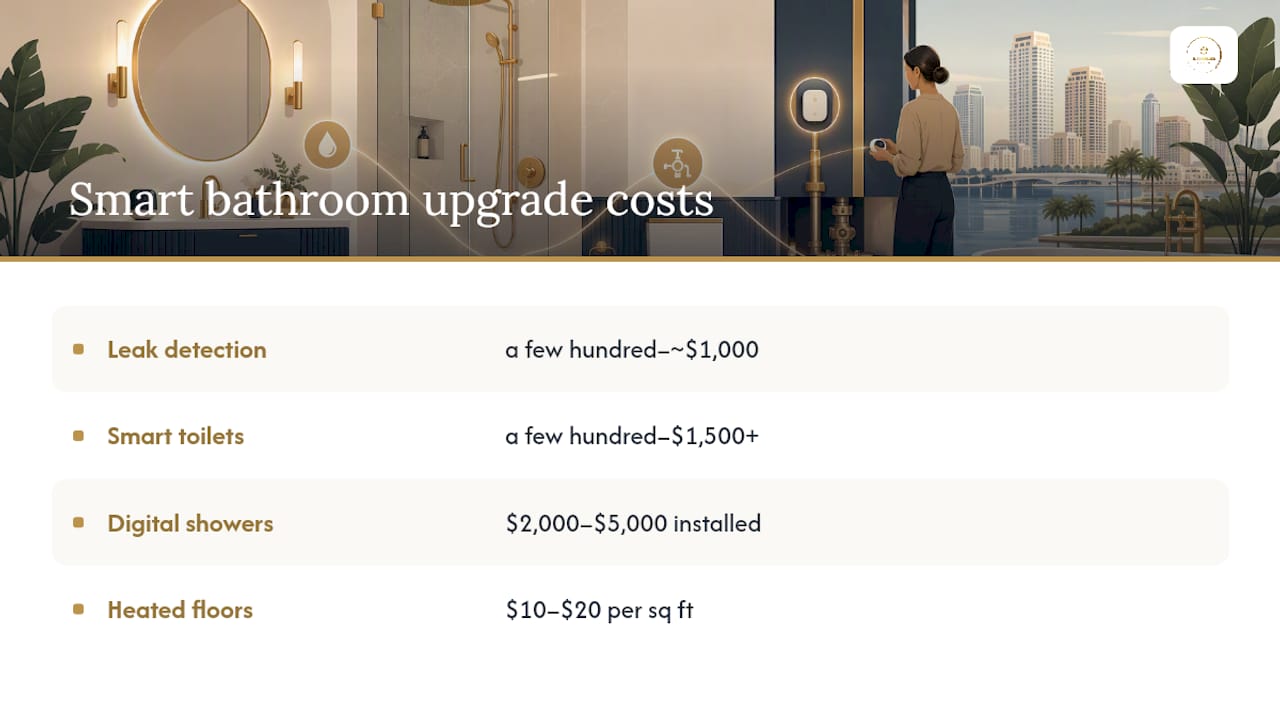
Leak detection systems generally install for a few hundred to around a thousand dollars depending on whether they monitor a single fixture or the whole house at the main line. Smart toilets range from a few hundred dollars for a bidet seat retrofit to $1,500 or more for a fully integrated unit with heated seat and dryer. Digital shower systems typically land between $2,000 and $5,000 installed, and heated floors added during a full remodel often run $10 to $20 per square foot, considerably less than retrofitting after the fact.
The payback isn’t just about your utility bill. Some smart bathroom upgrades pay for themselves in three to ten years through avoided water damage and lower water and energy use, and a single undetected leak can cause repair costs far beyond what a leak monitor typically costs to install. Pairing smart fixtures with LED task and vanity lighting adds another efficiency layer, since LEDs use meaningfully less energy than incandescent bulbs over the life of the fixture. It’s not a coincidence that smart home adoption across the U.S. keeps climbing; homeowners are recognizing that these upgrades pay for themselves rather than just adding convenience.
How to Prioritize Smart Features on Any Budget
Weigh each feature against three questions: How often will you use it? What happens if it fails? And will it feel dated in five years? A leak detector answers all three well. A display-heavy mirror often doesn’t.
- Essential tier: leak detection and humidity-sensing ventilation. Low cost, high protection, no downside.
- High-impact tier: smart toilet or bidet seat, digital shower system. These change your daily routine and hold value.
- Nice-to-have tier: anti-fog smart mirrors, app-controlled tub fills, chromotherapy lighting. Add these once the essentials are covered.
Pro Tip: Ask any contractor bidding your project what warranty and remote support each smart fixture manufacturer offers. Some warranties cover parts only, not the labor to access them behind tile.
How Elite Builder Renovation Handles Smart Bathroom Remodels
Coordinating electricians, plumbers, and tile crews around a single smart toilet’s rough-in specs is exactly the kind of detail that turns a straightforward remodel into a scheduling headache when it’s handled by separate, uncoordinated trades. Elite Builder Renovation manages that coordination directly, from your initial consultation through product-spec confirmation, licensed electrical and plumbing work, permitting with Pinellas County or Hillsborough County, final installation, and warranty handoff, so nothing gets discovered after the tile is already set.
With over a decade of experience and more than 375 completed projects across Tampa, St. Petersburg, Clearwater, Largo, and Safety Harbor, Elite Builder Renovation backs every project with a 100% satisfaction guarantee and offers financing options for homeowners who want smart features without paying the full cost upfront. A typical bathroom remodel that includes smart fixtures runs several weeks from demolition to final walkthrough, depending on the scope, with the project timeline confirmed once fixture specs are finalized.
If you’re planning a bathroom remodeling project in Tampa Bay and want smart features installed right the first time, start with a free consultation. You can also see how past clients rate their experience on the Elite Builder Renovation reviews page before you commit to a contractor.
Sources
- NKBA KBIS releases annual 2026 bath trends report
- Forecast: Number of smart homes in the U.S. (Statista)
FAQ
What Features Do Smart Toilets Have?
Smart toilets typically include heated seats, adjustable bidet water temperature and pressure, air dryers, deodorizing fans, and night lights, with some higher-end models offering remote controls or app pairing. They also require specific electrical and plumbing rough-in specs, so the model should be chosen early in a bathroom remodel.
What Are Some Smart Bathroom Ideas Worth Trying?
Start with leak detection at the main water line, humidity-sensing exhaust fans, and a digital shower valve with preset temperatures, since these deliver daily value and protect the rest of the room. Add a smart toilet, touchless faucet, or heated floors as budget allows, and treat display mirrors or app-controlled tub fills as optional last.
What Are the Disadvantages of Smart Showers?
Digital shower systems cost more upfront than a standard valve, typically $2,000 to $5,000 installed, and repairs sometimes require a technician familiar with the specific control system. They also depend on electrical power, so a home with frequent outages needs a backup plan for hot water access.
What Does a $10,000 Bathroom Remodel Look Like?
A typical bathroom remodel that includes smart fixtures runs several weeks from demolition to final walkthrough, with costs varying significantly based on scope, layout, and existing plumbing. Elite Builder Renovation can walk you through what fits your specific budget during a free consultation.
Do Smart Bathroom Features Raise My Water Damage Risk?
No, when installed correctly they lower it. Leak detection systems monitor flow patterns and shut off water automatically before a slow leak becomes a major repair, which is why pairing them with a licensed installation, like those handled through Elite Builder Renovation’s bathroom remodeling services, matters more than the gadget itself.