
Whether mounting a TV over a fireplace works for your home comes down to two measurable things: heat exposure and viewing ergonomics. Get both right and the setup can look great for years. Get either wrong and you’re looking at a shortened TV lifespan, a sore neck, or both.
Here’s the short verdict: a TV above the fireplace is a reasonable choice with electric fireplaces, shallow or well-ventilated mantels, and rooms where viewing sessions run short. It’s a riskier bet with wood-burning fireplaces, tall mantels, and rooms where the TV is the main screen for movie nights and long binges.
Before you commit, take these steps:
- Run a thermometer test on the wall above your mantel during a normal burn or heat cycle.
- Pull out your fireplace manual and check the manufacturer’s stated clearance distances.
- Consider a pull-down or tilting mount if the eye-line height is a concern.
The rest of this guide walks through the real advantages of tv over fireplace pros, the tradeoffs nobody puts on the brochure, and how a fireplace remodel contractor evaluates the spot before any drilling happens.
Key Takeaways
A TV over the fireplace works well when the fireplace runs cool at screen height and viewing sessions stay short, and it becomes a problem the moment heat or neck strain crosses a measurable threshold.
| Point | Details |
|---|---|
| Run the thermometer test first | Tape a thermometer to the wall at TV height and run the fireplace for a few hours before deciding anything. |
| Fireplace type drives risk | Electric fireplaces are typically the safest; wood-burning units need the heaviest mitigation. |
| Mantel depth matters | Deeper mantels and metal heat shields reduce radiant heat reaching the screen. |
| Ergonomics need a real fix | Pull-down or tilting mounts correct eye-level viewing without abandoning the wall. |
| Complex work needs a pro | Masonry anchoring, in-wall conduit, and ventilation channels call for licensed installation. |
Table of Contents
- Pros: The Advantages Of Placing Your TV Above The Fireplace
- Cons: The Main Risks—Heat Damage, Ergonomics, And Installation Complexity
- How Do You Test If A Fireplace Is Safe For A TV?
- Fireplace Types: How Electric, Gas, Wood, And Bioethanol Change The Decision
- Mitigation And Installation: Mounts, Mantels, Heat Shields, And Ventilation
- Design And Proportion: Making The TV Look Intentional
- Decision Checklist: Five Criteria Before You Commit
- What Professionals Do: A Contractor’s Approach To Safe Installs
- Sources
- FAQ
Pros: The Advantages Of Placing Your TV Above The Fireplace
The appeal is obvious the moment you walk into a small living room with a fireplace on the main wall. There’s often nowhere else sensible to put the television without blocking a window, crowding a doorway, or wasting a whole second wall on a media console.
Mounting the TV above the fireplace solves that instantly. You get one wall doing double duty instead of two walls competing for attention, and the floor space that would have gone to a media console or a stand becomes usable again. That matters more than people expect in condos and older Tampa Bay bungalows where square footage is already tight.
There’s a design payoff too. A fireplace and TV stacked on one wall create a single, unified focal point rather than two separate zones pulling the eye in different directions. Mounting a TV above a fireplace can maximize floor space and create a unified focal point, which is exactly why so many open-concept living rooms use this layout as the anchor for furniture placement.
The practical benefits stack up:
- Space efficiency. No console, no cable box shelf, no extra furniture footprint in rooms where every square foot counts.
- Cleaner sightlines. Seating can face one wall instead of splitting attention between the fireplace and a TV across the room.
- Cord concealment. In-wall conduit and recessed outlets hide power and HDMI cables, leaving a finished, media-wall look instead of a tangle of wires.
- A believable secondary screen. If the TV mostly plays background news or sports while guests mingle, the elevated viewing angle rarely matters.
The setups where this pays off share a pattern: the TV is not the primary entertainment source, the room is small enough that wall-sharing genuinely helps, or the household simply doesn’t binge-watch from that couch for three hours at a stretch.
Cons: The Main Risks—Heat Damage, Ergonomics, And Installation Complexity
Now the part most showroom brochures skip. Three risks show up over and over in expert warnings and manufacturer documentation, and none of them are hypothetical.
Heat exposure tops the list. Rising heat from a fireplace, even a moderate one, can bathe the wall above it for hours at a time. Prolonged heat exposure can cause cumulative internal damage to televisions, and that damage often builds slowly. A panel that works fine for eighteen months can start showing dead pixels, warped casing, or shortened backlight life right around the time the warranty expires. Manufacturers publish clearance specs for a reason, and installing above that threshold without mitigation is one of the fastest ways to void coverage on an otherwise sound TV.
Statistic callout: Heat damage to electronics is cumulative, not immediate. A TV that survives a season of fires can still fail early because internal components degrade gradually with repeated thermal cycling, according to guidance from BobVila’s fireplace mounting analysis.
Ergonomics is the second problem, and it’s the one people underestimate. Mantels typically sit 48 to 60 inches off the floor, which pushes the TV’s center well above natural eye level for anyone seated on a standard sofa; for guidance on ideal viewing heights, see this Window Height Guide for Homeowners and Builders. Viewing height and heat exposure create ergonomic and warranty problems, and many tech reviewers recommend an alternate wall specifically because of the neck strain that builds up over long viewing sessions. A quick glance during a commercial is fine. A two-hour movie craning your neck upward is not.
Installation complexity is the third cost, and it’s often underestimated at the planning stage. Fireplace walls are usually masonry, brick, or reinforced framing, none of which take a standard drywall anchor. Mounting brackets need masonry anchors rated for the TV’s weight, and running power and HDMI cables through a firebreak wall means in-wall conduit installed by someone who understands fire codes, not just cable management.
- Masonry anchoring often requires specialty hardware and a mount rated for the wall type, not just the TV weight.
- In-wall conduit for power and HDMI must route around flues and firebreaks, which usually means opening drywall.
- Ventilation gaps behind a recessed TV alcove add labor and material cost most DIY estimates miss.
- A tall, boxy TV stacked over a narrow mantel can look top-heavy, throwing off the proportions of an otherwise balanced wall.
None of these risks are dealbreakers on their own. Together, they’re why the decision deserves a real evaluation instead of a guess.
How Do You Test If A Fireplace Is Safe For A TV?
The single most useful tool in this whole decision is an ordinary $10 digital thermometer, and most homeowners skip it.
Here’s the process a fireplace remodel contractor would actually run before recommending a mount location:
- Tape a thermometer to the wall at the exact height where the TV’s lower edge would sit, and place a second one closer to where the screen’s center would land.
- Run the fireplace at your normal settings for at least two to three hours, matching how long you’d realistically run it on a cold Tampa Bay evening.
- Record the peak temperature rather than the average. Spikes matter more than the steady baseline.
- Compare that reading against your TV manufacturer’s operating temperature range, which is typically printed in the spec sheet or manual, not the general fireplace manual.
- Repeat the test at the flue or vent location if your fireplace has a top-mounted exhaust, since heat concentration there can run hotter than the open wall space.
A thermometer test, taping a unit to the wall and running the fireplace for several hours, is a widely recommended practical check before anyone drills a single hole. It’s low cost and it gives you a real number instead of a guess.
Your fireplace’s own manual carries more weight than any general rule of thumb you’ll find online. Standards and product manuals override generic guidance when it comes to clearance measurements, because those numbers reflect the specific heat output of your unit, not an industry average. If the manual lists a minimum clearance to combustibles or electronics, treat that number as the floor, not a suggestion.
Pro Tip: If your thermometer test shows sustained readings above 100°F at TV height, don’t try to “power through” with a fan or a gap in the mantel. That’s the point to call in a professional who can assess structural venting options rather than a workaround.
Call in a professional assessment when any of these show up:
- The wall is load-bearing masonry and you’re not certain what’s behind the surface.
- Your fireplace vents into the same wall cavity where cable conduit would need to run.
- The thermometer test shows temperatures near or above your TV’s rated operating range.
- You notice existing soot staining, discoloration, or heat cracking on the mantel or surround.
Any of those four is a legitimate reason to relocate the TV instead of forcing the installation.
Fireplace Types: How Electric, Gas, Wood, And Bioethanol Change The Decision
Not all fireplaces produce heat the same way, and that difference is the single biggest variable in whether mounting a TV above one makes sense.
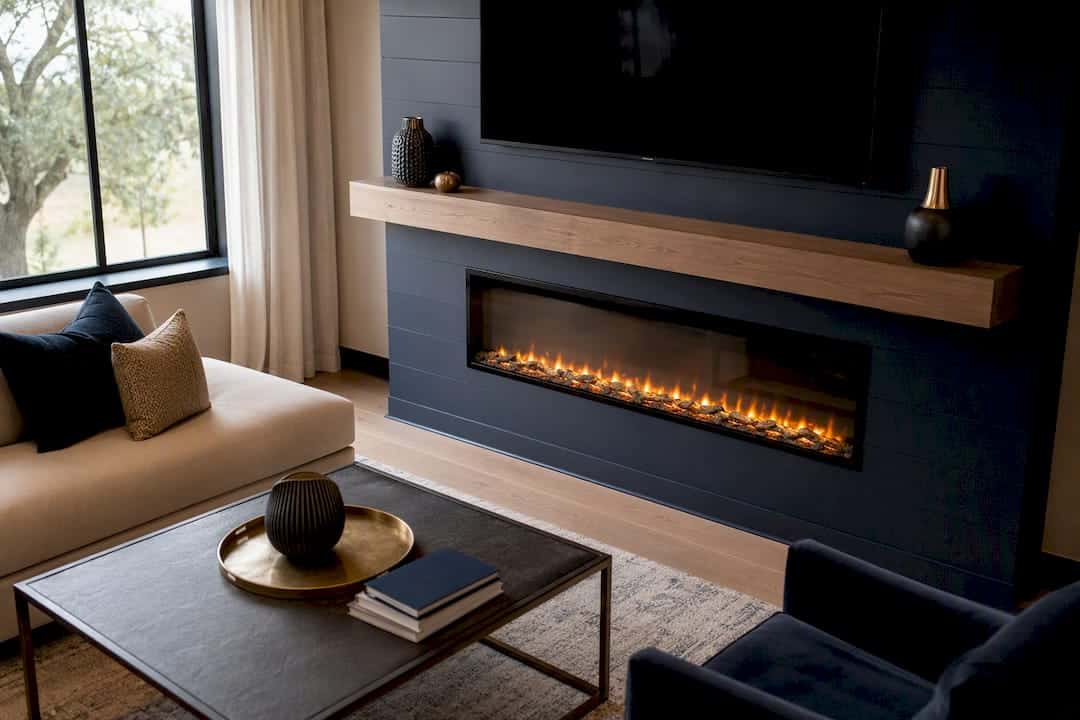
Electric fireplaces are usually the safest option. Most units push heat forward and slightly downward through a front-facing blower rather than letting it rise straight up the wall. Electric fireplaces are usually the easiest and safest option for this reason, and some electric media-wall units are specifically engineered to keep the surface above them close to room temperature. If you’re building new or doing a full fireplace remodel, an electric insert removes most of the heat risk from the equation entirely.
Gas fireplaces sit in the middle, and the details matter. A glass-fronted gas unit with a blower can run cool at the surface but still push a surprising amount of heat upward through convection, especially during long burns. These setups usually need a deeper mantel and sometimes a dedicated heat shield to make TV placement workable. Don’t assume “gas means safe” just because there’s no visible flame licking up the wall.
Wood-burning fireplaces carry the highest risk, and not just from heat. Open wood fires produce strong convective heat plumes along with soot and creosote that can drift upward and settle on electronics over time. Unless you’re planning heavy mitigation (deep mantel, metal deflector, dedicated ventilation), this is the fireplace type where the smart move is usually a different wall for the TV.
Bioethanol and freestanding units are the wildcard. Heat output varies enormously by model, and many of these units lack the standardized clearance documentation that gas and electric fireplaces carry. Always pull the specific manufacturer spec sheet rather than assuming a bioethanol unit behaves like a typical electric fireplace.
- Electric: front-blown heat, lowest risk, easiest to pair with a TV.
- Gas: variable output, often needs deeper mantels or shields.
- Wood-burning: highest heat and soot exposure, the heaviest mitigation required.
- Bioethanol/freestanding: check the specific model’s spec sheet before assuming anything.
Mitigation And Installation: Mounts, Mantels, Heat Shields, And Ventilation
If your thermometer test comes back borderline rather than clearly safe or clearly dangerous, mitigation is where a fireplace remodel actually earns its cost.
Start with the mantel itself. A deep, non-combustible mantel shelf physically pushes the TV further from the heat source and blocks a portion of the radiant heat rising directly off the firebox. Fireplace professionals often recommend mantels in the 100 to 150 millimeter depth range, or dedicated heat shields for gas fireplaces, specifically to deflect heat before it reaches screen height. If your current mantel is shallow or purely decorative, deepening it during a remodel is one of the highest-value fixes available.
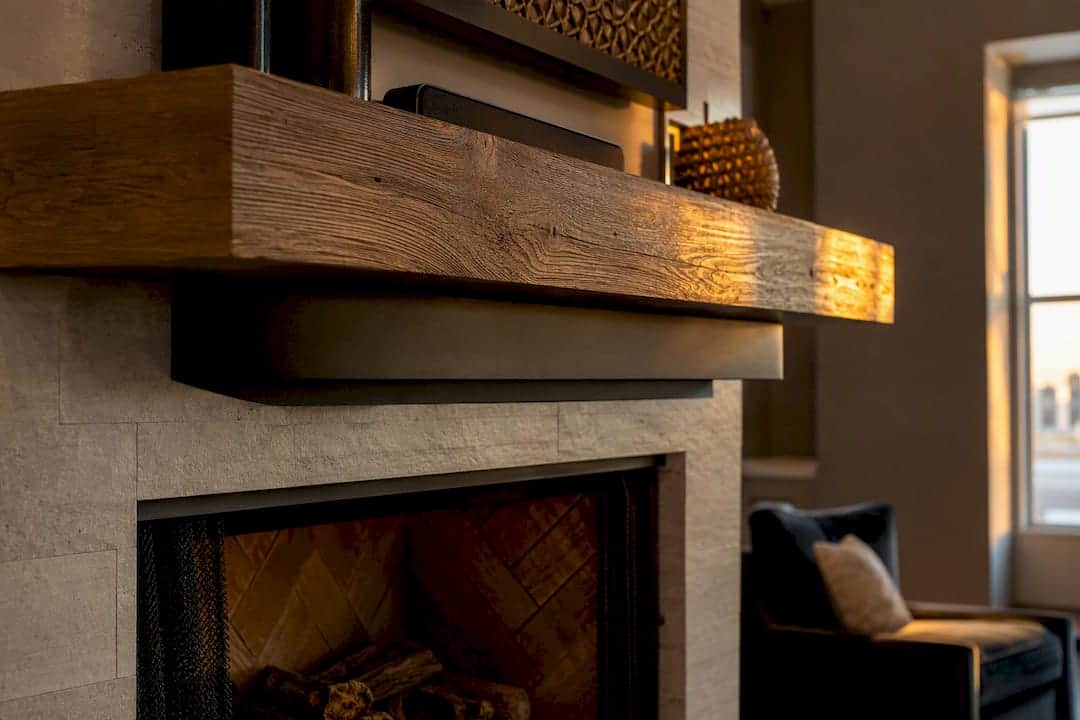
Metal heat shields and mantel hoods help, but know their limits. These deflectors work well against radiant heat, the kind you feel directly from an open flame, but they’re less effective against convective heat, the rising column of warm air that builds up in an open wood fire. A contractor typically pairs a metal shield with a deeper mantel and some form of ventilation rather than relying on the shield alone.
Address ergonomics with the right mount, not just the right wall. A pull-down or motorized mount lowers the screen to eye level when you’re actually watching, then retracts it back above the mantel when you’re not. This solves the neck-strain problem directly and, as a side benefit, reduces the time your TV spends sitting in the hottest part of the rising heat plume. Full-motion or tilting mounts help too, though they don’t change the screen’s resting height the way a pull-down system does.
Recessed alcoves are the higher-end solution. Building the TV into a recessed niche in the fireplace wall, with in-wall ventilation channels behind it, prevents the “oven effect” where heat gets trapped in a shallow void behind the screen. Professional installers routinely add larger cable conduits and ventilation channels specifically to avoid that trapped-heat scenario when planning a recessed installation.
Know when this stops being a DIY project. Masonry anchoring for a heavy TV mount, structural reinforcement behind a recessed alcove, and any conduit work that crosses a firebreak wall all call for a licensed contractor. This is the point where guides and blog posts stop being useful and a proper site visit takes over. Homeowners weighing this decision can review how to build a fireplace mantel for material and depth guidance before scoping the project.
Pro Tip: If you’re already planning a fireplace surround update, build the mantel depth and ventilation channel into that project instead of retrofitting them later. It’s almost always cheaper to solve heat mitigation once during a remodel than to reopen a finished wall a year later.
Design And Proportion: Making The TV Look Intentional
A TV mounted over a fireplace can look like a natural extension of the room or like an afterthought bolted onto a mantel. The difference comes down to proportion and framing, not the TV itself.
Match the TV width to the opening. A screen noticeably wider than the fireplace opening below it tends to look top-heavy and unbalanced. Choosing a TV slightly narrower than the firebox or surround, and centering it carefully, keeps the whole wall reading as one composition rather than two mismatched elements stacked awkwardly.
Use trim, mantels, or shelving to create a visual break. A physical mantel shelf, a run of decorative trim, or a shallow built-in shelf between the firebox and the TV gives the eye a resting point. Without that separation, the fireplace and the black screen above it can blur into one dense, heavy mass on the wall. Designers note a real tension between symmetry and daily function here, and the mantel line is usually the simplest fix.
Soften the black rectangle when the TV is off. Framed TV bezels, matte anti-glare screen protectors, or decorative surrounds that mimic artwork can reduce how jarring a dark screen looks against a warm fireplace wall during the hours it’s not in use.
- Size the TV a touch narrower than the fireplace opening, not wider.
- Add a mantel, trim line, or shelf to separate fireplace and screen visually.
- Consider a framed bezel or matte finish to soften the look when the screen is off.
- If ergonomics matter more than symmetry, move the TV to a side wall, media cabinet, or dedicated alcove instead.
Recessed mounts and, in some higher-end remodels, projection setups are worth considering specifically because they reduce the visual disruption of a black screen sitting atop a fireplace when the room is styled for daytime use.
Decision Checklist: Five Criteria Before You Commit
Run through these five items before signing off on a TV over the fireplace, whether you’re doing it yourself or scoping it with a contractor.
- Fireplace type. Electric leans safe by default; gas needs case-by-case review; wood-burning needs heavy mitigation or a different wall entirely.
- Thermometer test result. A clean reading well below your TV’s rated operating temperature is a green light. Borderline or high readings mean mitigation or relocation.
- Mantel or deflector feasibility. Can you realistically deepen the mantel or add a heat shield within your budget, or is the current mantel too shallow to modify?
- Viewing-angle tolerance. Be honest about how long people actually sit and watch from that couch. Short sessions tolerate a high mount better than movie nights do.
- Willingness to invest in professional installation. Masonry anchoring, conduit routing, and ventilation work cost more than a big-box store mount kit, but they’re what keeps the installation safe and code-compliant.
If two or more of these come back unfavorable, relocating the TV or switching to an electric fireplace insert as part of a media wall redesign is usually the smarter long-term move. Mitigation work (deeper mantel, heat shield, pull-down mount) typically runs a moderate remodeling budget and a few days of labor. Full relocation with a media wall rebuild costs more upfront but sidesteps the heat and ergonomics questions permanently.
What Professionals Do: A Contractor’s Approach To Safe Installs
Elite Builder Renovation approaches every TV-over-fireplace request the same way: verify the heat profile before touching the wall, then build the mitigation into the fireplace remodel rather than bolting on a workaround afterward.
A typical site assessment includes a structural mapping of the wall to locate studs or masonry, an operational heat check that runs the fireplace through a normal cycle, and a review of both the fireplace manual and the TV’s spec sheet for clearance conflicts. From there, the crew plans conduit routing for power and HDMI cables that avoids flues and firebreaks entirely, rather than drilling wherever is convenient.
Common retrofit work on these projects includes:
- Rebuilding or deepening mantels to create real heat separation, not just a decorative ledge.
- Cutting ventilation channels behind recessed TV alcoves to prevent heat buildup.
- Installing pull-down or motorized mounts to correct viewing height without moving the TV to a new wall.
- Masonry anchoring rated for the TV’s weight and the wall’s actual construction.
Timelines vary by scope. A mantel rebuild with a new mount typically runs a few days; a full recessed alcove with ventilation and conduit work can stretch to a week or more, especially if permitting is involved for structural changes. Elite Builder Renovation pulls the necessary permits, verifies the work meets code, and stands behind it with financing options and a satisfaction guarantee, so the mitigation work doesn’t create a warranty gap of its own.
If you’re weighing tv over fireplace pros for your own living room, a site visit answers the heat and ergonomics questions faster than any online guide can. Elite Builder Renovation’s completed projects, including fireplace and media wall remodels across Tampa Bay, are documented in the company’s remodeling reviews.
Sources
- Should You Mount Your TV Over Your Fireplace? — The Spruce
- Why It’s a Mistake to Mount a TV Above a Fireplace — BobVila
- Don’t mount your TV above your fireplace — CNET
- Mounting your TV above your fireplace: best practices and tips — Direct Fireplaces
FAQ
Is Mounting A TV Above The Fireplace A Good Idea?
It depends on your fireplace type and viewing habits. Electric fireplaces with short viewing sessions tend to work fine, while wood-burning fireplaces and long movie nights make it a riskier choice without mitigation.
Why Should You Not Mount A TV Above A Fireplace?
The two biggest reasons are cumulative heat damage that can shorten the TV’s lifespan and void its warranty, and the neck strain that comes from watching a screen mounted well above natural eye level.
Are TVs Above Fireplaces Still In Style?
Yes, though designers increasingly pair the placement with recessed mounts, deeper mantels, or framed screens to reduce the visual weight of a black rectangle above the mantel.
How Do I Know If My Fireplace Wall Gets Too Hot For A TV?
Run the thermometer test: tape a thermometer to the wall at TV height, run the fireplace normally for a few hours, and compare the peak reading against your TV’s rated operating temperature range.
When Should I Hire A Professional Instead Of A DIY Mount?
Call a professional if the wall is masonry, if cable routing would cross near a flue, or if your thermometer test shows temperatures near your TV’s rated limit, since those situations involve structural and ventilation work beyond a standard mount kit.
Recommended
- Can I Build a Fireplace in My House? A Complete Guide – Elite Builder Renovation
- Who Does Fireplace Remodels? Hiring Guide for Homeowners – Elite Builder Renovation
- How to Remodel a Fireplace With Stone: Complete Guide – Elite Builder Renovation
- How to Build a Fireplace Surround in FL: Easy Guide – Elite Builder Renovation