
Water mitigation is the emergency response that stops water from spreading and stabilizes your home. Remediation is the cleanup phase that removes contamination, mold, or unsalvageable materials once testing confirms a problem. If water hit your home in the last few hours, call a mitigation team immediately. If mold or sewage is already visible, or water sat unaddressed for more than a day or two, you’re looking at remediation.
TL;DR:
- Proper water mitigation begins within hours after damage to prevent contamination and should include water extraction, content protection, and structural drying according to the IICRC S500 standard.
- Delays beyond 48 to 72 hours significantly increase microbial growth risks, often escalating a Category 1 loss into a full remediation project.
- Remediation involves containment, removal of contaminated porous materials, antimicrobial treatments, and clearance testing, especially when mold or sewage are involved.
- Insurance claims depend heavily on documented moisture readings, drying logs, and timely completion of mitigation and remediation stages to avoid disputes.
- Choosing a contractor with IICRC certifications and proper equipment ensures adherence to standards, clear documentation, and smooth insurance processing.
Table of Contents
- Water Mitigation vs Remediation: Why the Order Matters
- What Happens During Water Mitigation
- What Water Remediation Actually Involves
- Mitigation vs Remediation: A Side-by-Side Comparison
- The Restoration Timeline: What to Expect Day by Day
- How Mitigation and Remediation Affect Your Insurance Claim
- How to Choose a Mitigation and Remediation Contractor
- A Real-World Look at Proper Sequencing
- Get Emergency Mitigation and Remediation Help Now
- Sources
- FAQ
Water Mitigation vs Remediation: Why the Order Matters
Every water damage claim in Pinellas County or Hillsborough County follows a sequence, and getting that sequence backwards costs homeowners money and time. Mitigation always comes first. It’s the fire department response, not the rebuild. Remediation only enters the picture when contamination is confirmed, and skipping straight to remediation without proper mitigation almost always means a bigger, more expensive remediation job later.
Here’s why the distinction isn’t just semantics. The IICRC S500 standard treats mitigation as the immediate 24 to 48 hour response that dictates everything from personal protective equipment to drying equipment placement. Miss that window, and you’ve likely triggered the next phase of the process. Understanding the difference between mitigation and remediation up front helps you make faster decisions when a pipe bursts at 2 a.m. or a storm surge floods a Clearwater garage.
What Happens During Water Mitigation
Mitigation is triage, supported by guidance on how to handle damage in waterschade en bouwkundige keuringen situations. The goal is simple: stop the water, protect what can be saved, and prevent the damage from getting worse. Nothing about this phase involves permanent repairs.
A mitigation crew arriving at your home typically works through these steps in order:
- Shut off the water source and check for electrical hazards before anyone steps into standing water.
- Extract standing water using truck mounted pumps or portable extractors, depending on volume.
- Move and elevate contents including furniture, rugs, and electronics away from wet areas.
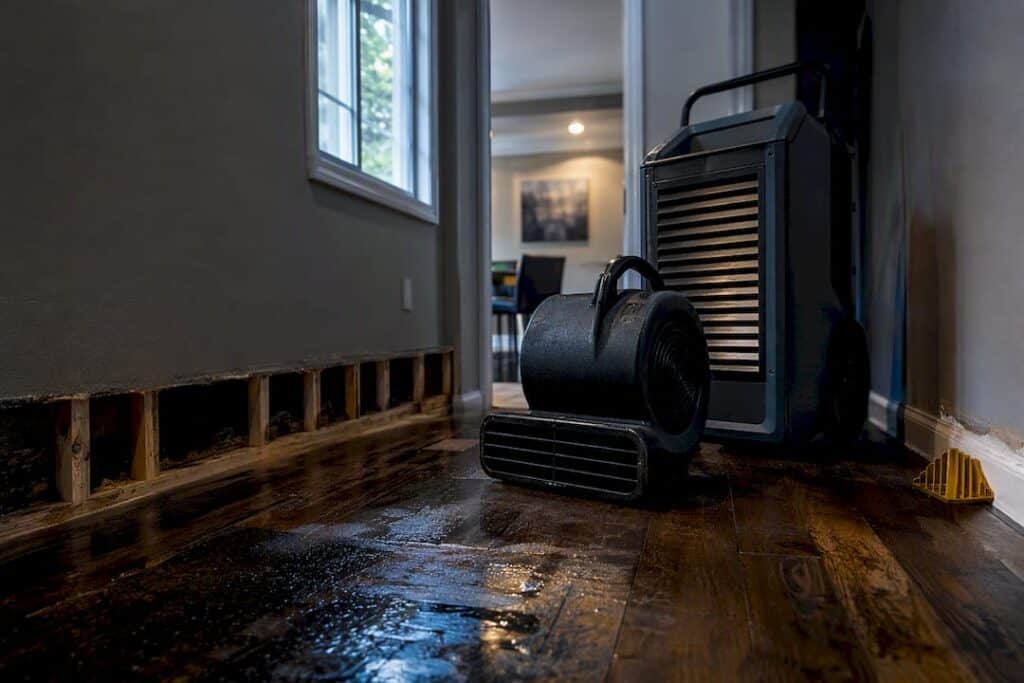
- Place air movers and low grain refrigerant (LGR) dehumidifiers to begin structural drying.
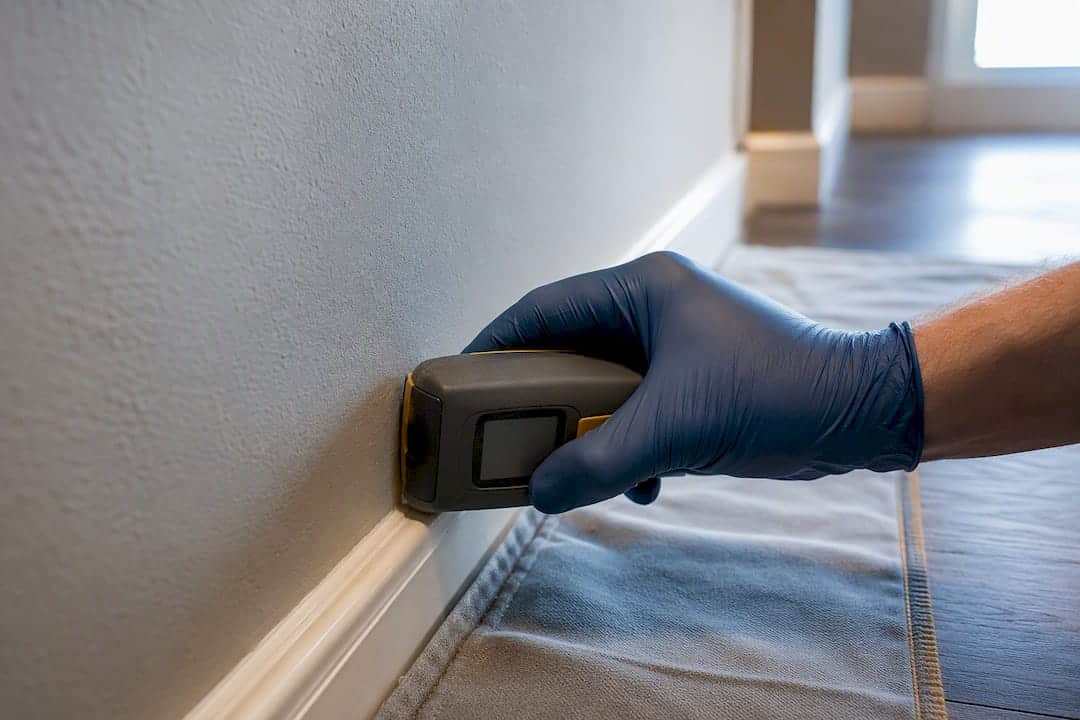
- Document everything with photos, moisture readings, and timestamps for your insurance file.
Notice what’s missing from that list: no drywall replacement, no flooring installation, no painting. That work belongs to restoration, which follows after mitigation and any needed remediation is complete.
The category and class of water involved changes everything about how mitigation crews approach the job. IICRC S500 sorts water into three categories, from clean supply-line water (Category 1) to grossly contaminated sewage or floodwater (Category 3), and four classes based on how much material absorbed the water and how hard it will be to dry.
Pro Tip: Ask your mitigation contractor to give you the category and class assigned to your loss in writing. That single detail determines the drying timeline, the equipment needed, and whether your insurer will require additional testing before rebuilding.
Industry data suggests microbial growth risk rises sharply after roughly 48 to 72 hours of standing moisture. That’s the number that should drive your urgency. A slow response doesn’t just mean more water damage. It means a Category 1 loss can escalate into something that requires full remediation.
What Water Remediation Actually Involves
Remediation is a different job entirely, and it carries a different risk profile. Where mitigation stabilizes, remediation decontaminates. It’s triggered when mitigation alone can’t guarantee a safe, dry structure, typically because mold has already colonized, sewage or gray water was involved, or moisture sat unaddressed long enough to cross that 48 to 72 hour threshold.
Remediation crews handle work that mitigation technicians generally don’t:
- Setting up containment barriers to isolate affected areas from the rest of the home
- Running HEPA air filtration to capture mold spores and airborne contaminants
- Removing and disposing of porous materials that can’t be sanitized, like soaked drywall, insulation, and carpet padding
- Applying antimicrobial treatments to framing and subfloor after demolition
- Conducting post-remediation clearance testing to confirm the space is safe before rebuilding begins
The EPA’s mold remediation guidance scales its recommendations to the size of the affected area, with larger contamination zones (generally above 30 to 100 square feet) calling for more rigorous containment and HEPA filtration protocols. The IICRC S520 standard governs the professional side of mold remediation specifically, covering everything from containment design to worker protection.
Pro Tip: Never let a contractor start reconstruction before you’ve seen a clearance test result, if mold or sewage contamination was part of the loss. Rebuilding over a space that hasn’t been verified dry and clean is one of the most common causes of repeat claims.
Depending on your municipality, remediation work involving demolition or mold abatement above certain thresholds may require permits or a licensed contractor, so it’s worth confirming local rules in Hillsborough County or Pinellas County before work begins.
Mitigation vs Remediation: A Side-by-Side Comparison
Homeowners juggling contractor calls and insurance adjusters benefit from seeing the two phases laid out directly against each other.
| Factor | Water Mitigation | Water Remediation |
|---|---|---|
| Primary goal | Stop water spread, stabilize structure | Remove contamination, restore safety |
| Timing | First 24 to 48 hours | Triggered by contamination or delayed drying |
| Typical actions | Extraction, drying, content protection | Containment, demolition, antimicrobial treatment |
| Who performs it | Mitigation technicians (IICRC WRT certified) | Remediation specialists (IICRC AMRT/mold certified) |
| Insurance impact | Usually covered under standard water damage claim | May require mold or sewage endorsement |
A few scenarios help make the boundary concrete. A burst supply line caught within hours is almost always a mitigation-only job. Groundwater seeping into a Largo basement after heavy rain, sitting for several days before discovery, frequently escalates into remediation because of the category and time elapsed. A sewage backup is Category 3 from the first minute, which means remediation protocols apply immediately alongside mitigation, not after it.
The clearest warning signs that you’ve crossed from mitigation into remediation territory: visible mold growth, a musty odor that persists after drying, water that involved a sewage line, or any loss where drying didn’t begin within two to three days.
The Restoration Timeline: What to Expect Day by Day
Homeowners want to know one thing above all else: how long is this going to take? The honest answer depends on category, class, and how quickly professionals responded, but there’s a predictable rhythm to the process.
- Hour 1 to 24: Source control and water extraction. This is also when your contractor should be documenting moisture readings and photographing every affected surface.
- Day 1 to 3: Structural drying begins with air movers and dehumidifiers running continuously. Daily moisture checks confirm progress.
- Day 3 to 10: For straightforward Class 1 losses, drying often wraps up in 3 to 5 days. Class 4 losses, involving low-permeance materials like hardwood or plaster, can require 10 or more days of specialized drying.
- Before reconstruction: Clearance testing confirms the space meets a documented dry standard. Only after that verification should subfloor replacement or drywall installation begin.
Your contractor should hand you a paper trail at every stage. That includes daily moisture logs, equipment placement records, and dated photos. According to IICRC S500 documentation standards, this record is what separates a smooth insurance approval from a drawn-out dispute.
How Mitigation and Remediation Affect Your Insurance Claim
Insurance adjusters don’t just approve claims on trust. They evaluate the scope of work against documented category and class assignments, and they expect to see the drying logs that prove the work was necessary. Missing documentation is one of the top reasons scopes get cut or challenged, according to industry guidance on S500 compliance.
Several factors drive cost on both sides of the mitigation and remediation split:
- The water category and class assigned at the start of the job
- Total square footage affected, especially if it crosses into multiple rooms
- Number of days equipment needs to run before the space passes drying targets
- Whether demolition of porous materials and lab testing for mold are required
Coverage gets complicated fast. Standard homeowner policies typically exclude gradual, long-term leaks, and many require separate endorsements for mold or sewage backup. Flood damage from rising groundwater or storm surge generally falls under a flood policy, not your standard homeowner policy, which is a distinction that catches a lot of Tampa Bay homeowners off guard during hurricane season.
Pro Tip: Request a signed scope of work and moisture verification report before any rebuilding starts. Adjusters approve claims faster when the paperwork already matches what S500 requires.
How to Choose a Mitigation and Remediation Contractor
Not every contractor who advertises water damage services actually follows the standards that protect you. Use this checklist on your first call.
- Confirm IICRC training. Ask directly whether technicians hold Water Damage Restoration Technician (WRT) certification for mitigation and Applied Microbial Remediation Technician (AMRT) certification for mold work.
- Ask about their equipment inventory. A serious mitigation crew can tell you how many LGR dehumidifiers and air movers they’re bringing and why.
- Request a sample report. A contractor who documents moisture readings and drying progress professionally should be able to show you what that looks like before you sign anything.
- Ask about clearance testing. If mold or sewage is involved, find out whether they coordinate independent clearance testing before reconstruction.
- Discuss insurance experience directly. Ask how many claims they’ve helped document and whether they communicate directly with adjusters.
Watch for red flags: a contractor who skips documentation, pushes to start rebuilding before drying targets are confirmed, or gives you a vague scope with no measurable moisture targets. Any of those should send you looking elsewhere.
Pro Tip: If a contractor seems eager to demo and rebuild before showing you a dry moisture reading, ask your insurer about requesting independent testing. It’s a reasonable request, and a legitimate contractor won’t push back on it.
A Real-World Look at Proper Sequencing
Elite Builder Renovation has worked more than 375 renovation and restoration projects across Tampa Bay, and water damage jobs follow the same disciplined sequence every time.
A typical case looks like this: a second-floor supply line fails in a Tampa home, saturating the ceiling below. Mitigation starts within hours, extraction, drying, and moisture mapping. Days later, monitoring shows the ceiling cavity didn’t dry as expected, and visible mold appears along a joist. That triggers remediation: containment, demolition of the affected drywall section, antimicrobial treatment, and clearance testing before any rebuild starts.
Homeowners should expect a documented moisture log, dated photos at each stage, and a written clearance confirmation before reconstruction begins.
- Extensive renovation and restoration experience
- Satisfaction guarantee backing completed projects
- Financing options to help manage emergency restoration and rebuild costs
Get Emergency Mitigation and Remediation Help Now
Standing water doesn’t wait for business hours, and neither should your response. Elite Builder Renovation handles both sides of this process under one roof: fast emergency mitigation to stop the damage, and full remediation when mold, sewage, or delayed moisture calls for it, followed by the reconstruction to bring your home back.
When you call, expect a technician who assigns a category and class to your loss, sets up drying equipment the same day, and documents moisture readings daily so your insurance file is solid from day one. If remediation is needed, that same team coordinates containment, demolition, and clearance testing before handing the project to reconstruction, whether that means new drywall, flooring, or a full kitchen or bathroom remodel after water damage forced a renovation you weren’t planning on.
Elite Builder Renovation serves homeowners and commercial properties throughout Tampa, St. Petersburg, Clearwater, Largo, and Safety Harbor. If water is actively spreading in your home right now, visit the water damage restoration page for Tampa to request emergency service, or check the Clearwater water damage restoration page if you’re on the Pinellas side. Request a free consultation, and a technician will walk you through documentation, timeline, and insurance coordination from the first call.
Sources
- IICRC
- U.S. Environmental Protection Agency (EPA)
- Trusted Water Damage
- Anajur Construction (IICRC S500 explainer)
FAQ
What Is the Difference Between Mitigation and Remediation?
Mitigation stabilizes a property by stopping water spread and drying the structure. Remediation removes contamination like mold or sewage once testing confirms it’s present.
How Fast Do I Need to Call a Mitigation Company?
Call within hours, not days. Microbial growth risk rises significantly after roughly 48 to 72 hours of standing moisture, which can push a simple mitigation job into full remediation.
Does Homeowners Insurance Cover Both Mitigation and Remediation?
Standard policies typically cover mitigation for sudden water damage, but mold or sewage remediation often requires a separate endorsement. Flood damage from rising water usually falls under a flood policy instead.
How Long Does Water Mitigation Take?
A straightforward Class 1 loss often dries in 3 to 5 days, while a Class 4 loss involving dense materials like hardwood can take 10 or more days of specialized drying.
Does Elite Builder Renovation Handle Both Mitigation and Remediation?
Yes. Elite Builder Renovation manages emergency mitigation, remediation, and the reconstruction that follows for homeowners and commercial properties across Tampa Bay, with pricing available directly through a free consultation.
What Certifications Should a Water Damage Contractor Have?
Look for IICRC Water Damage Restoration Technician (WRT) certification for mitigation and Applied Microbial Remediation Technician (AMRT) certification for mold remediation work.