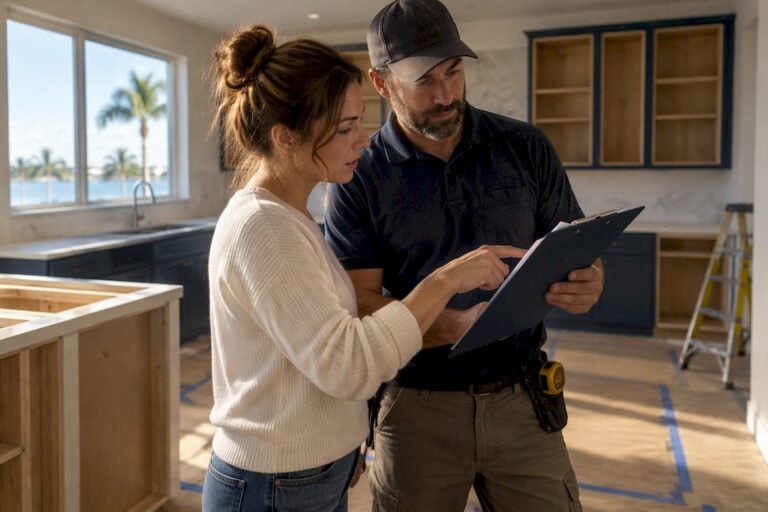


A renovation project manager is the professional responsible for coordinating every aspect of a home or property renovation, from the first planning meeting through the final inspection. The role of project manager in renovation is to protect your investment by keeping the project on budget, on schedule, and aligned with your original vision. For homeowners and property managers in Tampa Bay, understanding this role is the difference between a smooth remodel and a costly, stressful experience. Project managers typically charge a professional fee of 5–10% of the total project cost. That fee is almost always recovered through tighter budget control and fewer expensive mistakes.
What are the key responsibilities of a renovation project manager?
A renovation project manager handles far more than scheduling. Their core responsibilities span pre-construction planning, permit coordination, trade sequencing, budget tracking, and formal change order management. Each task directly protects the homeowner from the most common renovation pitfalls.
Here is what a qualified project manager does throughout your renovation:
- Pre-construction planning and scope definition. The PM documents exactly what work will be done, by whom, and in what order before a single tool is picked up. This prevents scope creep from the start.
- Permit coordination and inspection scheduling. In Pinellas County and Hillsborough County, permit requirements vary by project type and municipality. A PM tracks every permit application, approval, and required inspection so nothing stalls the job.
- Trade sequencing. Framing before electrical, electrical before drywall, drywall before tile. Getting this order wrong forces expensive rework. A PM builds a master schedule with a defined critical path so each trade arrives at the right time.
- Budget monitoring and contingency management. The PM tracks every line item against the approved budget and maintains a contingency fund for unexpected conditions, such as hidden water damage or outdated wiring.
- Change order management. Verbal agreements between homeowners and contractors are the single biggest source of budget overruns. Unmanaged verbal changes commonly inflate budgets by 10–20%. A PM enforces a written change order policy before any additional work begins.
- Quality control. The PM defines a clear “definition of done” for each trade and conducts inspections before sign-off. This prevents substandard work from being covered up by the next phase.
- Single point of contact. Instead of fielding calls from five different subcontractors, you communicate with one person. That PM then coordinates all parties on your behalf.
- Progress documentation. The PM records decisions, approvals, and daily progress. This documentation protects you legally and financially if disputes arise.
Pro Tip: Ask any project manager candidate to show you a sample master schedule and a change order template before you hire them. These two documents reveal whether they run a disciplined operation or a loose one.
How does a renovation project manager differ from a general contractor?

Homeowners frequently assume the general contractor manages the overall project. That assumption is one of the most expensive mistakes in residential renovation. The distinction matters because it determines whose interests are being protected on your job site.
A general contractor’s primary job is construction execution. They hire subcontractors, manage labor, and build the physical work. Their profit comes from a markup on subcontractor costs, typically 15–25% above what those subs charge. That financial structure creates a built-in conflict of interest. A GC who recommends a more expensive subcontractor or a scope addition earns more money from that decision.
A project manager operates under a different financial model. Their fee is fixed as a percentage of the total project cost, so they have no financial incentive to inflate the scope or favor one subcontractor over another. A PM’s loyalty is to your budget and schedule, not to contractor profit margins.
The table below shows the practical differences between the two roles.
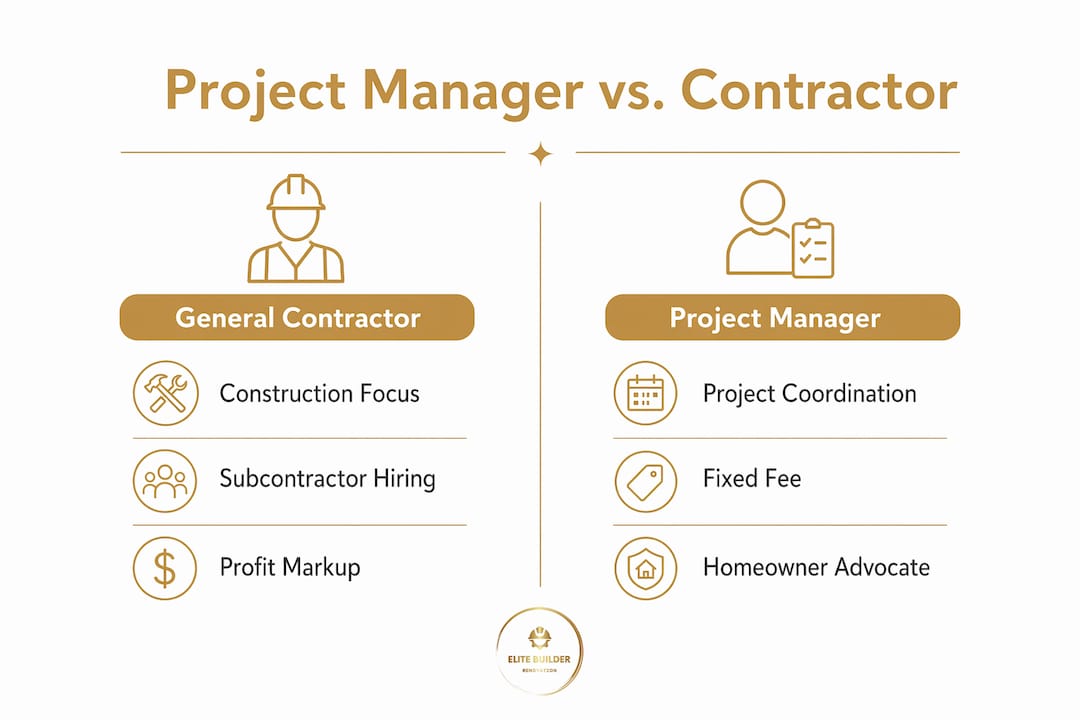
| Factor | General Contractor | Renovation Project Manager |
|---|---|---|
| Primary focus | Construction execution | Owner advocacy and oversight |
| Fee structure | 15–25% markup on subs | 5–10% of total project cost |
| Financial incentive | Higher scope = higher profit | Staying on budget = satisfied client |
| Conflict of interest | Present | Minimized |
| Permit and inspection oversight | Varies | Core responsibility |
| Communication to owner | Periodic | Structured and consistent |
In Tampa Bay, where permitting complexity across Clearwater, St. Petersburg, and Tampa can add weeks to a project timeline, having an independent PM who focuses entirely on coordination and compliance is a measurable advantage. You can learn more about types of renovation contractors and how their roles differ before making any hiring decisions.
Pro Tip: A project manager working as your owner’s representative should never also be swinging a hammer on your job. The moment a PM takes on construction tasks, their independent oversight is compromised.
When should you hire a renovation project manager?
Not every renovation requires a dedicated project manager. A single-trade bathroom refresh in Largo is manageable with a reliable contractor and clear communication. But certain project conditions make professional project management not just helpful, but necessary.
-
Large or multi-trade projects. Any renovation involving three or more subcontractor trades, such as plumbing, electrical, HVAC, and finish carpentry, creates coordination complexity that most homeowners cannot manage effectively on their own.
-
Occupied homes. Renovating while living in the property adds pressure on scheduling, dust containment, and daily communication. A PM manages these logistics so your household is disrupted as little as possible.
-
Tight deadlines. If you have a lease ending, a property sale pending, or a tenant move-in date, delays are not just inconvenient. They are financially damaging. A PM builds schedule buffers and enforces milestone dates.
-
Limited construction knowledge. Most homeowners cannot evaluate whether a subcontractor’s work meets code or quality standards. A PM provides that technical oversight on your behalf.
-
Limited time. Managing a renovation is effectively a part-time job. If you cannot dedicate several hours per week to site visits, calls, and decision-making, a PM fills that gap. Strong project management delivers the highest return for custom builds, multi-contractor projects, and time-constrained owners.
-
Complex permitting jurisdictions. Hillsborough County and Pinellas County each have distinct permitting requirements. A PM who knows local building departments in Tampa, Clearwater, and Safety Harbor can prevent permit delays that commonly add weeks to a project.
-
Budget sensitivity. If you have a firm budget ceiling with little flexibility, a PM’s financial oversight is your best protection against cost overruns.
Reviewing home renovation best practices before your project begins helps you identify which of these conditions apply to your situation.
What practical benefits does a renovation project manager bring to Tampa Bay projects?
The benefits of professional project management in home renovation show up in three areas: financial control, schedule discipline, and stress reduction. Each one has a direct impact on your experience and your property’s value.
Financial control is the most measurable benefit. A PM controls scope creep by requiring written approval for every change. They monitor the budget weekly and flag variances before they compound. They also manage procurement timing to prevent material delays that force subcontractors to sit idle and charge waiting time.
Schedule discipline comes from the PM’s master schedule and trade sequencing plan. When the electrician finishes rough-in on time, the drywall crew can start as scheduled. When the drywall is done, the tile setter is already booked. This chain of coordination is what separates a six-week renovation from a four-month one. A PM controls scope, budget, trade sequencing, and procurement to protect your return on investment throughout the project.
Stress reduction is harder to quantify but equally real. Most renovation conflicts come from communication failures. A PM acts as your single point of contact, providing consistent updates and filtering the noise so you are not fielding calls from subcontractors at 7:00 AM.
“Communication clarity is often the biggest factor in renovation success. A project manager acts as the single point of contact to reduce homeowner stress and avoid delays that stem from miscommunication between trades.”
Additional benefits specific to Tampa Bay renovations include:
- Faster permit approvals through established relationships with local building departments in Tampa, St. Petersburg, and Clearwater
- Punch-list management at project close, ensuring every incomplete or deficient item is corrected before final payment
- Risk identification during the planning phase, particularly for older homes in Pinellas County where moisture damage and outdated electrical panels are common discoveries
Understanding the phases of a home renovation helps you see exactly where a project manager adds value at each stage.
Elite Builder Renovation: project management built into every project
Elite Builder Renovation has completed over 375 renovation projects across Tampa Bay, including full home remodels, kitchen renovations, and bathroom remodels in Tampa Bay. Every project includes structured oversight from initial consultation through final walkthrough, so homeowners in Tampa, St. Petersburg, and Clearwater get the coordination and communication that professional project management delivers. The team handles permit coordination, trade scheduling, and budget tracking as part of the standard process. Read what past clients say about the experience on the remodeling reviews page, and reach out to discuss your project with a team that has managed the full range of Tampa Bay renovation challenges.
Key Takeaways
A renovation project manager is the homeowner’s advocate, controlling budget, schedule, trade coordination, and communication to protect your investment from start to finish.
| Point | Details |
|---|---|
| PM fee vs. GC markup | PMs charge 5–10% of project cost; GCs add 15–25% markup on subcontractor costs. |
| Written change orders | Enforcing written approvals prevents the 10–20% budget inflation common in unmanaged renovations. |
| Single point of contact | A PM filters all contractor communication so homeowners receive consistent, clear updates. |
| When to hire a PM | Multi-trade projects, occupied homes, tight deadlines, and complex permitting all justify hiring a PM. |
| Independent oversight | A PM’s financial alignment is with the homeowner, not the contractor, removing conflicts of interest. |
FAQ
What does a renovation project manager do?
A renovation project manager plans, coordinates, and oversees every phase of a renovation project, including permits, trade scheduling, budget tracking, and change order management. Their primary role is to protect the homeowner’s interests throughout the construction process.
How much does a renovation project manager cost?
Project managers typically charge a fee of 5–10% of the total project cost. This fee is often offset by the budget savings achieved through tighter cost control and fewer costly mistakes.
What is the difference between a project manager and a general contractor?
A general contractor focuses on construction execution and earns profit through subcontractor markups. A project manager focuses on owner advocacy, budget control, and overall coordination, with no financial incentive to inflate the project scope.
Do I need a project manager for a small renovation?
Single-trade projects with a straightforward scope generally do not require a dedicated PM. However, any renovation involving multiple contractors, complex permitting, or a firm budget ceiling benefits significantly from professional project management oversight.
How does a project manager handle permits in Tampa Bay?
A PM tracks every permit application, coordinates required inspections with local building departments in Hillsborough County and Pinellas County, and ensures all work meets current code requirements before each phase is closed out.