


Home renovation contractors fall into five distinct categories: sole proprietors, specialty trade contractors, general contractors, design-build firms, and custom home builders. Knowing the types of contractors for home projects before you hire protects your budget, your timeline, and your home’s structural integrity. The California Contractors State License Board (CSLB) oversees more than 40 specialty license categories, and the National Electrical Code sets binding standards for electrical work. Matching the right contractor to your project scope is the single most important hiring decision you will make.
1. What types of contractors handle home projects?
Home renovation contractors are defined by their role in a project, not just their trade. Five major categories cover nearly every residential job: sole proprietors, specialty trade contractors, general contractors, design-build firms, and custom home builders. Each category carries different licensing requirements, liability exposure, and coordination responsibilities. Understanding these distinctions before you sign a contract prevents costly mistakes.

2. General contractors: the project managers of home renovation
A general contractor (GC) holds the prime contract with you and manages every other trade on the job. They pull permits, coordinate inspections, and assume overall liability for the project. That single point of accountability is the core reason homeowners hire them for complex work.
State regulations in most jurisdictions require a licensed GC when two or more unrelated trades are involved in a project. A kitchen remodel touching electrical, plumbing, and carpentry qualifies. A GC handles the sequencing so your electrician does not show up before the framing is done.
You can learn more about the full scope of this role in Elitebuilderrenovation’s breakdown of what a GC does.
Key responsibilities a GC handles on your behalf:
-
Pulling building permits and scheduling inspections
-
Hiring, vetting, and paying specialty subcontractors
-
Managing the project schedule and trade sequencing
-
Carrying general liability insurance and workers’ compensation
-
Serving as your single point of contact for all project issues
Pro Tip: Ask your GC whether they conduct a pre-construction site walk, sometimes called a Trade Day, where all subcontractors walk the job before final pricing. This practice reduces costly change orders by 10–20% and is a reliable sign of a professional operation.
3. Specialty trade contractors: licensed experts for specific systems
Specialty trade contractors focus on one defined discipline, such as electrical, plumbing, HVAC, roofing, or masonry. They hold trade-specific licenses and operate under codes like the National Electrical Code or local plumbing standards. Their depth of knowledge in a single system exceeds what a generalist can offer.
These contractors work in two ways. They work directly for you on a standalone project, or they work as subcontractors under a GC on a larger job. A licensed electrician rewiring a garage can work directly for you. That same electrician on a full kitchen remodel typically works under a GC who coordinates the broader schedule.
The CSLB alone classifies over 40 specialty license categories with defined codes and safety standards. That number reflects how specialized residential construction has become.
Common specialty trades and their typical project scope:
-
Licensed electricians handle panel upgrades, outlet additions, lighting installation, and code compliance inspections.
-
Plumbers manage pipe replacement, fixture installation, water heater work, and drain systems.
-
HVAC technicians install and service heating, ventilation, and air conditioning systems.
-
Roofing contractors replace or repair shingles, underlayment, flashing, and gutters.
-
Masons work with brick, block, stone, and concrete for structural and decorative applications.
-
Tile and flooring specialists handle surface installation requiring precision layout and waterproofing.
Every specialty contractor working on permitted work must schedule inspections. Skipping that step creates code compliance problems when you sell the home.
4. Sole proprietors and handymen: the right fit for small repairs
Handymen and sole proprietors are the right choice for minor repairs and cosmetic updates. They typically handle jobs under $1,000 and operate without the extensive licensing that specialty or general contractors carry. Their lower overhead translates to lower rates for straightforward work.
The limitation is real and legally significant. A handyman cannot legally perform structural work, electrical panel changes, plumbing rough-in, or any task requiring a trade license in most states. Hiring one for complex work risks failed inspections and voided homeowner’s insurance claims.
Tasks where a handyman adds genuine value:
-
Patching drywall and painting interior rooms
-
Replacing door hardware, light fixtures, and faucets
-
Caulking, weatherstripping, and minor carpentry repairs
-
Assembling furniture or installing shelving
-
Pressure washing and basic exterior maintenance
Tasks that require a licensed contractor instead:
-
Any structural modification, including wall removal
-
Electrical work beyond simple fixture swaps
-
Plumbing beyond basic fixture replacement
-
Roofing repairs on permitted structures
-
Any project requiring a building permit
Pro Tip: Before hiring anyone for home work in Florida, verify their license status through the Florida Department of Business and Professional Regulation (DBPR) online database. Elitebuilderrenovation’s guide on Florida remodeling licenses explains exactly what the state requires.
5. Design-build firms: integrated design and construction
Design-build firms combine architectural design and construction services under one contract and one team. You work with a single point of contact from the first sketch through the final walkthrough. That integration eliminates the need to separately hire an architect and then find a builder who will honor that architect’s plans.
The practical benefit is tighter budget control. When the designer and builder work for the same firm, design decisions account for real construction costs in real time. Scope creep is easier to catch before it becomes a change order.
The trade-off is cost. Design-build firms command a premium due to higher overhead, but that premium often pays for itself through fewer surprises and faster project delivery.
| Feature | Traditional GC + Architect | Design-Build Firm |
|---|---|---|
| Single point of contact | No | Yes |
| Integrated budget control | Limited | Strong |
| Design flexibility | High | Moderate |
| Typical project cost | Variable | Higher upfront |
| Communication complexity | Higher | Lower |
Design-build works best for full home renovations, additions, and projects where the design phase is as complex as the construction phase. For a bathroom tile replacement, it is more structure than you need.
6. Custom home builders: coordinating new construction from the ground up
Custom home builders specialize in new construction rather than renovation. They function similarly to general contractors but operate at a scale that involves coordinating roughly 22 subcontractors across a single project. Site work, foundation, framing, mechanical systems, finishes, and landscaping all require separate trades working in a precise sequence.
For property investors building from scratch or adding an accessory dwelling unit (ADU), a custom builder is the correct hire. They understand zoning, setbacks, and local building department relationships in ways that renovation-focused GCs may not. Their process is built around new construction timelines, not remodel workflows.
Elitebuilderrenovation’s full home remodeling services in Tampa serve homeowners who need that level of comprehensive coordination without hiring a custom builder for a renovation project.
7. How to decide which contractor type fits your project
Choosing the right contractor starts with defining your project scope clearly. Vetting contractors by project type — kitchens versus full gut remodels, for example — produces better outcomes than hiring based on price alone. A contractor experienced in bathroom tile work is not automatically qualified for a structural addition.
A practical decision framework:
-
Single trade, no permits required: Hire a licensed specialty contractor directly.
-
Single trade, permits required: Hire a licensed specialty contractor and confirm they pull their own permits.
-
Two or more trades involved: Hire a licensed general contractor to coordinate the work.
-
Full renovation with design complexity: Consider a design-build firm for integrated planning and execution.
-
New construction or ADU: Hire a custom home builder with local zoning experience.
-
Minor repairs under $1,000: A vetted handyman is appropriate.
License verification is non-negotiable regardless of contractor type. Elitebuilderrenovation’s guide on choosing a remodeling contractor walks through the full vetting process, including what to ask before signing any contract.
The most common homeowner mistake is managing multiple specialty contractors without a GC, which leads to scheduling conflicts, cost overruns, and delays. Coordination is a full-time job during a renovation. If you are not prepared to do it yourself, hire someone who is.
Key takeaways
Hiring the right contractor type is the most consequential decision in any home renovation, and it depends entirely on project scope, trade complexity, and coordination needs.
| Point | Details |
|---|---|
| Match contractor to project scope | Single-trade jobs need a specialist; multi-trade jobs need a licensed GC. |
| GCs manage liability and permits | A GC assumes overall responsibility, pulls permits, and coordinates all trades. |
| Handymen have legal limits | Handymen cannot legally perform structural, electrical, or permitted work in most states. |
| Design-build reduces surprises | Integrated firms control budget and design together, reducing costly mid-project changes. |
| Always verify licenses | Check every contractor’s license through your state’s licensing board before signing. |
What I’ve learned after watching hundreds of renovations go wrong
The most expensive lesson homeowners learn is that coordination is not free. When you hire four specialty contractors separately and try to manage the schedule yourself, you are doing a GC’s job without a GC’s experience or leverage. Subcontractors prioritize clients who give them steady work. A homeowner with one bathroom project is not that client.
I have seen projects where a homeowner saved $8,000 by skipping a GC, only to spend $15,000 fixing sequencing errors, water damage from an uncoordinated plumbing and tile installation, and failed inspections. The math rarely works in favor of self-coordination on projects above a single trade.
The other pattern worth naming: homeowners who define their project scope in writing before the first contractor conversation get better bids, better timelines, and fewer disputes. A contractor who knows exactly what you want can price it accurately. One who is guessing will pad the estimate or miss something critical.
Design-build firms get a reputation for being expensive, and they are. But on a complex project, the premium is often the cost of not having two professionals argue about whose drawing is correct while your project sits idle. Single-point accountability has real dollar value.
Elite Builder Renovation: experienced renovation coordination in Tampa Bay
Elite Builder Renovation has completed over 375 home renovation projects across Tampa Bay, managing the full contractor coordination process so homeowners do not have to. Their team handles kitchen remodels, bathroom renovations, water damage restoration, and full home renovations with a 100% satisfaction guarantee.
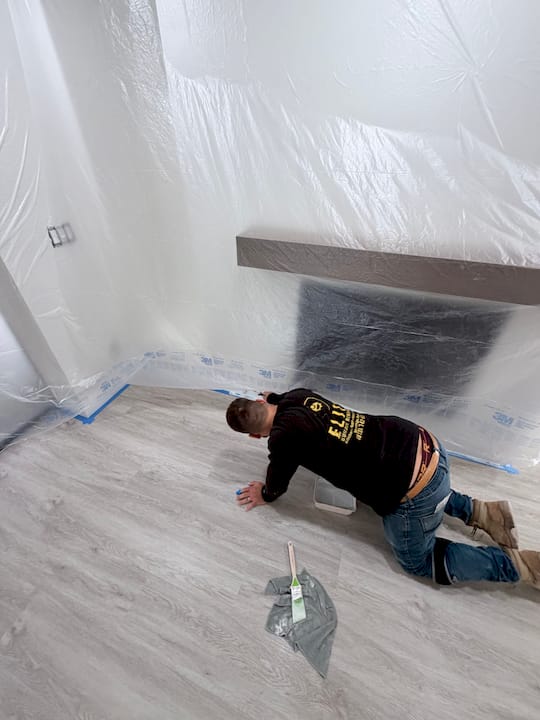
Whether you need a kitchen remodel in Tampa or a complete home renovation in Clearwater, Elite Builder Renovation manages every trade, every permit, and every inspection under one accountable team. Financing options are available to make the process accessible regardless of budget. Read what past clients say about their experience on the remodeling reviews page and request your estimate today.
FAQ
What is the difference between a GC and a specialty contractor?
A general contractor manages the entire project, coordinates all trades, and holds the prime contract. A specialty contractor focuses on one trade, such as electrical or plumbing, and often works as a subcontractor under the GC.
When do I need a general contractor for a home project?
Most states require a licensed GC when two or more unrelated trades are involved. Any project touching electrical, plumbing, and carpentry together qualifies.
Can a handyman do permitted work on my home?
No. Handymen legally handle minor repairs and cosmetic updates but cannot perform structural, electrical, or plumbing work that requires a trade license or building permit.
What does a design-build firm do differently than a GC?
A design-build firm combines architectural design and construction under one contract, giving you a single point of contact and integrated budget control from day one. A GC builds to plans created by a separately hired architect.
How do I verify a contractor’s license before hiring?
Check your state’s contractor licensing board online. In Florida, the DBPR maintains a public database where you can confirm any contractor’s license status, insurance, and complaint history before signing a contract.