

A home needing renovation, commonly called a fixer-upper, is a property priced below market value due to required repairs, giving buyers a real opportunity to build equity through planned improvements. For first-time buyers priced out of turnkey listings and investors focused on returns, understanding why buy a home needing renovation is the first step toward a sound purchase decision. The gap between a fixer-upper’s purchase price and its post-renovation value is where the financial case lives. Getting that math right separates a profitable project from a costly mistake.
What are the benefits of buying a home needing renovation?
Lower purchase price is the most direct benefit of buying a fixer-upper. Redfin explains that fixer-uppers sell for less because most buyers prefer move-in ready homes, which reduces competition and gives serious buyers more negotiating room. That reduced competition is especially valuable in tight markets like Tampa Bay, where turnkey inventory moves fast and bidding wars are common.
Beyond price, buying a renovation project gives you creative control that a move-in ready home simply cannot offer. Redfin highlights that buyers who renovate can personalize layouts, preserve historic character, and choose finishes that match their lifestyle rather than inheriting someone else’s choices. That level of customization often produces a home that fits the owner better than anything available on the open market.

The equity upside is the third major advantage. When you buy below market and renovate well, the gap between your all-in cost and the home’s after-repair value becomes your built-in equity. Buyers who choose cosmetic fixer-uppers in established neighborhoods can also access price points that would otherwise be out of reach, getting into a better school district or a stronger resale market without paying full price.
Key benefits at a glance:
- Lower purchase price with less buyer competition
- Creative freedom to design the home to your specifications
- Equity building through renovation and market appreciation
- Neighborhood access at a price below fully renovated comparables
- Reduced bidding pressure compared to turnkey listings
Pro Tip: Target cosmetic fixer-uppers with solid structural integrity. Homes that need paint, flooring, and kitchen updates carry far less financial risk than properties with foundation, roof, or plumbing failures.
What are the common challenges and risks when buying a home needing renovation?
Renovation projects almost always cost more and take longer than buyers expect. Redfin and Realtor.com both caution that delays and budget overruns are the norm, not the exception, and that buyers who underestimate this reality face serious financial and personal stress. Living through an active construction project, or paying rent while your new home is being renovated, adds real costs that rarely appear in initial budgets.
Hidden defects are the biggest financial wildcard in any fixer-upper purchase. Problems behind walls, under floors, or inside electrical panels are invisible during a standard walkthrough. Water damage, outdated wiring, and compromised structural elements can each add tens of thousands of dollars to a renovation budget after closing.
Common risks to plan for:
- Budget overruns from hidden defects and material cost changes
- Timeline delays caused by contractor availability, permit approvals, or supply chain issues
- Personal stress from living in or near an active construction zone
- Scope creep when one repair reveals additional problems
- Contractor management challenges for buyers without construction experience
Pro Tip: Before making an offer, hire a licensed home inspector and, if the property is older, a specialist for electrical, plumbing, and roof assessments. The cost of these inspections is small compared to the surprises they prevent.
The decision between a fixer-upper and a move-in ready home is fundamentally about how much uncertainty you can manage. Buyers who go in with realistic expectations, a contingency budget, and a clear scope of work are far better positioned than those who rely on optimistic estimates.
How to evaluate the financial feasibility of a fixer-upper purchase
Financial feasibility starts with one calculation: total all-in cost versus After Repair Value (ARV). Realtor.com advises framing the budget as a math problem where purchase price plus renovation cost plus a 20% contingency must be measured against the home’s ARV. If your all-in cost exceeds the ARV by more than 10–15%, the deal does not pencil out.
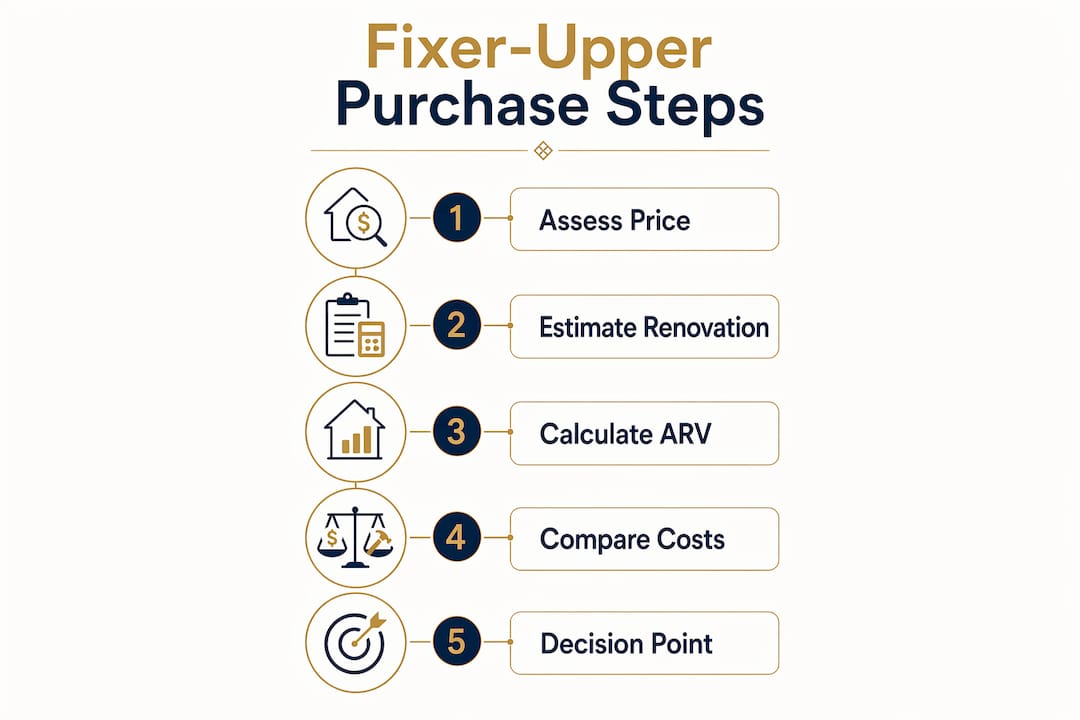
ARV is calculated from comparable recently renovated homes in the same neighborhood. Accurate ARV projection requires matching your planned renovation scope to those comparable sales. A kitchen remodel adds different value than a full gut renovation, and your ARV estimate must reflect the specific work you plan to do.
A practical evaluation framework:
- Get a purchase price from the listing or negotiation.
- Build a scope-based renovation budget using itemized line items, not rough estimates.
- Add a 20% contingency to your renovation budget for unexpected costs.
- Calculate ARV using recent sales of renovated comparable homes nearby.
- Compare all-in cost to ARV. Your total should sit within 10–15% of ARV to protect your equity position.
Fixer-upper vs. move-in ready: a financial comparison
| Factor | Fixer-upper | Move-in ready |
|---|---|---|
| Purchase price | Below market | At or above market |
| Upfront renovation cost | Significant | Minimal |
| Buyer competition | Lower | Higher |
| Customization potential | High | Low |
| Equity upside | Strong if managed well | Limited at purchase |
| Financial uncertainty | Higher | Lower |
Scope-based budgeting tools produce far more reliable estimates than guesswork. Investors who skip this step routinely over-budget on low-value upgrades or under-budget on structural repairs, both of which erode returns. Reviewing Florida kitchen renovation costs before you build your budget gives you a realistic baseline for one of the most common and highest-impact renovation categories.
What renovation financing options exist for buyers of homes needing renovation?
Two loan programs dominate renovation financing for fixer-upper buyers: the FHA 203(k) loan and the Fannie Mae HomeStyle Renovation loan. Both bundle purchase and renovation costs into a single mortgage, which simplifies funding and avoids the need for a separate construction loan.
FHA 203(k) loans combine the purchase price and approved renovation costs into one mortgage with structured draw schedules. They require a HUD-approved consultant who documents the renovation scope, verifies work at each stage, and approves fund releases. This adds paperwork but also adds a layer of oversight that protects both the buyer and the lender.
Fannie Mae HomeStyle Renovation loans cap renovation costs at 75% of the appraised or purchase-plus-renovation value. They allow a broader range of renovation types than FHA 203(k) loans, including luxury upgrades, but carry stricter rules on DIY work and contractor qualifications.
FHA 203(k) vs. HomeStyle Renovation: key differences
| Feature | FHA 203(k) | HomeStyle Renovation |
|---|---|---|
| Loan backer | FHA / HUD | Fannie Mae |
| Credit requirements | More flexible | Stricter |
| Renovation cost cap | Based on project scope | 75% of appraised value |
| DIY allowance | Limited | Allowed with restrictions |
| Completion timeline | Defined by HUD consultant | 15-month window enforced by lender |
| Luxury upgrades | Not permitted | Permitted |
Key requirements for both programs:
- Detailed, scope-based renovation plans submitted at application
- Licensed contractors with verifiable credentials
- Lender inspections at defined project milestones
- Adherence to draw schedules tied to completed work
For buyers in Tampa Bay exploring remodel financing options, understanding which loan program fits your renovation scope and credit profile is a critical early step.
How to manage renovation projects effectively after buying
A thorough home inspection before closing is the single most important step in managing a fixer-upper project. Inspections reveal the true scope of work and prevent the most common source of budget overruns: surprises discovered after you own the property. For older homes, add specialist inspections for roofing, electrical panels, and plumbing systems.
Phased renovations are a proven way to control costs and reduce disruption. Tackling structural and systems work first, then cosmetic upgrades, keeps the project logical and prevents finishing work from being damaged by later structural repairs. Buyers who try to do everything at once typically face higher costs and longer timelines.
Effective project management practices:
- Hire licensed, insured contractors with verifiable references and local experience.
- Set a written scope of work before any contractor quotes the job.
- Build a contingency of at least 20% into your renovation budget.
- Track progress against a timeline and address delays before they compound.
- Avoid scope creep by approving any changes to the original plan in writing.
Pro Tip: Reviewing common bathroom remodel mistakes before your project starts can save you weeks of delays and thousands in rework costs. The same principles apply to any renovation category.
Realistic expectations protect both your budget and your wellbeing. Renovation projects that run on schedule and on budget are the result of detailed planning, not luck. Buyers who prepare their home for renovation before work begins consistently report smoother projects and fewer costly surprises.
Key takeaways
Buying a home needing renovation delivers the strongest financial results when buyers combine a below-market purchase price with accurate ARV modeling, a scope-based budget, and a realistic contingency.
| Point | Details |
|---|---|
| Lower price and less competition | Fixer-uppers sell below market, giving buyers more negotiating power and less bidding pressure. |
| ARV drives the investment case | Your all-in cost should stay within 10–15% of the after-repair value to protect equity. |
| Budget for overruns | Add a 20% contingency to every renovation budget to cover hidden defects and delays. |
| Financing options exist | FHA 203(k) and Fannie Mae HomeStyle loans bundle purchase and renovation costs into one mortgage. |
| Inspection before closing | A thorough pre-purchase inspection is the most effective way to prevent costly post-closing surprises. |
The honest case for buying a fixer-upper
The buyers who succeed with fixer-uppers are not the ones who find the cheapest property. They are the ones who do the math before they fall in love with a house. I have seen buyers walk away from deals that looked attractive on paper because the ARV did not support the renovation cost. That discipline is what separates a profitable project from a financial drain.
The fixer-upper vs. move-in ready decision is really a question of how much uncertainty you are willing to manage. Long-term owners who plan to stay for a decade or more can absorb delays and cost overruns because they have time to recoup. Investors need the numbers to work from day one, which means tighter ARV modeling and stricter contingency discipline.
One thing most buyers overlook is the value of a cosmetic fixer-upper with good bones. A property that needs paint, flooring, and updated fixtures carries a fraction of the risk of a full gut renovation. For first-time buyers especially, starting with a cosmetic project builds confidence and construction literacy without the exposure of a structural overhaul.
The buyers I respect most are the ones who get a full inspection, build a real budget, and then decide. That process takes longer than a gut-feeling offer, but it produces far better outcomes. A fixer-upper bought with clear eyes and a solid plan is one of the most reliable ways to build wealth through real estate.
How Elite Builder Renovation helps buyers transform fixer-uppers in Tampa Bay
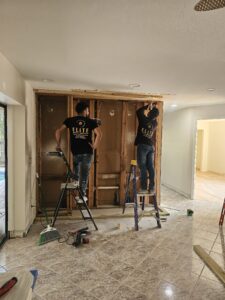
Elite Builder Renovation has completed over 375 renovation projects across the Tampa Bay area, giving buyers a proven partner for the full scope of fixer-upper work. From kitchen and bathroom remodels to water damage restoration and full home renovations, the team manages every stage from initial consultation through project completion.
Buyers who want to understand what a renovation will realistically cost and how long it will take can start by reading verified client reviews from completed Tampa Bay projects. For buyers ready to move forward, Elite Builder Renovation offers a 100% satisfaction guarantee and financing options that make the renovation process financially accessible. Contact the team for a consultation on your full home remodeling project in Tampa and get a clear plan before you commit to a purchase.
FAQ
What is a fixer-upper home?
A fixer-upper is a property priced below market value because it requires repairs or renovations. Buyers purchase it at a discount and add value through planned improvements.
Is buying a home needing renovation a good investment?
It can be, provided your all-in cost stays within 10–15% of the after-repair value. The investment case depends on accurate ARV modeling and a realistic renovation budget with a contingency.
What financing is available for fixer-upper buyers?
FHA 203(k) loans and Fannie Mae HomeStyle Renovation loans both bundle purchase and renovation costs into a single mortgage. Each program has different credit requirements, renovation cost caps, and completion timelines.
How much contingency should I budget for a renovation?
Realtor.com recommends a 20% contingency on top of your renovation budget. This buffer covers hidden defects, material price changes, and contractor delays that are common in renovation projects.
What should I inspect before buying a fixer-upper?
Commission a full home inspection plus specialist assessments for roofing, electrical, and plumbing systems. These inspections reveal the true scope of work and prevent costly surprises after closing.
Recommended
- Prepare Home For Renovation: A Practical Planning Guide – Elite Builder Renovation
- Phased Home Renovation Guide for Homeowners – Elite Builder Renovation
- Full Home Renovation Checklist For Stress-Free Remodeling – Elite Builder Renovation
- Eco Friendly Renovation Materials Guide – Elite Builder Renovation