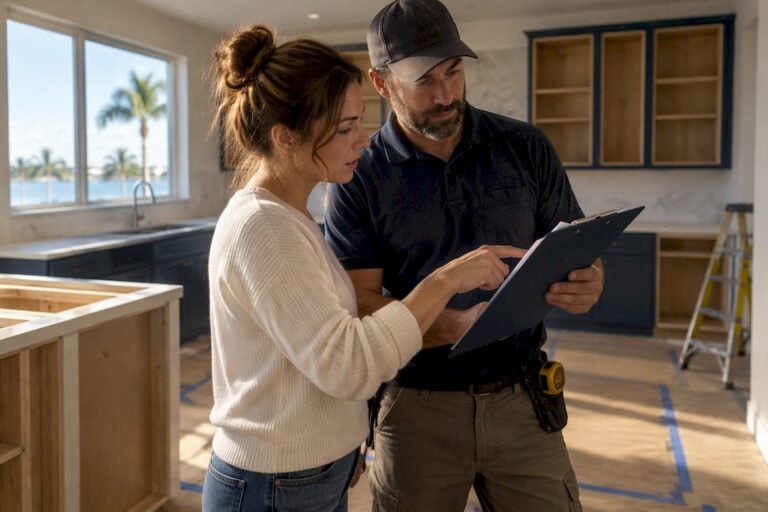


Subcontractors are defined as licensed trade specialists hired by a general contractor to complete specific scopes of work within a remodeling project. The role of subcontractors in remodeling is to deliver focused expertise in areas like electrical, plumbing, tile work, and drywall that no single general contractor can fully replicate alone. Their specialized knowledge reduces costly errors and rework, which directly protects your budget and timeline. Understanding how subcontractors fit into your project gives you the clarity to ask better questions, set realistic expectations, and choose the right team from the start.
What roles do subcontractors play in remodeling projects?
A subcontractor is a trade professional who works under a general contractor’s (GC’s) direction to complete a defined portion of a remodeling project. The industry term for this arrangement is “subcontracting,” and it is the standard delivery model for residential construction across the United States. You will not typically interact with subcontractors directly. They receive their scope, schedule, and payment through the GC.
The trades most commonly subcontracted in home renovation include:
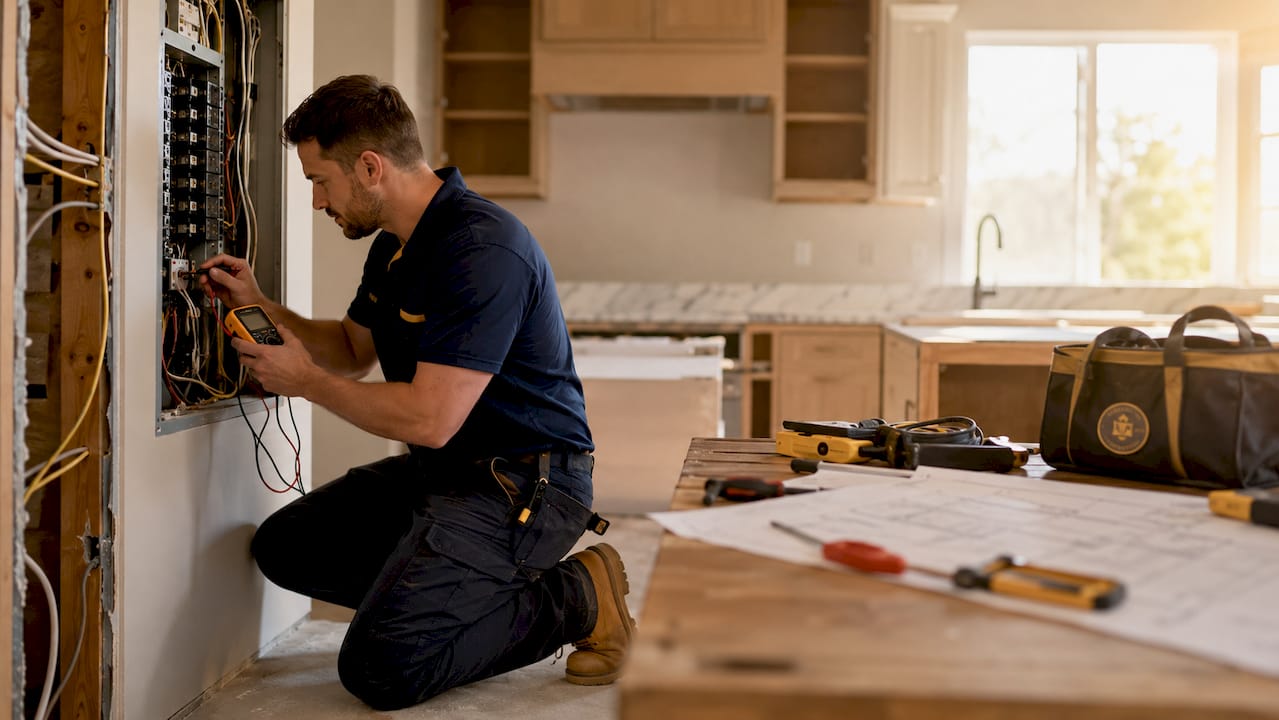
- Electrical: Licensed electricians handle panel upgrades, outlet placement, and code-compliant wiring.
- Plumbing: Plumbers manage pipe rerouting, fixture installation, and water supply connections.
- HVAC: Heating and cooling specialists install ductwork, vents, and equipment.
- Tile and flooring: Tile setters and flooring installers handle surface finishes that require precision and material knowledge.
- Drywall: Drywall crews hang, tape, and finish walls to prepare surfaces for paint or tile.
- Roofing and framing: Structural trades address load-bearing changes and exterior envelope work.
Each subcontractor carries their own license and insurance for their specific trade. That licensing is not optional. State and local building codes require licensed professionals for electrical, plumbing, and HVAC work. Unlicensed work fails inspections, voids homeowner insurance, and creates liability that falls directly on you.
Pro Tip: Before your GC brings a subcontractor on site, ask for proof of their trade license and a certificate of insurance. A reputable GC provides this without hesitation.
Subcontractors are also responsible for meeting local code compliance within their scope. An electrician, for example, must pull the correct permits and pass rough-in inspections before walls close. This accountability structure is what makes the subcontracting model reliable for homeowners.
How do subcontractors and general contractors collaborate for project success?
The general contractor is the legal and operational hub of every remodeling project. General contractors assume full legal responsibility for the project, which shields you from direct liability if a subcontractor causes damage or violates a code. That legal umbrella is one of the most underappreciated benefits of hiring a GC rather than managing trades yourself.
The GC coordinates subcontractors through written contracts, scheduled site meetings, and sequenced work orders. Sequencing matters more than most homeowners realize. Framing must be complete before electrical rough-in. Electrical rough-in must pass inspection before drywall. Drywall must be finished before tile or cabinetry. A single scheduling error cascades into days or weeks of delay.
Responsibilities: general contractor vs. subcontractor
| Responsibility | General contractor | Subcontractor |
|---|---|---|
| Legal project accountability | Yes | No |
| Permit pulling (overall) | Yes | Trade-specific permits |
| Scheduling all trades | Yes | No |
| Executing trade scope | No | Yes |
| Code compliance (trade scope) | Oversight | Direct responsibility |
| Homeowner communication | Primary point of contact | Rarely direct |
| Payment management | Pays subcontractors | Receives payment from GC |
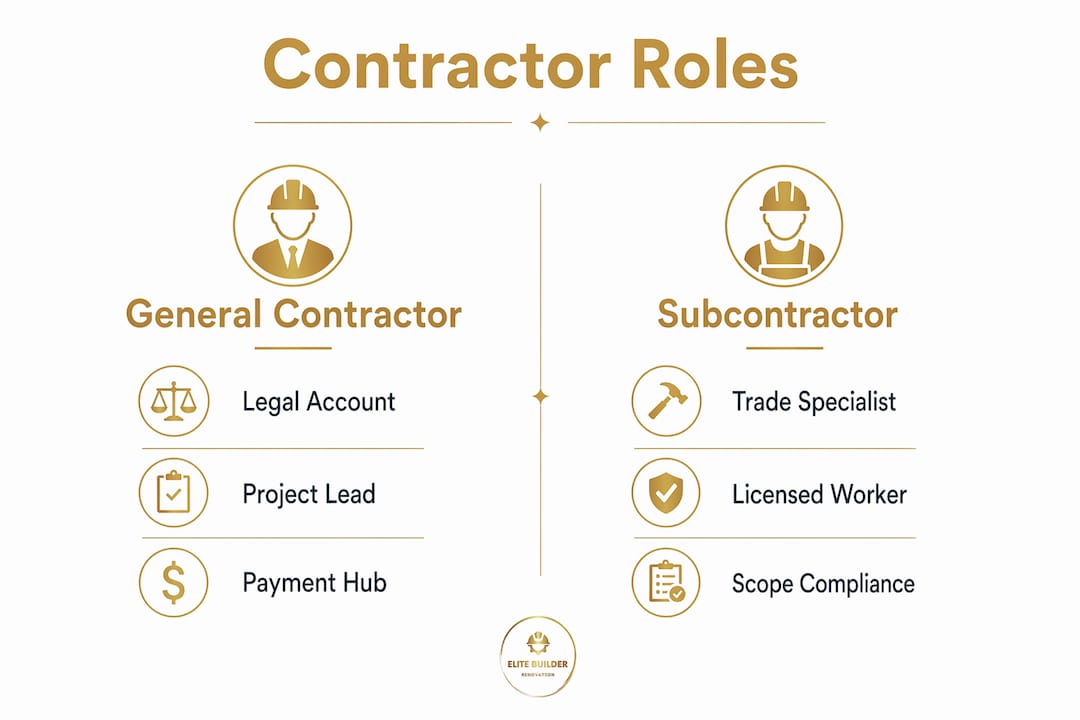
Payment flow is a critical part of this relationship. The GC collects payments from you and distributes them to subcontractors based on completed milestones. Quality GC-subcontractor relationships improve subcontractor availability and give your project scheduling priority over other jobs. When a GC pays on time and runs an organized site, subcontractors return calls faster and show up when scheduled.
Coordination and communication between subcontractors and the GC are critical to avoiding scheduling conflicts and quality issues. A GC who holds weekly site meetings, documents change orders in writing, and keeps a shared schedule reduces the risk of miscommunication that leads to rework.
What are the benefits and challenges of using subcontractors in home remodeling?
Benefits subcontractors bring to your project
Subcontractors deliver trade depth that a general contractor alone cannot match. Subcontractors’ specialized skills are critical for tackling complex remodeling tasks beyond the GC’s own capacity. A GC who tries to self-perform electrical or plumbing work without a licensed sub creates code violations and inspection failures.
The core benefits of using subcontractors in home renovation include:
- Higher quality output: Trade specialists perform their scope daily. Their speed and accuracy exceed what a generalist can deliver.
- Faster project completion: Multiple subcontractors can work in parallel when the schedule allows, compressing the overall timeline.
- Risk reduction: Licensed subs carry their own liability insurance, reducing your exposure to property damage claims.
- Cost efficiency: Subcontractors often provide discounted pricing to general contractors due to reliable payment and organized job sites. That savings can pass to you.
Challenges that require active management
70% of subcontractors face regular delayed payments, which directly impacts skilled labor availability on your project. When a sub is not paid on time, they prioritize other jobs. Your project stalls. This is why the GC’s financial management is as important as their construction management.
Ambiguity in subcontractor management often causes disputes, and structured processes minimize those risks. Vague scope descriptions, verbal change orders, and unclear timelines are the three most common sources of conflict between GCs and their subs.
Pro Tip: Ask your GC to show you a sample subcontractor agreement before you sign your own contract. A GC who uses detailed written scopes with their subs runs a tighter project.
Professional subcontractor management reduces budget overruns and litigation risks through process clarity. The difference between a smooth remodel and a contentious one often comes down to how well the GC documents and enforces subcontractor agreements.
How can homeowners work effectively with subcontractors?
Homeowners who assume direct subcontractor management face complexities that a general contractor normally handles. Scheduling trade sequences, pulling permits, managing lien waivers, and resolving disputes between trades are full-time responsibilities. Most homeowners underestimate the time and expertise those tasks require.
The most effective path for most homeowners is hiring a qualified GC and staying engaged without micromanaging. Here is a practical process for doing that well:
- Vet your GC’s subcontractor network first. Ask which subs they use regularly and how long those relationships have been active. A GC with long-term sub relationships delivers better results than one who hires whoever is available.
- Request a project schedule before work begins. The schedule should name each trade, their start date, and their expected duration. Review it for logical sequencing.
- Confirm all subs carry current licenses and insurance. Your GC should provide certificates of insurance for each trade before they step on your property. You can verify contractor licenses through your state’s licensing board.
- Put every change in writing. If you want to add a recessed light or move a drain, that change must be documented with a revised scope and updated cost before work proceeds.
- Communicate through your GC, not directly with subs. Direct conversations with subcontractors about scope or schedule create confusion and undermine the GC’s authority. Route all project questions through your GC.
- Conduct milestone walkthroughs. Walk the site at the end of each major phase, such as framing, rough-in, and finish work. Catching issues early costs far less than correcting them after walls are closed.
Clear expectations and communication among all parties are among the top success factors for remodeling projects. Homeowners who stay informed but delegate execution to a skilled GC consistently report better outcomes than those who try to manage trades independently.
Knowing the types of contractors for home projects before you hire helps you ask the right questions and avoid costly mismatches between your project’s needs and the team you select.
Key Takeaways
Subcontractors deliver the specialized trade expertise that makes remodeling quality possible, and a skilled general contractor is the essential link that coordinates, schedules, and holds them accountable.
| Point | Details |
|---|---|
| Subcontractors provide trade expertise | Licensed specialists in electrical, plumbing, HVAC, and tile produce higher quality than generalists. |
| GCs carry full legal responsibility | Hiring a GC shields homeowners from direct liability for subcontractor errors or code violations. |
| Payment delays hurt project timelines | 70% of subcontractors face delayed payments, which reduces their availability and slows your project. |
| Written scopes prevent disputes | Ambiguous agreements cause most GC-subcontractor conflicts; detailed contracts protect all parties. |
| Homeowners should manage through the GC | Routing all communication through the GC preserves accountability and avoids scheduling confusion. |
How Elite Builder Renovation handles subcontractor coordination
Elite Builder Renovation brings over a decade of experience and more than 375 completed projects to every remodel in the Tampa Bay area. Their approach to home remodeling in Tampa includes carefully selected subcontractors with verified licenses, active insurance, and proven track records on similar scopes. Every trade is scheduled, supervised, and held to clear written agreements so your project stays on time and on budget. Homeowners receive a single point of contact throughout the process, which removes the coordination burden entirely. Read what past clients say about the results on the Elite Builder Renovation reviews page, and reach out to schedule a consultation for your next project.
FAQ
What is the role of subcontractors in remodeling?
Subcontractors perform specialized trade work, such as electrical, plumbing, and tile installation, under a general contractor’s supervision. Their focused expertise improves quality and reduces errors in home renovation projects.
How do I know if my GC’s subcontractors are qualified?
Ask your GC for each subcontractor’s trade license number and certificate of insurance before work begins. You can verify license status through your state’s contractor licensing board at no cost.
Should I hire a GC or manage subcontractors myself?
Hiring a GC is the better choice for most homeowners. Direct subcontractor management requires scheduling, permitting, lien waiver management, and dispute resolution skills that take years to develop.
Why do payment delays affect my remodeling project?
When subcontractors are not paid on time, they shift their crews to other jobs. That disrupts your project’s schedule and can cause costly gaps between trade phases.
How can I choose the right remodeling contractor?
Look for a contractor with documented subcontractor relationships, written scope agreements, and verifiable references. A detailed guide on how to choose a remodeling contractor can help you evaluate your options before signing any contract.