


Home renovation is defined as the process of restoring, updating, or improving an existing home without fundamentally altering its structure or intended use. This distinguishes it from remodeling, which involves structural changes that shift a space’s layout or function. Understanding that difference matters before you commit a single dollar to a project. A home renovation can range from fresh paint and new flooring to a full mechanical system overhaul. As of 2026, renovation costs span from $3,000 for a single-room refresh to more than $200,000 for a whole-home project. Elite Builder Renovation has completed over 375 projects across Tampa Bay, and the most common mistake homeowners make is starting without a clear picture of what renovation actually includes.
What does a full home renovation include?
A full home renovation covers cosmetic, mechanical, and system updates within the existing footprint of a home. It does not include removing load-bearing walls, adding square footage, or changing a room’s primary function. Those actions cross into remodeling territory and typically require permits under IRC Section R105.1.
Common renovation tasks include:
- Painting interior and exterior surfaces
- Flooring replacement or refinishing (hardwood, tile, vinyl plank)
- Fixture upgrades in kitchens and bathrooms (faucets, lighting, cabinet hardware)
- HVAC servicing or unit replacement
- Electrical panel updates and outlet additions
- Plumbing repairs and water heater replacement
- Window and door replacement within existing openings
- Roof repairs and weatherproofing improvements
What renovation excludes is equally important. Moving a kitchen to a different room, converting a garage into living space, or adding a second story all require structural permits and fall under remodeling. Cosmetic work, by contrast, often requires no permits, which keeps timelines shorter and costs lower.
Pro Tip: Prioritize essential repairs before aesthetic upgrades. Fixing a leaking roof or outdated electrical panel before installing new cabinets protects your investment and prevents costly rework.

How long do home renovations usually take?
Renovation timelines depend directly on project scope, and most homeowners underestimate how much procurement time adds to the schedule. Cosmetic updates take 2–6 weeks, moderate renovations run 3–6 months, and full-scale whole-home renovations typically require 12–18 months. Material procurement alone can add 2–10 weeks due to backorders, especially for custom cabinetry, tile, and specialty fixtures.
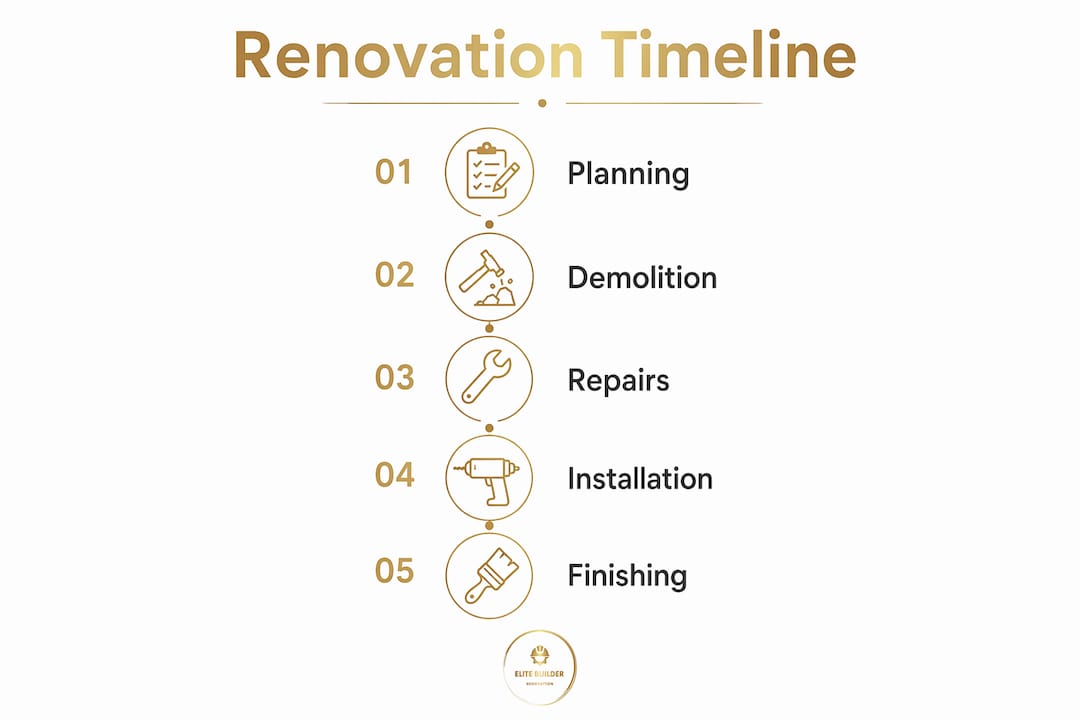
The logical sequence for a renovation also affects duration. Rushing the order of operations creates expensive delays. Here is the standard progression:
- Demolition and site preparation — remove old materials and protect unaffected areas
- Structural and mechanical rough-ins — address any framing repairs, then run new electrical, plumbing, and HVAC lines
- Inspections — secure required approvals before closing walls
- Insulation and drywall — enclose the mechanical systems
- Finishes — flooring, tile, paint, and trim
- Fixture and appliance installation — cabinets, countertops, lighting, and plumbing fixtures
- Final walkthrough and punch list — address any remaining items before project close
For a detailed breakdown of what drives project duration, the full remodel timeline guide from Elite Builder Renovation covers scope-specific estimates across Tampa Bay projects.
Pro Tip: Order materials before demolition begins. Locking in tile, cabinetry, and fixtures early prevents the most common cause of schedule delays: waiting on backordered goods.
What are typical costs and budgeting strategies?
Renovation costs follow a clear pattern based on project scope. Labor accounts for 50–60% of most renovation budgets, making it the single largest cost driver. That means the quality of your contractor directly determines whether your budget holds.
Here are the standard cost ranges by project type:
| Project Type | Typical Cost Range |
|---|---|
| Single-room cosmetic refresh | $3,000–$8,000 |
| Kitchen or bathroom remodel | $15,000–$50,000 |
| Whole-home renovation | $50,000–$200,000+ |
New tariffs and global supply shifts have raised material costs 5–8% by 2026 compared to late 2025. That increase makes early material selection and price locking a financial priority, not just a scheduling convenience.
Three budgeting principles protect homeowners from cost overruns:
- The 30% rule: Experts recommend budgeting no more than 30% of your home’s current market value for renovations. Spending beyond that threshold risks over-improving relative to neighborhood standards, which limits resale return.
- Contingency fund: Set aside 15–20% above your base budget to cover hidden repairs. Most renovations uncover issues like outdated wiring, water damage, or deteriorated subfloor that were invisible before demolition.
- Labor first: Secure your contractor before finalizing your material budget. Labor availability in markets like Tampa, Clearwater, and St. Petersburg affects both cost and scheduling, and a qualified contractor will catch scope gaps before they become expensive surprises.
For a deeper look at managing renovation finances, the home renovation best practices guide from Elite Builder Renovation covers 2026-specific cost benchmarks and contractor selection criteria.
What is the recommended sequence for a full home renovation?
The whole home renovation sequence follows a logic rooted in building science, not personal preference. Mechanical work must precede drywall installation, and inspections must occur before walls close. Skipping this order forces contractors to tear out finished work to access hidden systems, which multiplies cost and extends timelines.
A full home renovation moves through these phases:
- Pre-renovation inspection — assess structural integrity, electrical capacity, plumbing condition, and moisture-related risks before any work begins
- Permitting — file required permits per IRC Section R105.1 for structural, electrical, and plumbing work
- Structural repairs — address foundation issues, framing damage, or roof deck problems
- Weatherproofing — seal the building envelope with updated windows, doors, and roofing before interior work starts
- Mechanical rough-ins — install new electrical wiring, plumbing lines, and HVAC ductwork
- Insulation — add or upgrade insulation once mechanicals pass inspection
- Drywall and interior finishes — hang, tape, and paint after all inspections clear
- Flooring, cabinetry, and fixtures — complete the visible renovation layer last
- Final inspection and punch list — confirm code compliance and address any remaining deficiencies
Homeowners who want to stay in the home during renovation can phase the work by floor or by zone. Completing one wing of the house before starting another keeps at least part of the home livable. The renovation phases guide from Elite Builder Renovation details how Tampa Bay homeowners have managed phased projects across Hillsborough County and Pinellas County properties.
What are the most common renovation mistakes to avoid?
The most expensive renovation mistakes share a common cause: skipping foundational steps to move faster toward visible results. A thorough property inspection before any cosmetic work identifies critical repairs that would otherwise surface mid-project at full emergency cost.
Common pitfalls include:
- Skipping permit checks — unpermitted work creates legal liability and complicates future sales
- Underestimating contractor experience — a low bid from an inexperienced contractor often costs more in corrections than a higher bid from a qualified one
- Ignoring supply chain timing — material price volatility in 2026 rewards homeowners who lock in prices early
- Starting with aesthetics — painting over water-damaged walls or installing new flooring over a compromised subfloor creates compounding problems
- No contingency fund — hidden defects requiring urgent repairs are the norm, not the exception, in homes older than 20 years
Pro Tip: Schedule a structural inspection before finalizing your renovation scope. Issues like water intrusion, mold, or outdated wiring discovered after work begins cost significantly more to address than if caught during the planning phase.
For homeowners in Tampa Bay dealing with water intrusion or moisture damage, water damage restoration is a critical first step before any cosmetic renovation begins.
Elite Builder Renovation serves Tampa Bay homeowners
Elite Builder Renovation brings over a decade of hands-on experience to home renovation projects across Tampa, St. Petersburg, Clearwater, Largo, and Safety Harbor. With more than 375 completed projects and a 100% satisfaction guarantee, the team manages every phase from initial consultation through final inspection. Financing options make full-scale renovations accessible without requiring homeowners to delay critical repairs. Whether you need a kitchen remodel in Tampa Bay or a complete whole-home renovation, Elite Builder Renovation delivers clear communication and expert execution at every stage. Read what past clients say on the remodeling reviews page and schedule a consultation to get your project scoped and priced accurately.
Key Takeaways
A successful home renovation requires clear scope definition, phased sequencing, and a contingency budget to protect against hidden costs and delays.
| Point | Details |
|---|---|
| Renovation vs. remodeling | Renovation updates existing spaces; remodeling changes structure or function and requires permits. |
| Cost ranges by scope | Projects range from $3,000 for a single room to $200,000+ for a whole-home renovation. |
| Labor is the largest cost | Labor accounts for 50–60% of renovation budgets, making contractor selection critical. |
| Follow the correct sequence | Complete mechanical rough-ins and inspections before closing walls to avoid costly rework. |
| Budget a contingency fund | Set aside 15–20% above your base budget to cover hidden repairs discovered during work. |
FAQ
What is the difference between renovation and remodeling?
Renovation restores or updates existing spaces without structural changes, while remodeling alters a home’s layout or function and typically requires permits under IRC Section R105.1.
How much does a home renovation cost in 2026?
Costs range from $3,000–$8,000 for a single-room refresh, $15,000–$50,000 for a kitchen or bathroom, and $50,000–$200,000+ for a whole-home renovation, with labor comprising 50–60% of the total.
How long does a full home renovation take?
Cosmetic updates take 2–6 weeks, moderate renovations run 3–6 months, and full-scale whole-home renovations typically require 12–18 months depending on scope and material availability.
What is a home addition renovation?
A home addition renovation adds new square footage to an existing structure, such as a room addition or garage conversion. This type of project crosses into remodeling territory and requires structural permits.
Do I need a permit for a home renovation in Tampa Bay?
Cosmetic work like painting and flooring typically requires no permit. Electrical, plumbing, HVAC, and structural changes require permits per IRC Section R105.1 and local Hillsborough County or Pinellas County building codes.