

Commercial remodeling is the process of updating and reconfiguring commercial spaces to better meet functional needs, aesthetic expectations, and tenant demands. Property owners who understand why commercial spaces need remodeling gain a direct advantage: renovation projects cost 50–70% less than new construction while increasing property value by 15–30%. Tax incentives can offset an additional 10–25% of project costs, making a planned remodel one of the most financially sound decisions a property owner can make. Elite Builder Renovation has completed over 375 successful projects across the Tampa Bay area, bringing that same financial discipline and execution quality to commercial clients in Tampa, St. Petersburg, Clearwater, and Pinellas County.
What practical benefits does remodeling offer commercial property owners?
The benefits of commercial space remodeling go well beyond fresh paint and new flooring. A well-executed remodel addresses the systems, layouts, and environments that directly affect how tenants operate and whether they renew their leases.

Tenant retention and wellness
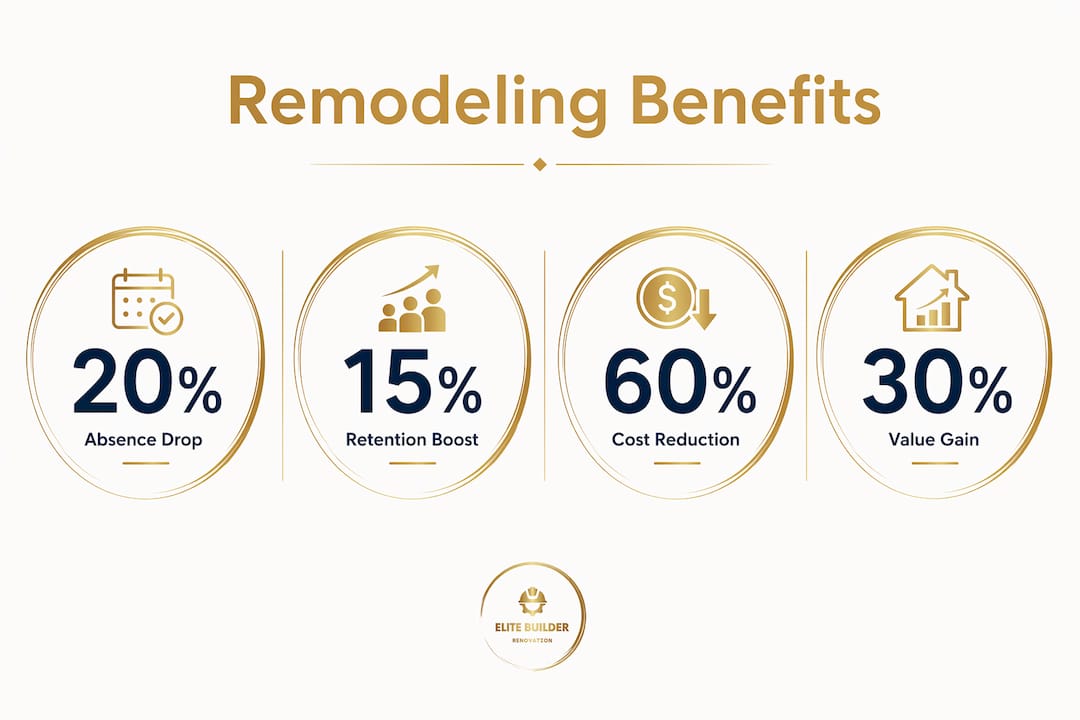
Wellness-focused office design reduces stress-related absences by 20% and improves employee retention by 15%. Employees in high-quality workplaces are nearly three times more likely to stay with their company. That retention advantage translates directly into lower vacancy rates and more stable rental income for property owners.
Energy and operational savings
Mechanical, electrical, and plumbing systems account for nearly 60% of operational costs in commercial buildings. Upgrading these systems delivers a typical annual ROI of 8–12%. Switching to energy-efficient lighting alone can reduce energy consumption by up to 70% and improve perceived productivity by up to 30%. Green-certified buildings also command up to 10% higher rental rates, which compounds the return over time.
Leasing appeal and market positioning
Modern layouts that support hybrid work, collaboration, and flexible use attract a wider pool of tenants. Spaces that adapt to tenant behaviors improve retention and lease competitiveness, according to 2026 investor research. A remodeled property in Clearwater or Largo signals to prospective tenants that ownership is active and invested in the building’s performance.
Key benefits at a glance:
- Lower vacancy rates through tenant-friendly, adaptable layouts
- Reduced energy bills from upgraded MEP systems and lighting
- Higher rental income from green certification and modern finishes
- Stronger lease renewals tied to wellness and functional design
- Improved code compliance that reduces liability exposure
Pro Tip: Before finalizing a remodeling scope, audit your current lease renewal rates and tenant satisfaction scores. Properties with declining renewal rates almost always have a design or systems problem that remodeling can fix.
When should commercial spaces be remodeled instead of repaired or rebuilt?
Knowing when to remodel rather than repair or rebuild is one of the most consequential decisions a property owner makes. The answer depends on the age of your building systems, tenant feedback, and the cost trajectory of deferred maintenance.
-
Aging building systems. HVAC, electrical, and plumbing systems require upgrades every 15–25 years. Delaying past that window leads to costly emergency repairs that disrupt tenants and spike operating expenses.
-
Rising maintenance costs. When repair bills climb year over year without improving performance, the building is signaling that reactive fixes are no longer cost-effective. A planned remodel resets that cost curve.
-
Tenant feedback and vacancy trends. Consistent complaints about temperature control, lighting, or layout are direct indicators that the space no longer meets market expectations. Vacancy spikes after lease expirations confirm the same.
-
Lease turnover windows. Proactive replacement of building systems during tenant turnover minimizes disruption and reduces downtime costs. This is the most cost-effective window for a remodel.
-
Code compliance deadlines. Local building codes in Hillsborough County and Pinellas County are updated regularly. A remodel triggered by a code requirement can be scoped to deliver broader improvements at the same time, maximizing the investment.
Statistic to know: Renovation projects cost 50–70% less than new construction while delivering comparable performance improvements and a 15–30% increase in property value. For most commercial property owners, rebuilding is rarely the right answer.
Remodeling also supports sustainability goals. Upgrading insulation, windows, and mechanical systems reduces a building’s carbon footprint and positions the property favorably for tenants with environmental commitments. In Safety Harbor and surrounding Pinellas County markets, sustainability credentials are increasingly part of tenant site selection criteria.
How do tenant and workforce trends shape remodeling priorities?
Tenants in 2026 prioritize flexible, wellness-focused designs with integrated technology and multi-use layouts. This shift is not a preference. It is a structural change in how commercial space gets used, and property owners who ignore it face rising vacancy and declining lease rates.
Flexible and multi-use layouts
Hybrid work has permanently changed how tenants use office space. Reallocating desk space to task-specific and collaborative zones improves tenant satisfaction significantly without increasing floor area. A property in Tampa that converts underused private offices into shared project rooms and quiet focus areas becomes more competitive without adding square footage.
Wellness and biophilic design
Biophilic design, which incorporates natural light, plants, and ventilation into the built environment, reduces workplace stress and supports retention. Data-driven remodeling can reduce voluntary turnover by 15% within nine months. For tenants whose business performance depends on retaining skilled employees, a wellness-oriented space is a leasing requirement, not a luxury.
Technology as infrastructure
Technology integration is no longer an add-on. Tenants expect built-in high-speed connectivity, smart building controls, and power infrastructure that supports modern equipment. Retrofitting these systems during a remodel costs far less than installing them after a tenant moves in and discovers the building cannot support their operations.
“Functionality, including flow, acoustics, and technology integration, is the primary driver of tenant retention and leasing success. Aesthetic upgrades matter, but they do not compensate for a space that does not work.”
Using data to guide decisions
Data-driven facility managers use occupancy and utilization metrics to identify underperforming spaces and guide renovations that directly impact business metrics such as turnover and room booking rates. Property owners who track how their spaces are actually used make better remodeling decisions and avoid spending on changes that do not move the needle. Explore renovation features attracting commercial tenants in 2026 to see which upgrades deliver the strongest leasing results in the current market.
What are the most common remodeling mistakes and how do you avoid them?
Most costly remodeling mistakes stem from ignoring tenant needs, poor planning, and starting with cosmetic finishes before addressing system upgrades. These errors do not just waste money. They create tenant disruption, code violations, and projects that fail to improve the property’s competitive position.
Common mistakes to avoid:
- Starting with aesthetics. New flooring and paint do not fix a failing HVAC system or inadequate electrical capacity. System upgrades must come first because they affect every other element of the remodel.
- Skipping tenant input. Redesigning a space without consulting current or prospective tenants risks delivering a layout that does not match how the space will actually be used.
- Ignoring phased construction planning. A remodel that shuts down an entire floor for six months costs far more in lost rent and tenant goodwill than a phased approach that keeps operations running.
- Underestimating permit requirements. Commercial projects in Tampa and Clearwater require permits for structural, electrical, plumbing, and mechanical work. Missing a permit triggers stop-work orders and fines that extend timelines and budgets.
- Choosing contractors based on price alone. The lowest bid rarely accounts for code compliance, quality materials, or project management. Experienced contractors prevent the problems that cheap bids create.
Pro Tip: Review your commercial renovation planning process before signing any contractor agreement. A clear scope of work, phased timeline, and permit checklist protect your budget and your tenant relationships.
Commercial property management is shifting from reactive repairs to continuous optimization based on real-time operational data. Owners who plan remodels proactively, rather than waiting for systems to fail, consistently achieve better financial outcomes and stronger tenant relationships. Reviewing common commercial renovation mistakes before starting a project is one of the most practical steps you can take to protect your investment.
Key Takeaways
Commercial spaces require remodeling to maintain competitive leasing value, control operational costs, and meet the functional demands of modern tenants.
| Point | Details |
|---|---|
| Remodeling beats rebuilding | Renovation costs 50–70% less than new construction and raises property value by 15–30%. |
| Systems upgrades drive ROI | MEP upgrades deliver 8–12% annual ROI and cut energy costs significantly. |
| Timing matters | Schedule remodels during lease turnovers to minimize disruption and maximize cost efficiency. |
| Tenant trends are non-negotiable | Flexible layouts, wellness design, and technology integration are now baseline leasing expectations. |
| Planning prevents overruns | Phased construction, permit compliance, and experienced contractors are the three pillars of a successful commercial remodel. |
Elite Builder Renovation serves Tampa Bay commercial property owners
Commercial property owners across Tampa, St. Petersburg, Clearwater, and Hillsborough County trust Elite Builder Renovation for remodeling projects that deliver real results. With over a decade of experience and more than 375 completed projects, the team manages every phase from initial consultation through final inspection, keeping disruption to a minimum and communication clear throughout. Whether you need a full interior reconfiguration, MEP system upgrades, or a targeted refresh to attract new tenants, Elite Builder Renovation brings the expertise to execute on time and within budget. Read verified client reviews to see how other property owners in the Tampa Bay area have benefited from a professional remodel. Contact Elite Builder Renovation today to schedule a consultation for your commercial remodeling project in Tampa Bay.
FAQ
Why do commercial spaces need remodeling?
Commercial spaces need remodeling to stay competitive, control costs, and meet tenant expectations. Outdated systems, poor layouts, and aging finishes reduce leasing appeal and increase operational expenses over time.
How much does commercial remodeling cost compared to new construction?
Renovation projects typically cost 50–70% less than new construction while delivering a 15–30% increase in property value. Tax incentives can offset an additional 10–25% of project costs.
When is the right time to remodel a commercial building?
The best time to remodel is during tenant turnover, when disruption is lowest and system upgrades can be completed without affecting active leases. HVAC, electrical, and plumbing systems typically need upgrades every 15–25 years.
What remodeling upgrades deliver the highest ROI?
MEP system upgrades deliver 8–12% annual ROI, while energy-efficient lighting can reduce consumption by up to 70%. Flexible layouts and wellness-focused design also improve tenant retention and lease competitiveness.
Do commercial remodeling projects require permits in Tampa Bay?
Yes. Commercial projects in Tampa, Clearwater, and surrounding Pinellas and Hillsborough County jurisdictions require permits for structural, electrical, plumbing, and mechanical work. Working with an experienced contractor ensures full code compliance and avoids costly delays.