

Effective budgeting for commercial property upgrades is defined as the process of aligning capital expenditures with strategic goals to increase property value, reduce operating costs, and improve tenant satisfaction. Property owners who plan renovation spending carefully can increase total property value by 15–25% while reducing operating expenses by up to 30%. The industry term for this discipline is capital expenditure planning, or CapEx planning, and it applies to every upgrade from a lobby refresh to a full mechanical overhaul. Understanding the ways to budget commercial property upgrades gives property owners in Tampa Bay, Pinellas County, and Hillsborough County a clear path from project idea to completed renovation without financial surprises.
What are the key ways to budget commercial property upgrades?
Every sound renovation budget separates costs into two categories: hard costs and soft costs. Hard costs cover the physical work: construction labor, materials, and equipment. Hard costs range from $40–$80 per square foot for cosmetic updates and climb to $200–$300 per square foot for complete gut renovations. That range reflects the difference between repainting a retail suite and replacing an entire HVAC system along with structural elements.

Soft costs are the expenses that surround the physical work. Architectural fees, permits, engineering reviews, and project insurance fall into this category. Soft costs add 20–35% on top of hard construction costs, and many property owners underestimate this figure when drafting their first budget. A $500,000 hard cost project can carry $100,000–$175,000 in soft costs before a single wall is touched.
Contingency funding is the third budget line that separates experienced owners from first-timers. A tiered contingency of 5–10% applies to modern buildings, while older properties or projects involving complex mechanical, electrical, and plumbing (MEP) systems require 15–25%. Hidden problems discovered during demolition routinely add 20–30% to original budgets when no contingency exists.
Pro Tip: Build your contingency line before you finalize scope. Owners who treat contingency as an afterthought end up cutting finishes or delaying phases when surprises surface.
Standard commercial fit-outs run 12–24 weeks from permit approval to occupancy. Factor that timeline into your cash flow model so reserves and loan draws align with actual construction milestones.
| Cost Category | Typical Range | Notes |
|---|---|---|
| Hard costs (cosmetic) | $40–$80 per sq ft | Paint, flooring, fixtures |
| Hard costs (full gut) | $200–$300 per sq ft | Structural, MEP, envelope |
| Soft costs | 20–35% of hard costs | Permits, design, insurance |
| Contingency (new building) | 5–10% of total | Lower risk profile |
| Contingency (older stock) | 15–25% of total | MEP unknowns, code gaps |
How to prioritize and plan commercial property upgrade projects
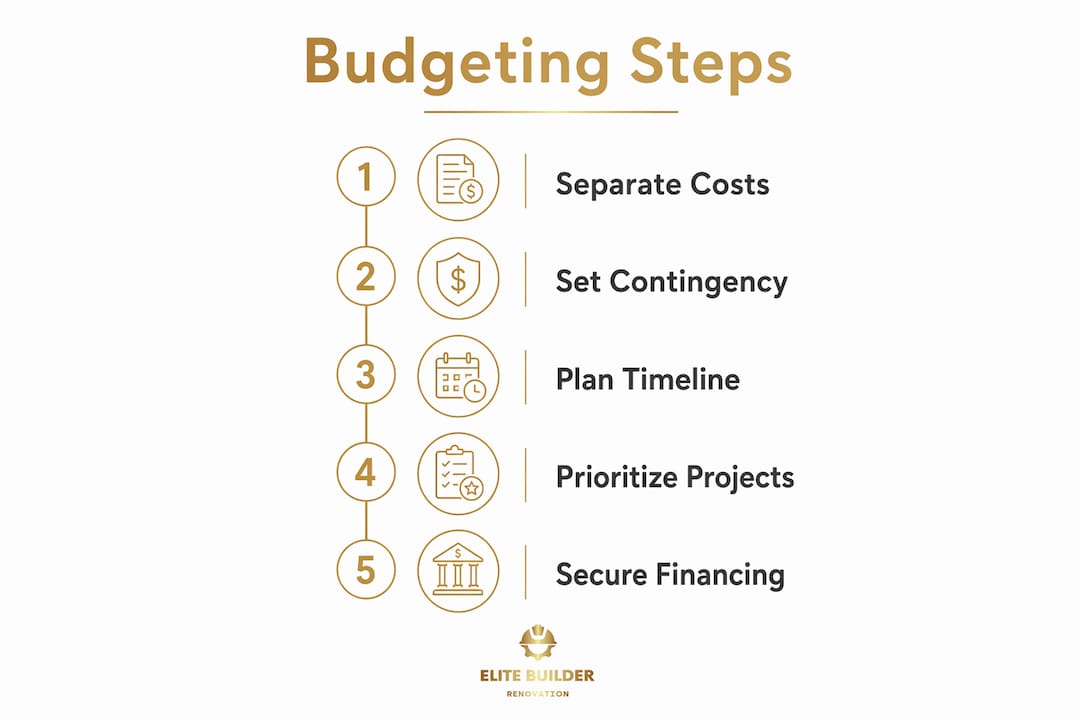
Prioritization separates a well-run CapEx program from a reactive one. The most reliable rule in property renovation financial planning is to address the building’s core systems before cosmetic improvements. Structural integrity, roofing, electrical panels, and plumbing are the foundation on which every other upgrade depends. Skipping these to fund a lobby redesign creates hidden liabilities that reduce appraised value over time.
A structured approach to project prioritization uses a property condition assessment (PCA) to rank needs by urgency and investment return. The PCA identifies deferred maintenance, code compliance gaps, and end-of-life systems. That document becomes the foundation of your 5–10 year capital plan.
Annual reserve funding prevents the cash flow crises that force emergency spending. Industry guidance sets annual replacement reserves at $0.40–$0.75 per square foot for office buildings and $0.25–$0.50 per square foot for retail properties. A 20,000-square-foot office building should accumulate $8,000–$15,000 per year in reserves dedicated to capital replacement.
Project phasing is the practical tool that makes large budgets manageable. Phasing spreads spending across fiscal years, limits tenant disruption, and preserves flexibility when market conditions shift. A well-phased plan might address HVAC in year one, restrooms and common areas in year two, and exterior improvements in year three.
Common budgeting mistakes to avoid:
- Confusing CapEx and OpEx. Classifying a roof replacement as a maintenance expense (OpEx) instead of a capital expenditure (CapEx) distorts your financial statements and lowers appraised value.
- Ignoring scope creep. Each undocumented change order adds cost and time. Require written approval for every scope change before work begins.
- Misaligning upgrades with tenant needs. Upgrading spaces that tenants do not value produces low return. Survey tenants before finalizing scope to confirm which improvements affect lease renewal decisions.
- Skipping annual budget reviews. A budget written in january becomes inaccurate by june without updates for inflation and changing conditions.
Pro Tip: Review your commercial renovation plan at least twice per year. Mid-year reviews catch cost drift before it becomes a budget crisis.
What financing options support commercial property upgrades?
Financing a commercial upgrade program requires matching the funding source to the project type and timeline. Property owners in Tampa Bay and across Pinellas County typically draw from four sources: capital reserves, commercial loans, government grants, and tax incentives.
Capital reserves are the lowest-cost funding source because they carry no interest. Owners who fund reserves consistently using the per-square-foot benchmarks described above can self-finance routine upgrades without debt service. Larger projects, such as full building envelope replacements or elevator modernizations, typically require commercial financing.
[Tax incentives and accelerated depreciation](https://mcguiresponsel.com/fixed-asset-services/cost-segregation/commercial-property-depreciation/#:~:text=The Internal Revenue Service (IRS,%25 declining balance (DB).) can offset 10–25% of renovation project costs, improving post-upgrade cash flow. Cost segregation studies allow owners to accelerate depreciation on qualifying components, reducing taxable income in the years immediately following a renovation. A qualified tax advisor should review this strategy before project close.
Key financing considerations for property renovation financial planning:
- Treat your budget as a living document. Annual construction cost inflation runs 2–5%, which means a budget drafted 18 months before construction starts will be understated without an inflation adjustment.
- Get detailed cost estimates early. Allowance-based budgets (where line items say “flooring allowance: $20,000”) frequently underperform. Replace allowances with specified materials and firm contractor bids as soon as scope is defined.
- Vet contractors thoroughly. Verify licensing, insurance, and references before signing contracts. In Florida, contractors must hold a valid state license for commercial work, and Hillsborough County and Pinellas County each have local permit requirements that affect project timelines.
- Plan for permit delays. Code compliance reviews and permit approvals in the Tampa Bay area can add 4–8 weeks to a project schedule. Build that buffer into your draw schedule and financing terms.
How to monitor and avoid common pitfalls while managing your renovation budget
Budget monitoring is not a one-time task at project close. Effective property owners review budget-to-actual reports monthly during active construction. This practice catches cost overruns while there is still time to adjust scope or reallocate contingency funds.
Poor communication during renovations causes delays and costly change orders that damage budgets. Establish a formal approval process for every decision that affects cost or schedule. Document all decisions in writing, including verbal agreements made on-site.
Budgets are dynamic, not static. Annual reviews that account for inflation and actual asset conditions improve financial forecasting and prevent the surprises that derail projects mid-construction.
Watch for these warning signs that a budget is losing control:
- Contingency funds drawn before the project reaches 50% completion
- Change orders exceeding 10% of the original contract value
- Soft costs growing beyond 35% of hard costs without a documented reason
- Net operating income (NOI) ratios declining without a corresponding increase in property value
Avoiding common renovation mistakes requires discipline in scope management. Once a scope is approved, changes should require written justification, cost impact analysis, and owner sign-off before proceeding. This process slows decisions slightly but prevents the budget erosion that accumulates from dozens of small undocumented changes.
Pro Tip: Assign one point of contact on your team to approve all field decisions. Contractors who can get approvals from multiple people will receive conflicting instructions, and that confusion costs money.
Preventative maintenance reduces emergency repair costs significantly and keeps tenant satisfaction high. Owners who invest in scheduled maintenance programs protect their capital budgets from unplanned draws that disrupt planned upgrade timelines.
What upgrades deliver the best ROI for commercial properties?
The highest-return upgrades in commercial property renovation fall into three categories: energy efficiency systems, high-traffic common areas, and technology infrastructure. Each category offers measurable payback and direct impact on tenant retention.
Energy efficiency upgrades, including LED lighting retrofits and programmable HVAC controls, reduce operating costs and pay back the investment in 18–24 months. That payback period makes energy upgrades the most financially defensible first step in any CapEx program. The operational savings then fund subsequent upgrade phases without additional debt.
High-traffic areas like lobbies and restrooms deliver disproportionate ROI by shaping tenant perception at every interaction. A dated lobby signals neglect to prospective tenants even when the mechanical systems are in excellent condition. Renovating these spaces first maximizes the visible impact of your capital investment.
Technology infrastructure, including high-speed fiber connectivity, smart access control, and building automation systems, increases lease rates and tenant retention. These upgrades are particularly relevant for office properties in Safety Harbor, Clearwater, and St. Petersburg, where tenants increasingly require technology-ready spaces as a baseline condition.
| Upgrade Type | Estimated Cost | Impact Level | Payback Period |
|---|---|---|---|
| LED lighting retrofit | Low | High | 12–18 months |
| HVAC controls upgrade | Medium | High | 18–24 months |
| Lobby and common area renovation | Medium | High | Lease cycle |
| Restroom modernization | Medium | High | Lease cycle |
| Technology infrastructure | Medium to high | High | 24–36 months |
| Exterior landscaping | Low to medium | Medium | Lease cycle |
| Structural and MEP systems | High | Critical | Long-term |
Upgrading features that attract commercial tenants in 2026 requires understanding what the current market values. Tenants in Largo, Clearwater, and the broader Tampa Bay area prioritize energy efficiency, flexible floor plans, and reliable technology infrastructure above cosmetic finishes. Aligning your upgrade budget with those priorities produces faster lease-up and stronger renewal rates.
Effective budgeting creates a reinvestment cycle. Operational savings from energy upgrades reduce monthly expenses, and those savings accumulate into the reserve fund that finances the next phase of improvements. Owners who build this cycle into their financial model grow property value steadily without relying on debt for every project.
Key Takeaways
Effective commercial property upgrade budgeting requires separating hard and soft costs, funding contingency reserves before finalizing scope, and prioritizing energy and infrastructure upgrades that deliver measurable payback within 18–24 months.
| Point | Details |
|---|---|
| Separate hard and soft costs | Soft costs add 20–35% on top of hard costs; budget both from the start. |
| Fund tiered contingency | Use 5–10% for modern buildings and 15–25% for older or complex MEP projects. |
| Prioritize infrastructure first | Address structural, electrical, and HVAC systems before cosmetic upgrades. |
| Treat budgets as living documents | Update for 2–5% annual construction inflation and changing asset conditions. |
| Focus ROI on energy and common areas | LED and HVAC upgrades pay back in 18–24 months; lobbies and restrooms drive tenant retention. |
Planning your next commercial upgrade with Elite Builder Renovation
Commercial property owners in Tampa Bay, St. Petersburg, Clearwater, and the surrounding areas have a local partner with over a decade of hands-on renovation experience. Elite Builder Renovation has completed more than 375 projects and brings the same disciplined approach to budgeting and project management that this article describes. Whether you need a phased upgrade plan, a detailed cost estimate, or a contractor who communicates clearly at every stage, the team at Elite Builder Renovation delivers. Read verified client reviews to see how past clients describe the experience, and explore remodel financing options that make upgrades financially accessible without disrupting your cash flow.
FAQ
What is the difference between CapEx and OpEx in commercial renovations?
Capital expenditures (CapEx) cover major improvements that extend a property’s useful life, such as roof replacements or HVAC overhauls. Operating expenses (OpEx) cover routine maintenance; misclassifying CapEx as OpEx distorts financial statements and lowers appraised value.
How much contingency should I budget for a commercial renovation?
Budget 5–10% contingency for newer buildings and 15–25% for older properties or projects with complex MEP systems. Hidden problems discovered during construction routinely add 20–30% to original budgets when no contingency is in place.
What commercial upgrades deliver the fastest payback?
LED lighting retrofits and HVAC control upgrades pay back in 18–24 months through reduced operating costs. Lobby and restroom renovations deliver strong returns over the lease cycle by improving tenant perception and renewal rates.
How do I finance commercial property upgrades in Tampa Bay?
Common funding sources include capital reserves, commercial loans, and tax incentives such as accelerated depreciation, which can offset 10–25% of project costs. A qualified tax advisor and a licensed local contractor can help structure the most cost-effective approach for your property.
How often should I review my commercial renovation budget?
Review your budget at least twice per year during active planning and monthly during construction. Annual construction cost inflation of 2–5% makes budgets drafted more than a year in advance inaccurate without periodic updates.