


A hassle-free renovation is defined as a remodeling process managed with a single point of contact, transparent communication, and proactive planning that keeps homeowners informed without burdening them with logistics. The industry term for this model is turnkey remodeling, where one firm handles every phase from design through completion. Understanding what separates a well-run project from a stressful one helps you make better decisions before a single wall comes down. This guide breaks down the core practices, common pitfalls, and practical choices that make stress-free remodeling achievable for any homeowner.
What is a hassle-free renovation, really?
A hassle-free renovation does not mean a renovation without challenges. It means challenges are managed by your contractor so you stay informed without handling the operational details yourself. This distinction matters because many homeowners expect zero friction, then feel blindsided when normal construction issues arise.

The clearest definition comes from how responsibility is distributed. In a well-run project, a single dedicated contact handles scheduling, subcontractors, permits, and problem-solving. You receive updates without having to chase them. That structure is what separates a genuinely low-stress experience from one that simply looks organized on paper.
Turnkey remodeling takes this further by placing all trades, permitting, and procurement under one firm. Centralizing all phases under one roof eliminates the communication gaps and scheduling conflicts that typically derail multi-contractor projects. For homeowners in the Tampa Bay area, Elite Builder Renovation operates on exactly this model, covering everything from kitchen remodels to water damage restoration under one accountable team.
Uncertainty is the primary driver of renovation anxiety, not physical disruption. When you know what is happening, when it will happen, and who is responsible, the process becomes manageable. That clarity is the foundation of every genuinely easy home renovation.
How does clear planning reduce renovation stress?
Upfront planning is the single most effective tool for preventing renovation anxiety. Fixed-cost proposals and defined decision points before construction begins reduce budget overruns and the emotional distress that follows unexpected change orders. When you agree on scope, materials, and price before work starts, you remove the two biggest sources of mid-project conflict: money and surprises.
A realistic budget conversation at the start sets the tone for the entire project. Contractors who present fixed-cost proposals are committing to a defined scope, which protects you from scope creep. Scope creep is when small additions accumulate into significant cost increases, often without the homeowner realizing it until the invoice arrives.
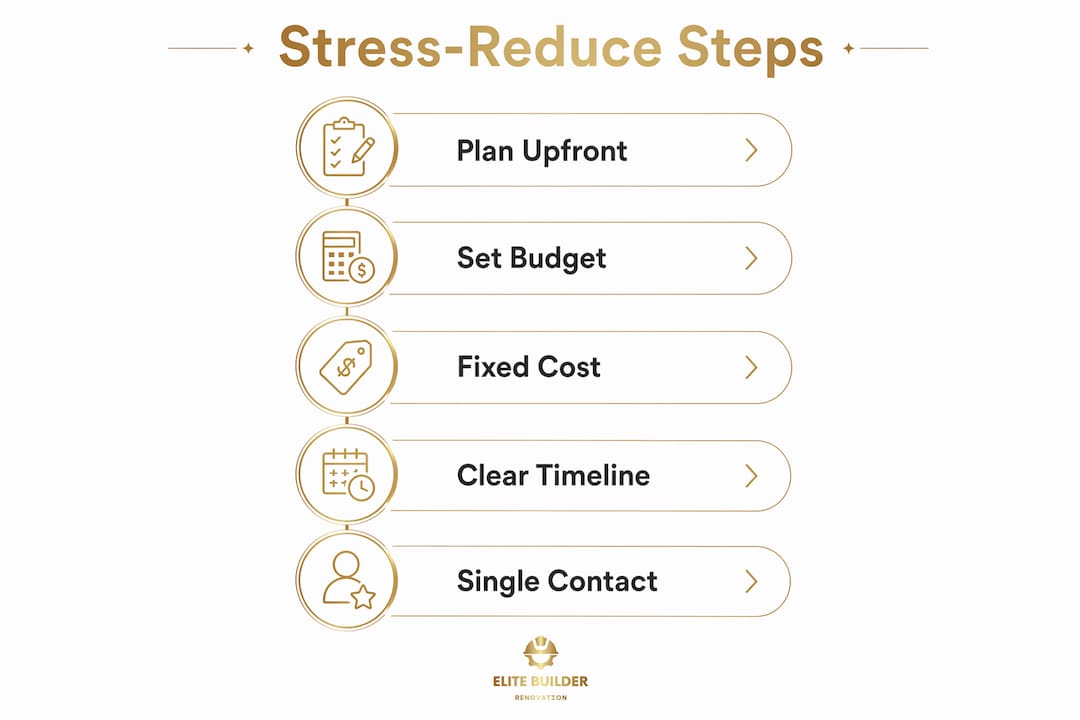
Proactive communication reinforces that protection throughout the build. Regular updates, whether through a digital portal or scheduled check-ins, mean you are never left guessing about progress. You can prepare your home more effectively when you know the exact sequence of work ahead of time.
Key planning practices that reduce renovation stress:
- Set a realistic budget with a contingency buffer before finalizing any scope of work.
- Request a fixed-cost proposal rather than an open-ended estimate to prevent surprise charges.
- Define all material selections before construction begins to avoid costly mid-project changes.
- Establish a communication schedule so you receive updates at predictable intervals.
- Clarify permit responsibilities upfront so delays do not catch you off guard.
Pro Tip: Ask your contractor to walk you through every decision point before demolition starts. Sequencing your choices early, such as selecting tile before plumbing rough-in, prevents the delays that inflate both timelines and budgets.
Why does a single point of contact matter so much?
A single point of contact is the structural backbone of a low-disruption renovation. When one person owns the entire project, there is no gap between what the plumber knows and what the tile installer expects. Projects using these management systems require only about one hour per week of homeowner involvement. That figure reflects how much time centralized management saves compared to coordinating multiple contractors yourself.
The contracts manager or dedicated project leader carries specific responsibilities that directly reduce your burden:
- Coordinating all subcontractors so trades arrive in the correct sequence without gaps or overlaps.
- Monitoring the schedule daily and flagging delays before they compound.
- Managing material deliveries so the job site stays organized and work continues without interruption.
- Handling permit inspections and code compliance checks on your behalf.
- Communicating progress updates through a consistent channel you can check at any time.
Without this role, homeowners often become the de facto project managers. You end up fielding calls from electricians, chasing tile shipments, and mediating between trades. That is the opposite of a home makeover without hassle.
Digital progress portals have made this model more transparent than ever. A well-run contractor provides real-time visibility into schedules and budgets through a client-facing platform. You can see where the project stands without making a single phone call. Knowing how to choose a remodeling contractor who offers this level of accountability is one of the most important decisions you will make before any renovation begins.
Pro Tip: Before signing a contract, ask specifically who your single point of contact will be and how often they will proactively reach out. If the answer is vague, that is a reliable signal of how communication will go once work starts.
What are the best low-disruption renovation upgrades?
Not every improvement requires structural work, permits, or weeks of disruption. High-impact, non-structural updates are the fastest path to a refreshed home, and they fit naturally into a renovation planning guide for homeowners who want results without a major project.
Painting multiple rooms can be completed for under $500 using affordable materials and basic skills. Professional-grade paint costs approximately $75 per gallon, making it the most cost-effective quick home upgrade available. A fresh coat of paint in a neutral tone changes the entire feel of a space without touching a single structural element.
The table below compares common low-disruption upgrades by approximate cost, skill level, and impact:
| Upgrade | Approximate Cost | Skill Level | Visual Impact |
|---|---|---|---|
| Interior painting | Under $500 | Beginner | High |
| Light fixture replacement | $100–$400 | Beginner | Medium-High |
| Cabinet hardware swap | $50–$200 | Beginner | Medium |
| Faucet and fixture update | $150–$600 | Intermediate | Medium-High |
| Backsplash tile installation | $300–$800 | Intermediate | High |
These updates work well as a first step before committing to a full remodel. They let you live with changes, understand what you actually want, and build confidence in the renovation process. For homeowners considering a larger project later, starting with these upgrades also helps clarify priorities.
When the scope grows beyond cosmetic changes, professional help becomes the more cost-effective choice. Mistakes in plumbing, electrical, or tile work cost significantly more to fix than they would have cost to do correctly the first time.
What are the most common causes of renovation stress?
Renovation stress almost always traces back to a small set of preventable problems. Recognizing them before your project starts gives you the ability to avoid them entirely.
-
Scope creep from undefined decisions. When materials or finishes are not selected before construction begins, contractors submit change orders to cover the gap. Each change order adds cost and time. Defined decision points before construction are the most reliable way to prevent this pattern.
-
Rushed timelines that produce rework. Rushing renovation timelines leads to poor quality outcomes and costly rework. Professional teams prioritize moving well over moving fast. A project completed correctly in twelve weeks costs less than one rushed through in eight and then repaired over the following month.
-
Disorganized job sites that extend disruption. A clean and organized job site reduces physical disruption and helps you maintain your daily routine during construction. Contractors who leave debris, tools, and materials scattered across your home signal a broader lack of discipline that shows up in the finished product.
-
Poor sequencing of decisions. Early and sequenced decision-making, where conflicts are anticipated and expectations are aligned before demolition, is the invisible work that shapes a calm renovation experience. Most homeowners never see this preparation. They only notice its absence when the project stalls.
-
No contingency in the budget. Unexpected conditions inside walls, such as outdated wiring or moisture damage, are common in older homes. A budget with no buffer forces reactive decisions under pressure, which is where costly mistakes happen. Setting aside 10–15% of your total budget as a contingency removes that pressure entirely.
Avoiding these five pitfalls does not require a large budget or a complex plan. It requires choosing a contractor who addresses them systematically before work begins. Reviewing common renovation mistakes before signing any contract is time well spent.
Key Takeaways
A hassle-free renovation requires a single point of contact, fixed-cost planning, and proactive communication to keep homeowners informed without placing operational burdens on them.
| Point | Details |
|---|---|
| Define the model upfront | Turnkey remodeling centralizes all trades and communication under one accountable firm. |
| Fix costs before construction | Fixed-cost proposals and pre-selected materials prevent scope creep and budget overruns. |
| Demand a single contact | One dedicated project leader reduces homeowner time to roughly one hour per week. |
| Start small if needed | Painting and fixture updates deliver high visual impact for under $500 with minimal disruption. |
| Avoid the five stress triggers | Scope creep, rushed timelines, messy sites, poor sequencing, and no contingency fund are all preventable. |
How Elite Builder Renovation delivers a stress-free remodel
Elite Builder Renovation has completed over 375 projects across the Tampa Bay area using a turnkey model built around a single dedicated project leader for every job. Every client gets transparent updates, a defined scope before work begins, and a 100% satisfaction guarantee that removes financial risk from the equation. The team handles full home remodeling in Tampa, kitchen and bathroom renovations, and water damage restoration, all under one roof. Financing options make the process accessible regardless of budget size. Homeowners who want to see what this looks like in practice can read verified client feedback on the Elite Builder Renovation reviews page before making any commitment.
FAQ
What does hassle-free renovation mean?
A hassle-free renovation is one where a dedicated contractor manages all logistics, communication, and scheduling so the homeowner stays informed without handling operational details. The industry term for this model is turnkey remodeling.
How much time does a homeowner spend managing a well-run renovation?
Projects with a single point of contact and a digital progress portal require approximately one hour per week of homeowner involvement. That figure reflects centralized management handling subcontractors, permits, and scheduling on your behalf.
What is the easiest first renovation for a beginner?
Painting is the most manageable starting point, delivering immediate visual improvement for under $500 with minimal disruption and no structural work required.
How do you prevent budget overruns in a renovation?
Request a fixed-cost proposal before work begins, finalize all material selections before demolition, and set aside a 10–15% contingency buffer for unexpected conditions inside walls or floors.
What causes the most renovation stress?
Uncertainty is the primary driver of renovation anxiety. Undefined scope, rushed timelines, and poor communication create the conditions where stress compounds. Fixed proposals and proactive updates address all three directly.