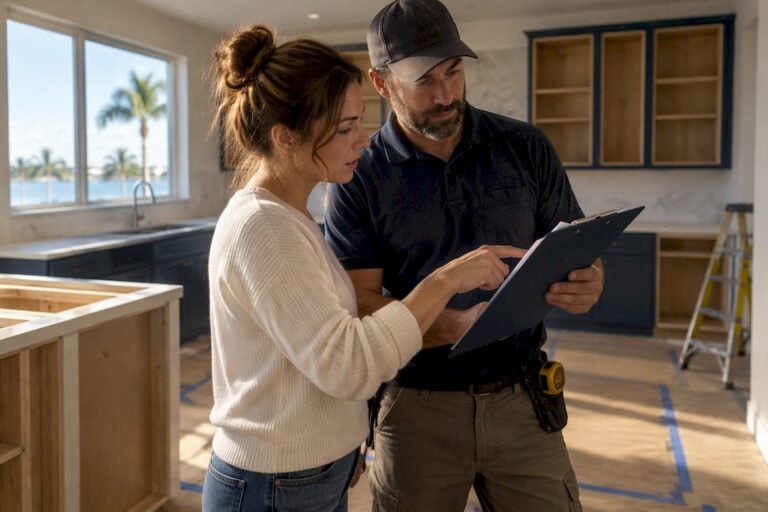


Living through a home renovation means maintaining a functional, safe living environment while construction actively happens around you. The key ways to live through renovations come down to three fundamentals: setting up protected living zones, adapting your daily routines, and communicating clearly with your contractor. Most homeowners can safely stay on-site during a remodel if they maintain access to at least one functioning kitchen, bathroom, and bedroom, with proper containment methods like locking dust walls and HEPA filtration in place. Elite Builder Renovation has guided homeowners through over 375 successful projects using exactly this approach.
What essential preparations make surviving home renovations possible?
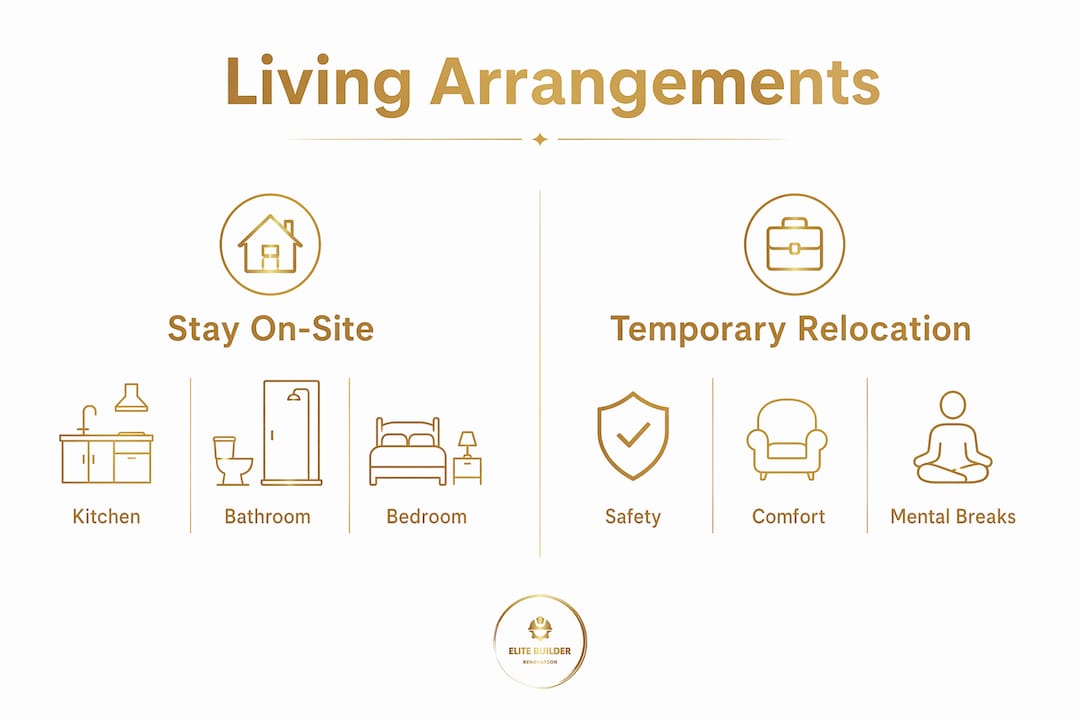
The single most important step before construction begins is identifying your non-negotiable living spaces. You need at least one functioning kitchen, one bathroom, and one bedroom that remain completely off-limits to construction crews. These three spaces form your baseline for daily life, and protecting them from dust and disruption is the foundation of every other strategy.
Set up a temporary kitchen
A temporary kitchenette with a microwave, mini-fridge, and hot plate handles most daily meal needs when your main kitchen is under construction. Plan a two-week meal rotation to reduce daily decision-making and simplify grocery runs. Batch cooking on weekends and storing meals in the mini-fridge cuts down on the stress of cooking with limited equipment. Keeping paper plates and disposable containers on hand reduces dishwashing demands when sink access is limited.

Create sealed construction zones
Dust containment starts at the boundary between the work zone and your living space. Locking dust walls with self-closing doors outperform basic plastic sheeting in high-traffic renovation zones. Plastic sheeting shifts with air movement and foot traffic, allowing fine particles to escape. A rigid dust wall with a door seal keeps construction debris contained and gives your crew a clean entry and exit point.
Pro Tip: Ask your contractor to prepare your home with a detailed zone map before day one. Knowing exactly which areas are off-limits removes daily guesswork for both you and the crew.
The table below outlines the minimum living requirements and containment tools for staying on-site during a remodel.
| Living requirement | Minimum standard |
|---|---|
| Kitchen access | Temporary kitchenette with microwave, mini-fridge, and hot plate |
| Bathroom access | One fully operational bathroom outside the work zone |
| Bedroom access | One sealed, dust-free bedroom with clean air supply |
| Dust containment | Locking dust walls with self-closing doors |
| Air quality | HEPA air scrubbers running continuously in the work zone |
Develop a utility shutdown schedule with your contractor before demolition starts. Knowing exactly when water, electricity, or gas will be off prevents the kind of surprise disruptions that derail a morning routine. Pets and young children need defined safe zones too. A baby gate, a locked door, or a designated room keeps them away from trip hazards and construction debris.
How can daily routines reduce stress during a remodel?
Routine is your most effective tool for managing stress during a long remodel. When the physical environment feels chaotic, a predictable daily schedule creates a sense of control. Consistent meal times, bedtimes, and morning routines matter especially for children, who read environmental disruption as emotional disruption.
- Schedule loud work around your household. Demolition during school or work hours reduces the impact on family members who work from home or have young children. Share your household calendar with your contractor so the crew can time the noisiest phases accordingly.
- Change HVAC filters every 2–3 weeks. Construction dust circulates through your entire home if the HVAC system is not managed. Regular filter changes keep air quality healthier throughout the project.
- Plan weekly breaks. Scheduled weekends away are not a luxury during a long remodel. They are a practical mental health strategy. Treating renovation as a marathon, not a sprint, helps you sustain energy and patience over weeks or months.
- Keep a shared project calendar. A calendar visible to both your household and your contractor sets clear expectations. Mark utility shutdowns, inspection days, and delivery windows so nothing catches anyone off guard.
- Protect one room as a true refuge. A safe zone free of construction activity gives every family member a mental reset space. This room should be clean, quiet, and completely off-limits to the crew.
Pro Tip: Review your remodel timeline with your contractor at the project start. Knowing the full schedule in advance lets you plan school pickups, work calls, and grocery runs around the noisiest phases.
Meal planning around limited kitchen access deserves its own attention. Restaurants and takeout are convenient but expensive over a multi-week project. A two-week meal rotation with batch-cooked proteins, pre-cut vegetables, and simple assembly meals keeps food costs manageable and reduces daily stress.
What tools and techniques control dust, noise, and safety hazards?
Dust is the most persistent problem homeowners face when living in a house under renovation. Fine particles from drywall, concrete, and wood travel farther than most people expect. Controlling dust at the source is far more effective than cleaning it up after it spreads.
- HEPA air scrubbers: Run HEPA air scrubbers continuously inside the work zone, not just during active construction hours. Fine particles remain airborne for hours after work stops. A continuously running scrubber captures particles before they migrate into living areas.
- Locking dust walls: Dust migration is best controlled at the source with rigid locking dust walls, not plastic sheeting. Plastic sheeting is a starting point, but it fails under daily use. A proper dust wall with a self-closing door is the industry standard for live-in remodels.
- HVAC vent management: Tape over supply and return vents inside the work zone. Replace HVAC filters every 2–3 weeks throughout the project. Dust that enters the HVAC system circulates to every room in the house.
- No-go zones: Establish clear boundaries for children and pets using gates, locks, or closed doors. Exposed nails, uneven subfloor, and power cords create real trip and injury hazards.
- Utility shutoff awareness: Post a simple chart near your electrical panel and water shutoff showing which circuits and valves are affected by each project phase. This prevents accidental shutoffs and helps in emergencies.
Noise is harder to contain than dust, but scheduling helps. Ask your contractor to reserve the loudest tasks, such as jackhammering, saw work, and demolition, for the hours when your household is least affected. Even a two-hour buffer in the morning makes a significant difference on work-from-home days.
Short-term relocation during the noisiest demolition phase is worth considering if your household includes infants, elderly family members, or anyone with respiratory sensitivities. A few nights at a hotel or with family during the worst phase costs far less than the stress of enduring it.
How to plan communication and decisions to avoid feeling overwhelmed?
Decision fatigue is a leading cause of stress during live-in remodels. Every unresolved choice about tile color, cabinet hardware, or fixture placement becomes a daily source of anxiety when construction is already underway. The solution is front-loading all decisions before demolition begins.
- Finalize every material, layout, and design selection before the first wall comes down. This includes paint colors, flooring, fixtures, and hardware. Changes made mid-project delay timelines and increase costs.
- Schedule a brief daily check-in with your contractor, five to ten minutes, to review progress and flag any issues. This prevents small problems from becoming large surprises.
- Set a defined window for contractor questions. If your contractor knows you are available by phone from 7:00 AM to 8:00 AM and again at 5:00 PM, they will batch their questions instead of interrupting your workday.
- Keep a written project log. Document every decision, change order, and utility shutdown in a shared document or notebook. This protects both you and your contractor if disputes arise.
Pro Tip: Completing all design choices before demolition is one of the most overlooked renovation preparation steps. Homeowners who finalize selections upfront report significantly less stress during the build phase.
A documented timeline with milestones, utility shutdowns, and access plans gives your household a clear picture of what to expect each week. Share this timeline with everyone in the home, including older children, so the whole household operates from the same information.
When should homeowners consider temporary relocation during renovations?
Temporary relocation is not an all-or-nothing decision. A hybrid approach, staying home during lower-impact phases and relocating only during the most disruptive stages, balances comfort with cost. Phased remodeling allows most homeowners to stay on-site for the majority of a project.
The table below compares staying on-site versus temporary relocation across the most common renovation phases.
| Project phase | Stay on-site | Temporary relocation |
|---|---|---|
| Design and planning | Ideal | Not needed |
| Demolition and rough-in | Difficult, high dust and noise | Strongly recommended |
| Framing and mechanical | Manageable with containment | Optional |
| Drywall and finishing | Manageable | Not needed |
| Final installation and punch list | Ideal | Not needed |
Short-term relocation during demolition and rough-in phases is often the most practical choice for comfort and safety. These phases generate the most dust, the loudest noise, and the greatest utility disruption. A planned two-week stay elsewhere during this window can protect your health and preserve your patience for the rest of the project.
The mental health benefit of periodic breaks from a construction environment is real. Returning to a home mid-project after a few days away often resets your perspective. You notice progress instead of chaos. That shift in mindset carries you through the remaining phases more effectively.
Key Takeaways
Successfully living in a house under renovation requires protecting your essential spaces, controlling dust at the source, and front-loading all decisions before demolition begins.
| Point | Details |
|---|---|
| Protect three core spaces | Keep at least one kitchen, bathroom, and bedroom fully functional and off-limits to crews. |
| Use proper dust containment | Locking dust walls and continuous HEPA scrubbers outperform plastic sheeting for air quality. |
| Front-load all decisions | Finalize materials and layouts before demolition to eliminate mid-project decision fatigue. |
| Schedule around your household | Time loud demolition work during school or work hours to protect daily routines. |
| Plan strategic breaks | Scheduled time away during peak disruption phases protects mental health and project endurance. |
How Elite Builder Renovation helps you stay comfortable during a remodel
Homeowners in the Tampa Bay area have trusted Elite Builder Renovation across more than 375 completed projects, many of them live-in remodels. The team builds containment plans, utility schedules, and daily communication routines into every project from day one. Read what past clients say about the experience on the Elite Builder Renovation reviews page. If you are planning a kitchen, bathroom, or full home project, the home remodeling services in Tampa page outlines what a well-managed, homeowner-friendly renovation looks like in practice. A 100% satisfaction guarantee and financing options are available for qualified projects.
FAQ
Can you live in your home during a full renovation?
Yes. Most homeowners can stay on-site as long as they maintain access to one functioning kitchen, bathroom, and bedroom with proper dust containment in place.
What is the hardest phase to live through during a remodel?
Demolition and rough-in are the most disruptive phases due to extreme noise, dust, and utility shutoffs. Short-term relocation during these phases is often the most practical option.
How do you control dust when living in a house under renovation?
Run HEPA air scrubbers continuously in the work zone, install locking dust walls with self-closing doors, and replace HVAC filters every 2–3 weeks throughout the project.
How do you reduce stress during a home remodel?
Finalizing all design decisions before demolition begins is the single most effective way to reduce decision fatigue and stress during a live-in remodel.
How long should you plan to live through a renovation?
Project length varies by scope, but treating renovation as a long-term process with planned breaks and paced expectations helps homeowners endure multi-week or multi-month projects without burnout.