
Welcome to your go-to guide on choosing the best flooring options for humid climates, especially if you live in Florida, where heat, moisture, and humidity can quickly turn the wrong flooring choice into an expensive mistake. From warped hardwood and lifting laminate to mold-prone carpets, many homeowners only realize too late that not all flooring is built for Florida conditions. In this article, we’ll break down what actually works in humid environments, compare tile vs LVP vs hardwood, and explain why certain materials are far better suited for Florida homes, including popular options like vinyl plank in Tampa and tile flooring used throughout the region. Whether you’re renovating, building, or simply planning ahead, this guide will help you make a smart, long-lasting flooring decision with confidence.
The best flooring options for humid climates are luxury vinyl plank (LVP), porcelain or ceramic tile, and engineered hardwood under controlled conditions. These materials resist moisture, reduce the risk of warping or mold, and perform well in hot, high-humidity environments like Florida homes. Tile offers the highest moisture resistance, while vinyl plank provides a balance of comfort, durability, and style.
What Makes Humid Climates Tough on Flooring?
Humidity changes how flooring behaves over time, and this is especially true in places like Florida where moisture and heat are part of daily life. Many flooring issues do not show up right away. Instead, they develop slowly as materials react to constant environmental stress, which is why understanding these factors upfront is so important when choosing flooring for humid climates.
Moisture Absorption & Expansion
Most flooring materials, even those designed for indoor use, naturally react to moisture in the air. In humid environments, excess moisture is absorbed into the flooring and subfloor, causing materials to expand and shift.
- Wood-based materials: Solid hardwood and low-quality laminates absorb moisture easily, leading to swelling, cupping, and warping over time.
- Floating floors: Expansion can cause boards to press against each other or nearby walls, resulting in buckling if proper expansion gaps are not left.
- Long-term impact: Repeated moisture absorption weakens flooring structure and shortens its lifespan, even if damage is not immediately visible.
This constant expansion and contraction is one of the biggest reasons flooring fails prematurely in humid climates.
Heat + Humidity Cycles
Humidity alone is challenging, but when combined with heat, the effects on flooring become more aggressive. Florida homes experience daily and seasonal cycles where temperatures rise and fall while humidity levels remain high.
- Thermal movement: Heat causes materials to expand further, intensifying moisture-related movement.
- Uneven stress: Flooring may expand during the day and contract at night, placing stress on seams, joints, and locking systems.
- Surface breakdown: Over time, these cycles can lead to cracked finishes, separated planks, or loosened tiles.
Flooring that performs well in cooler or drier regions often struggles when exposed to repeated heat and humidity fluctuations.
Subfloor Moisture in Florida Homes
One of the most overlooked challenges in Florida flooring installations is moisture coming from below, not just from the air. Concrete slabs, crawl spaces, and even raised foundations can hold and release moisture into the flooring system.
- Concrete slabs: Slabs can retain moisture for years and release vapor upward, especially in humid conditions.
- Crawl spaces: Poor ventilation allows moisture to build up beneath the home, affecting subfloor materials.
- Installation risks: Without proper moisture testing and barriers, even moisture-resistant flooring can fail prematurely.
This is why proper preparation and moisture mitigation are just as important as choosing the right flooring material.
Why “Indoor-Rated” Doesn’t Always Mean “Florida-Safe”
Many flooring products are labeled as indoor-rated, but that does not automatically mean they are suitable for humid climates like Florida. Indoor ratings often assume moderate, climate-controlled environments.
- Regional differences: Flooring designed for dry or temperate regions may not account for constant humidity.
- Marketing confusion: Terms like water-resistant or moisture-friendly can be misleading without understanding product limitations.
- Real-world performance: Flooring that performs well elsewhere may still warp, swell, or deteriorate faster in Florida homes.
Choosing flooring for humid climates requires looking beyond general ratings and focusing on materials proven to perform in high-moisture environments.
What To Look For In Flooring For Humid Climates
Choosing flooring for a humid climate is not just about appearance. Heat and moisture place constant pressure on flooring materials, especially in regions with year-round humidity. The right flooring must be able to handle moisture exposure, temperature fluctuations, and daily wear without warping, swelling, or becoming difficult to maintain. Understanding the key factors below will help you choose flooring that performs reliably over time, not just when it is first installed.
Water Resistance Vs Waterproof
This is one of the most important and commonly misunderstood factors when selecting flooring for humid climates. Many products claim to be water resistant, but that does not always mean they can handle ongoing moisture exposure.
- Water resistant: These materials can tolerate small spills or brief moisture exposure, but prolonged contact with water can lead to absorption, swelling, or surface damage.
- Waterproof: These materials are designed to block moisture penetration entirely, making them far more suitable for humid environments and moisture-prone areas.
For homes in high-humidity regions, waterproof flooring provides stronger protection and reduces the risk of long-term moisture-related damage.
Dimensional Stability
Dimensional stability refers to how well flooring maintains its shape when exposed to humidity and temperature changes. In humid climates, expansion and contraction are unavoidable, but some materials handle this movement better than others.
- High-dimensional stability: Tile and quality vinyl plank remain stable despite humidity fluctuations and temperature changes.
- Low-dimensional stability: Solid hardwood and some laminate products may expand, shrink, or warp if humidity levels are not tightly controlled.
Choosing dimensionally stable flooring helps prevent buckling, gaps, and uneven surfaces over time.
Mold And Mildew Resistance
High humidity increases the risk of mold and mildew, especially when moisture becomes trapped beneath flooring or within porous materials. Flooring that resists mold growth contributes to better indoor air quality.
- Non-porous materials: Tile and vinyl do not absorb moisture, making them less likely to support mold or mildew growth.
- Moisture-absorbing materials: Wood-based flooring and carpet can retain moisture, increasing the risk of mold if conditions are not properly managed.
Mold-resistant flooring is especially important in humid climates where moisture exposure is ongoing.
Maintenance Needs
Humidity can increase maintenance demands by accelerating wear and moisture-related issues. Selecting flooring with manageable maintenance requirements can save time and reduce long-term costs.
- Low-maintenance options: Tile and vinyl require minimal upkeep and resist humidity-related damage.
- Higher-maintenance options: Hardwood and specialty flooring may need refinishing, humidity monitoring, or climate control to maintain performance.
Understanding maintenance expectations ahead of time helps homeowners avoid unexpected upkeep challenges.
Comfort In Hot Climates
Comfort plays an important role in daily living, particularly in warm and humid environments. Flooring should feel comfortable underfoot while supporting temperature control inside the home.
- Naturally cool surfaces: Tile stays cool and is often preferred in hot climates for its temperature-regulating properties.
- Cushioned and warmer feel: Vinyl plank provides added comfort underfoot while still performing well in humid conditions.
Choosing flooring that balances comfort and durability helps create a living space that feels as good as it performs.

Tile vs LVP vs Hardwood: Which Flooring Works Best in Humid Climates?
When comparing tile, luxury vinyl plank, and hardwood for humid climates, the key difference comes down to how each material handles moisture, heat, and long-term exposure to humidity. Homeowners in Florida often discover that the wrong flooring choice can lead to warping, gaps, or costly repairs. Understanding how these options perform side by side makes it much easier to choose a floor that will last and stay comfortable in a humid environment.
Quick Comparison Overview
Below is a high-level comparison of how tile, LVP, and hardwood perform in the areas that matter most in humid climates.
- Moisture Resistance: Tile is completely moisture-proof, luxury vinyl plank is highly resistant or waterproof depending on the product, and hardwood is the most sensitive to humidity.
- Durability: Tile and high-quality LVP offer excellent long-term durability, while hardwood durability depends heavily on climate control.
- Comfort: LVP and hardwood feel warmer and softer underfoot compared to tile.
- Maintenance: Tile and LVP require minimal upkeep, while hardwood needs more consistent care.
- Cost: LVP is often the most cost-effective overall, tile has higher installation costs, and hardwood tends to be the most expensive.
- Best Use Cases: Tile works best in wet or high-humidity areas, LVP is ideal for most living spaces, and hardwood is best limited to controlled environments.
This overview highlights why certain flooring materials consistently outperform others in humid regions like Florida.
Tile Flooring in Humid Climates
Tile flooring is one of the most reliable choices for humid climates and remains a popular option for homeowners searching for tile flooring Tampa solutions. Its resistance to moisture makes it especially well suited for Florida homes.
- Pros: Completely unaffected by humidity
Tile does not absorb moisture, which means it will not swell, warp, or buckle even during periods of extreme humidity. - Pros: Ideal for Florida’s heat
Tile naturally stays cool, helping indoor spaces feel more comfortable during hot and humid weather. - Pros: Long lifespan
With proper installation, tile flooring can last for decades without losing its structural integrity. - Cons: Hard underfoot
Tile can feel rigid and uncomfortable in areas where people stand or walk frequently. - Cons: Grout maintenance
Grout lines require regular cleaning and sealing to prevent discoloration or mildew in humid conditions. - Cons: Higher installation cost
Tile installation is labor-intensive, which often results in higher upfront costs. - Best For: Bathrooms, kitchens, and whole-home installs in Florida
Tile performs exceptionally well in moisture-prone areas and is often used throughout entire homes in humid regions.
Luxury Vinyl Plank in Humid Climates
Luxury vinyl plank has become one of the most popular flooring options for flooring Florida homes, especially for homeowners looking for vinyl plank Tampa options that balance durability, comfort, and style.
- Pros: Waterproof core options
Many LVP products are fully waterproof, making them well suited for humid environments. - Pros: Comfortable and quiet
LVP feels softer underfoot than tile and helps reduce noise, which is ideal for living areas and bedrooms. - Pros: Wide design variety
Vinyl plank offers a wide range of styles that closely mimic hardwood or stone. - Pros: Great for full-home installs
Its versatility makes LVP a practical option for most areas of the home. - Cons: Quality varies widely
Lower-quality vinyl plank products may dent, fade, or separate over time. - Cons: Improper installation causes failures
In humid climates, poor installation can lead to lifting edges or gaps, even with waterproof flooring. - Best For: Living areas, bedrooms, rentals, and Tampa-area homes
LVP is a popular choice for homeowners who want durability without sacrificing comfort.
Hardwood Flooring in Humid Climates
Hardwood flooring offers a classic appearance but requires caution in humid climates. Understanding the difference between solid hardwood and engineered hardwood is essential before considering this option.
- Clarify Distinction: Solid hardwood vs engineered hardwood
Solid hardwood is highly sensitive to moisture, while engineered hardwood uses layered construction for better stability. - Pros: Natural appearance
Hardwood delivers an authentic look that many homeowners find appealing. - Pros: Higher-end aesthetic
When properly maintained, hardwood can enhance the overall look and feel of a home. - Cons: Expansion and warping risks
Humidity can cause hardwood to expand, cup, or warp if moisture levels are not controlled. - Cons: Requires strict climate control
Consistent indoor humidity and temperature are necessary to prevent damage. - Cons: Higher maintenance
Hardwood requires more upkeep compared to tile or LVP, especially in humid regions. - Best For: Climate-controlled spaces with engineered hardwood only
Engineered hardwood may work in select areas where humidity is carefully managed, but it is not ideal for moisture-prone rooms.
Choosing between tile, luxury vinyl plank, and hardwood in a humid climate depends on balancing moisture resistance, comfort, and long-term performance. Tile offers unmatched durability against humidity, LVP provides a flexible and comfortable solution for most living spaces, and hardwood should only be considered when climate control is reliable. Taking the time to match the flooring material to the environment helps ensure a durable, low-maintenance result that holds up well over time.
Best Flooring Options For Humid Climates (Expanded Recommendations)
Choosing flooring for a humid climate requires more than picking a style you like. Constant moisture in the air, high temperatures, and seasonal changes can cause many materials to expand, warp, or fail over time. The following flooring options are proven to perform well in humid environments when selected and installed correctly.
Luxury Vinyl Plank (LVP): A Top Choice For Florida Homes
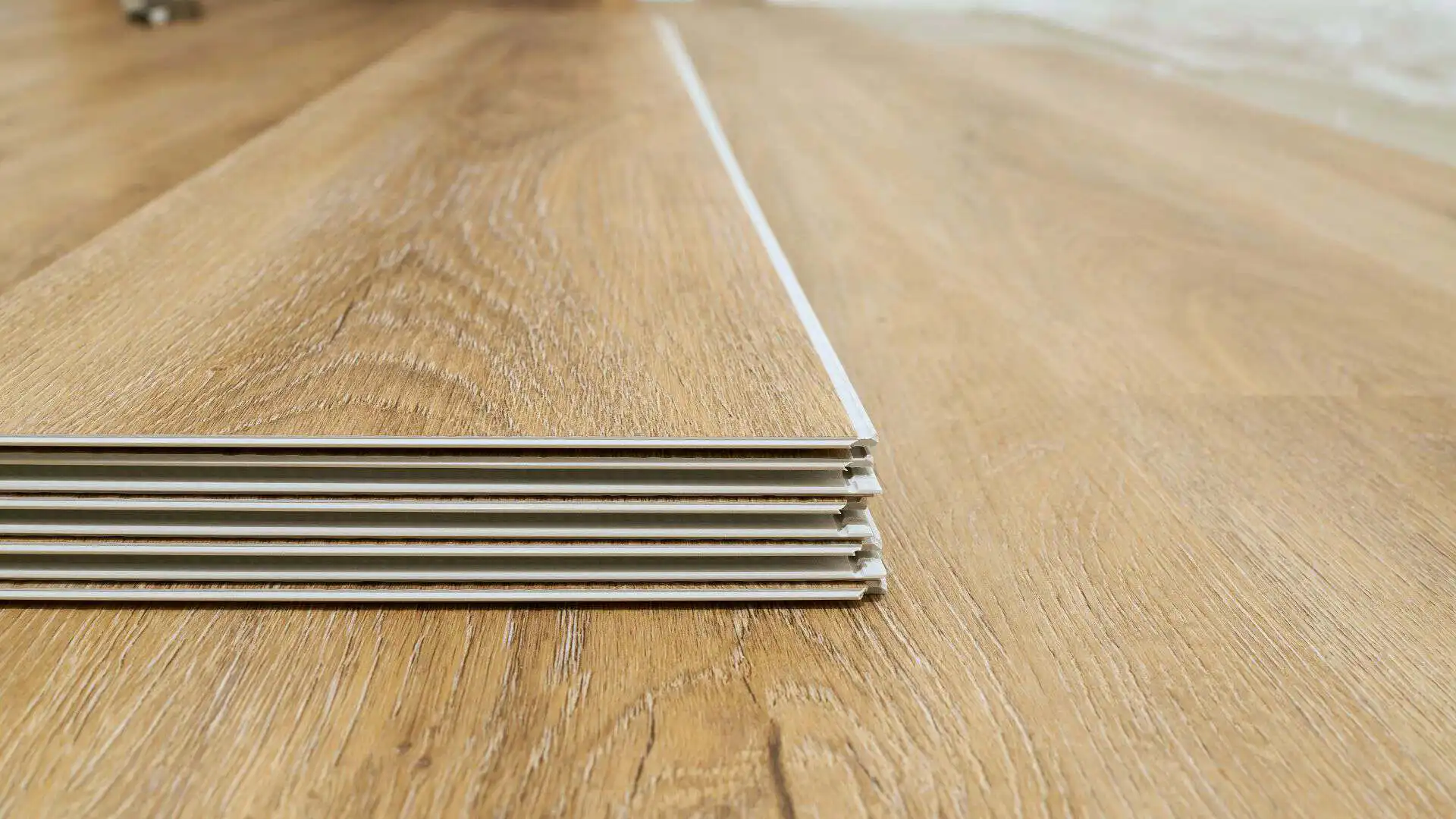
Luxury vinyl plank is one of the most reliable flooring options for humid climates, especially in Florida homes. It offers strong moisture resistance, durability, and comfort while maintaining the look of natural wood.
Why LVP Is One Of The Safest Bets:
- Waterproof or water-resistant core that does not absorb humidity
- Dimensional stability that prevents warping or buckling
- Suitable for most rooms, including living areas and bedrooms
- Wide range of styles that mimic hardwood and tile
Click-Lock vs Glue-Down In Humidity:
- Click-lock systems: Allow slight movement, which helps manage expansion caused by humidity changes and are easier to install
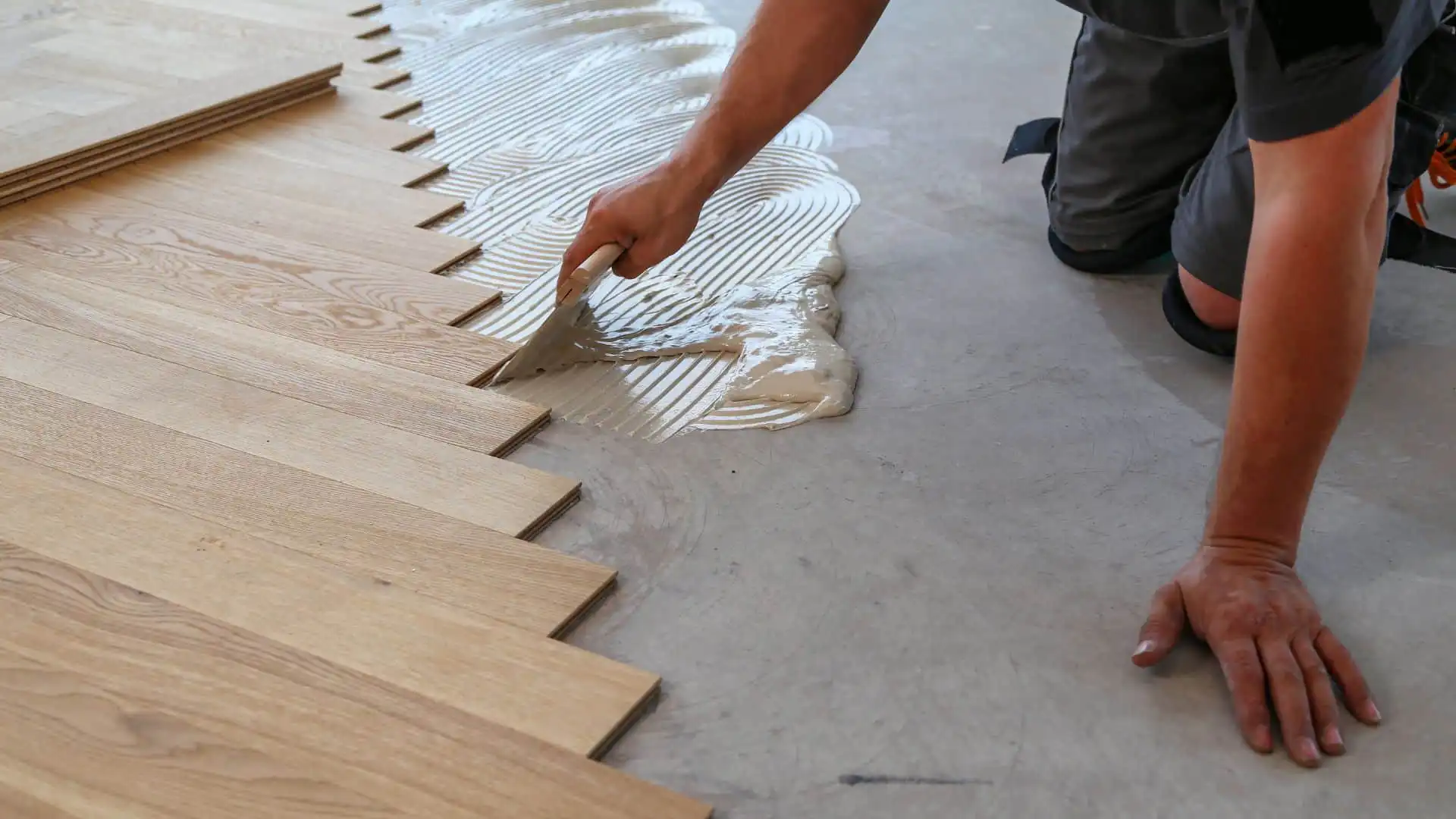
- Glue-down installations: Create a firm bond to the subfloor and can perform well in humid climates when moisture testing and proper adhesives are used
Common Mistakes Homeowners Make:
- Choosing low-quality LVP with unstable cores
- Skipping subfloor moisture testing before installation
- Failing to leave proper expansion gaps around edges
Tile Flooring: The Most Humidity-Proof Option
Tile flooring remains one of the most dependable choices for humid climates due to its resistance to moisture and long-term durability. It is especially common in Florida homes where humidity is a year-round concern.
Porcelain vs Ceramic:
- Porcelain tile: Denser and less porous, making it ideal for high-humidity environments
- Ceramic tile: Slightly more porous but still effective when properly glazed and sealed
Cooling Benefits In Florida:
- Naturally stays cool underfoot, improving indoor comfort
- Helps reduce heat retention during hot and humid months
Long-Term Durability:
- Resistant to warping, swelling, and mold growth
- Can last decades with proper installation and maintenance
- Suitable for high-traffic areas and whole-home installations
Engineered Hardwood: When It Can Work
Engineered hardwood offers the appearance of natural wood with improved stability, but it requires specific conditions to perform well in humid climates.
Required Conditions:
- Consistent indoor climate control with air conditioning
- Proper acclimation before installation
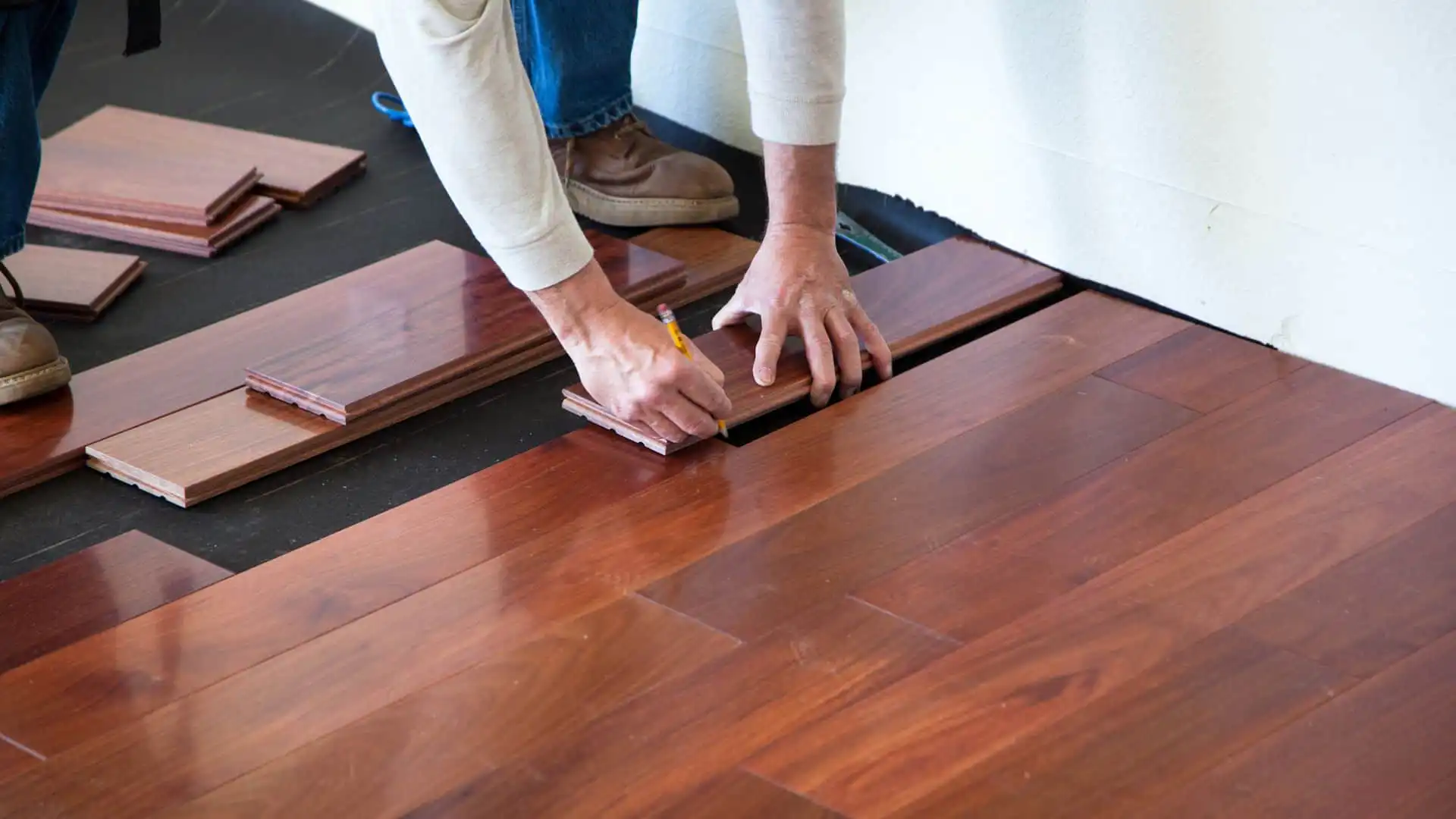
- Professional installation with moisture barriers
Where It Makes Sense:
- Bedrooms and home offices
- Climate-controlled living spaces with low moisture exposure
When To Avoid It:
- Homes without consistent temperature and humidity control
- Bathrooms, kitchens, and laundry rooms
- Properties in coastal or flood-prone areas
Flooring Types To Avoid In Humid Climates
Some flooring materials are not designed to handle ongoing exposure to moisture and humidity and often fail prematurely in humid environments.
Solid Hardwood:
- Absorbs moisture from the air
- Prone to cupping, warping, and cracking
- Requires strict humidity control to maintain performance
Low-Quality Laminate:
- Swells when exposed to moisture
- Breaks down quickly in humid conditions
- Short lifespan compared to humidity-resistant options
Carpet In Moisture-Prone Areas:
- Traps moisture and humidity
- Creates ideal conditions for mold and mildew
- Difficult to maintain in humid climates
Selecting flooring that can handle humidity is essential for long-term comfort and durability. By choosing materials designed to resist moisture and avoiding those prone to damage, homeowners can make smarter decisions that protect their investment and suit the realities of living in a humid climate.

Installation Matters Just as Much as the Flooring Material
Choosing the right flooring for a humid climate is only part of the process. In areas like Florida, where moisture and heat are constant factors, proper installation plays a critical role in how long your flooring lasts and how well it performs. Even high-quality materials can fail if installation does not account for humidity, subfloor conditions, and natural movement over time.
Moisture Testing
Moisture testing is one of the most important steps when installing flooring in a humid climate. Many Florida homes are built on concrete slabs that can retain moisture long after they appear dry on the surface.
- Why it matters: Excess moisture beneath flooring can lead to warping, buckling, mold growth, and adhesive breakdown.
- How it is done: Professional installers use moisture meters or calcium chloride tests to measure moisture levels accurately.
- What to expect: If moisture levels are too high, additional steps such as moisture barriers or mitigation systems may be required.
Skipping moisture testing often results in flooring problems that appear months after installation, making this step essential for long-term performance.
Proper Underlayment
Underlayment serves as a protective layer between the subfloor and the finished flooring, especially in moisture-prone environments.
- Moisture control: The right underlayment helps prevent moisture vapor from reaching the flooring material.
- Added stability: It improves comfort underfoot, reduces noise, and supports the structural integrity of the floor.
- Correct selection: Different flooring materials require specific underlayments, and using the wrong one can compromise durability or void warranties.
In Florida homes, moisture-resistant underlayments are often necessary to ensure flooring remains stable in high-humidity conditions.
Expansion Gaps
All flooring materials expand and contract naturally, but this movement is more pronounced in humid climates.
- Purpose: Expansion gaps allow flooring to move without pressing against walls or fixed structures.
- Common issues: Floors installed without adequate spacing can buckle, lift, or separate as humidity levels rise.
- Climate considerations: In humid regions, expansion gaps must be carefully calculated based on room size and flooring type.
Proper expansion spacing helps flooring maintain its shape and appearance throughout seasonal changes.
Local Installer Experience (Florida-Specific)
Choosing an installer with local experience can make a significant difference in flooring performance.
- Knowledge of local conditions: Florida installers understand high humidity, slab foundations, and seasonal moisture changes.
- Material insight: Local professionals know which flooring products perform best in Florida homes.
- Climate-aware techniques: Practices such as proper acclimation, moisture mitigation, and installation timing are standard for experienced local installers.
Working with a Florida-based flooring professional reduces installation risks and ensures your flooring is prepared for the local climate.
Flooring Recommendations By Room
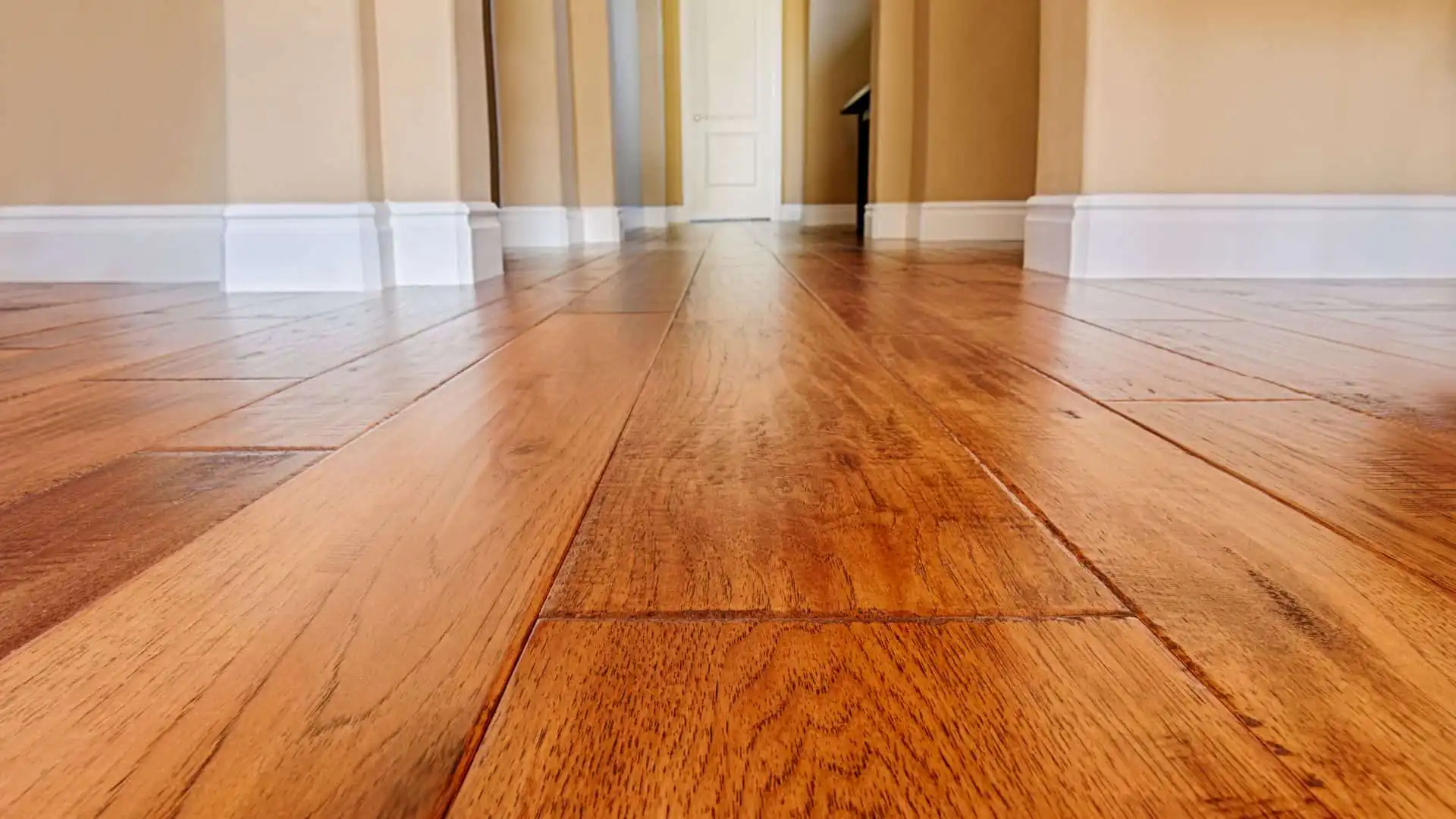
Choosing the right flooring for a humid climate becomes much more effective when decisions are made room by room. Each area of a Florida home is exposed to different levels of moisture, foot traffic, and daily use, so flooring that works well in one space may not be ideal in another. Below are practical, experience-based recommendations to help homeowners choose flooring that performs well long-term in humid environments.
Living Rooms
Living rooms are high-traffic areas where comfort and appearance matter just as much as durability. In humid climates, flooring here must resist expansion while still creating a welcoming feel.
- Best Options: Luxury vinyl plank and engineered hardwood
- Why They Work: Luxury vinyl plank handles humidity without warping, while engineered hardwood offers better stability than solid wood due to its layered construction
- Comfort Consideration: Vinyl plank is quieter and warmer underfoot than tile, making it ideal for family spaces
- What To Avoid: Solid hardwood, which is prone to cupping and expansion in high humidity
These flooring choices allow homeowners to maintain a stylish living room without constant concerns about moisture damage.
Kitchens
Kitchens face frequent spills, humidity from cooking, and heavy foot traffic, making moisture resistance essential. Flooring in this space must be easy to clean and capable of handling daily wear.
- Best Options: Porcelain tile or waterproof luxury vinyl plank
- Why They Work: Tile is unaffected by moisture, while waterproof vinyl plank offers durability with added comfort
- Maintenance Needs: Tile requires occasional grout maintenance, while vinyl plank needs simple routine cleaning
- Design Flexibility: Both materials are available in styles that mimic wood, stone, or modern finishes
The right kitchen flooring reduces maintenance headaches and helps prevent long-term moisture-related problems.
Bathrooms
Bathrooms experience constant exposure to water and humidity, making flooring selection especially critical in Florida homes. Even small installation or material mistakes can lead to mold or structural issues.
- Best Options: Porcelain or ceramic tile
- Why They Work: Tile is fully waterproof, easy to sanitize, and highly resistant to humidity
- Safety Factor: Slip-resistant or textured tile improves traction in wet conditions
- What To Avoid: Hardwood, laminate, and carpet, which absorb moisture and deteriorate quickly
Tile remains the most dependable and long-lasting flooring solution for bathrooms in humid climates.
Bedrooms
Bedrooms generally have lower moisture exposure, but humidity can still affect flooring over time. Comfort, warmth, and sound absorption are often key considerations in these spaces.
- Best Options: Luxury vinyl plank, engineered hardwood, or tile paired with area rugs
- Why They Work: Vinyl plank resists humidity while remaining comfortable, and engineered hardwood can perform well in climate-controlled bedrooms
- Comfort Tip: Area rugs help soften tile floors while maintaining moisture resistance
- What To Avoid: Carpet in humid homes, as it can trap moisture, odors, and allergens
Bedroom flooring should balance comfort and durability while accounting for Florida’s year-round humidity.

Cost Considerations for Flooring in Florida Homes
Choosing flooring for a humid climate like Florida is not just a design decision. It is a financial one that affects long-term home value and ongoing ownership costs. While many homeowners focus on the initial price per square foot, Florida’s humidity can quickly expose hidden expenses tied to maintenance, repairs, and early replacement. Looking at the full cost picture helps ensure the flooring you choose performs well and remains cost-effective over time.
Upfront vs Long-Term Costs
The upfront cost of flooring often draws the most attention, but in Florida homes, long-term performance is just as important. Materials that struggle with moisture may seem affordable at first but can become expensive when humidity-related issues arise.
Key cost factors to consider include:
- Material price: Tile and high-quality luxury vinyl plank generally cost more upfront than laminate or carpet, but they are far more resistant to moisture and humidity.
- Installation costs: Tile installation usually involves higher labor costs, while vinyl plank can often be installed more efficiently, reducing overall expenses.
- Durability in humid climates: Flooring designed to handle moisture tends to last longer, lowering the true cost of ownership over time.
In many Florida homes, investing slightly more upfront in moisture-resistant flooring reduces long-term expenses and the risk of premature failure.
Maintenance Expenses
Maintenance is an ongoing cost that varies significantly by flooring type, especially in humid environments. Some materials require consistent care to prevent moisture damage, while others are naturally low maintenance.
Common maintenance considerations include:
- Routine cleaning: Tile and vinyl plank are easy to clean and do not absorb moisture, while hardwood requires careful cleaning and humidity management.
- Preventative maintenance: Sealing grout, managing indoor humidity, and using moisture barriers can add recurring costs for certain flooring types.
- Repair frequency: Flooring that expands, warps, or buckles due to humidity often needs repairs that increase overall ownership costs.
Low-maintenance flooring options are particularly appealing for Florida homeowners who want to reduce long-term upkeep without sacrificing durability.
Replacement Frequency
Replacement frequency plays a major role in the total cost of flooring in humid climates. Materials that cannot withstand moisture often need to be replaced sooner, increasing long-term expenses.
Typical replacement timelines include:
- Tile flooring: Often lasts several decades when installed properly, making it one of the most cost-effective options over time.
- Luxury vinyl plank: Commonly lasts 15 to 25 years and performs reliably in Florida’s humid conditions.
- Hardwood flooring: May require refinishing or replacement much sooner if indoor humidity is not carefully controlled.
Choosing flooring that holds up well in humid environments helps minimize replacement costs and reduces disruptions caused by frequent renovations.
Choosing the right flooring for a humid climate isn’t just about looks—it’s about durability, comfort, and protecting your investment. If you want expert guidance tailored specifically to Florida homes, our team can help you compare materials, avoid costly mistakes, and find flooring that truly lasts in Tampa’s climate.

FAQs About Flooring Options For Humid Climates
- What are the best flooring options for humid climates?
The best flooring options for humid climates include luxury vinyl plank (LVP), porcelain or ceramic tile, and engineered hardwood when properly installed. These materials resist moisture, reduce warping, and perform well in high humidity. - Why is flooring selection important for Florida homes?
Florida homes experience high humidity, heat, and moisture year-round, which can cause certain flooring materials to expand, warp, or develop mold if they are not designed for these conditions. - Is vinyl plank flooring good for humid climates like Tampa?
Yes, vinyl plank flooring is an excellent choice for humid climates like Tampa because it is water-resistant or waterproof, dimensionally stable, and comfortable underfoot compared to tile. - What is better for humid climates: tile or vinyl plank?
Tile offers the highest resistance to moisture and humidity, while vinyl plank provides better comfort and warmth. The best choice depends on the room, lifestyle, and budget. - Can hardwood flooring work in humid climates?
Solid hardwood is generally not recommended for humid climates, but engineered hardwood may work in climate-controlled spaces if proper installation and humidity control are maintained. - What flooring should be avoided in humid climates?
Solid hardwood, low-quality laminate, and carpet in moisture-prone areas should be avoided in humid climates due to their susceptibility to moisture damage and mold growth. - Does humidity affect flooring installation?
Yes, humidity greatly affects flooring installation. Proper acclimation, moisture testing, underlayment selection, and expansion gaps are essential for long-term performance in humid climates. - What flooring is easiest to maintain in Florida homes?
Tile and luxury vinyl plank are the easiest flooring options to maintain in Florida homes because they resist moisture, require minimal upkeep, and clean easily. - Is tile flooring a good option for the entire home in Florida?
Yes, many Florida homeowners choose tile flooring throughout the entire home because it stays cool, handles humidity well, and offers long-term durability. - How long does flooring last in humid climates?
The lifespan of flooring in humid climates depends on material quality, installation, and maintenance. Tile can last decades, vinyl plank typically lasts 15–25 years, while hardwood’s lifespan varies based on humidity control.
Conclusion
Choosing the right flooring for humid climates ultimately comes down to understanding how your environment, daily lifestyle, and budget work together, rather than focusing on appearance alone. In moisture-heavy areas like Florida, flooring needs to withstand humidity, temperature changes, and long-term wear, which is why materials such as tile and luxury vinyl plank consistently outperform options that are more sensitive to moisture. While aesthetics matter, prioritizing durability, water resistance, and ease of maintenance will save homeowners from costly repairs and premature replacements down the line. Taking the time to weigh practical performance alongside design preferences leads to better outcomes, especially when decisions are informed by real-world experience and an understanding of how flooring behaves in humid conditions. By making a thoughtful, climate-appropriate choice, homeowners can enjoy flooring that not only looks good on day one but continues to perform reliably for years to come.
Additional Services To Support Your Flooring Project
- Full Home Remodeling: Pairing new flooring with a full home remodel allows everything to feel cohesive, from room layouts to finishes. This approach ensures your floors match the overall style and functionality of your updated home.
- Kitchen Remodeling: Kitchen remodeling works naturally with flooring upgrades by allowing you to choose durable, moisture-resistant surfaces that handle spills, heat, and daily traffic while maintaining a unified design.
- Bathroom Remodeling: Flooring plays a major role in bathroom performance, and remodeling the space at the same time ensures proper material selection, waterproofing, and long-term durability in high-moisture areas.
- In-House Interior Design: Interior design services help homeowners select flooring styles, colors, and textures that complement the rest of the home while balancing comfort, durability, and climate-friendly performance.